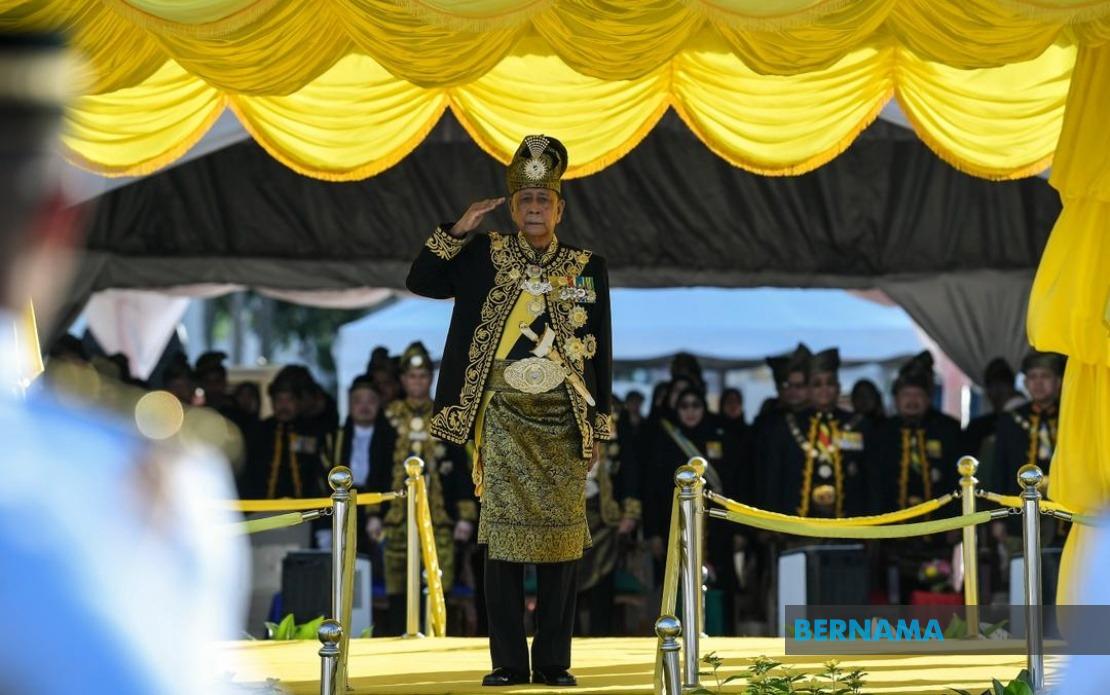
The Sultan of Kedah, Al Aminul Karim Sultan Sallehuddin Sultan Badlishah, was accorded a ceremonial guard of honour parade at Dataran Medan Bandar in Alor Setar on July 5 to commemorate his 84th birthday. The elaborate tribute, which combined military precision with tradition, underscored the state's reverence for its ruler and reflected the ceremonial customs that remain integral to Malaysia's constitutional monarchy system.
The Raja Muda of Kedah, Tengku Sarafudin Badlishah Sultan Sallehuddin, joined the sovereign for the occasion, signifying the continuity of royal succession within the state. Their joint presence demonstrated both the vitality of the reigning monarch and the readiness of the next generation to assume their role within Kedah's governance structure. Such public appearances by both the Sultan and his heir are significant within Malaysia's federal system, where state rulers wield considerable constitutional authority despite the Prime Minister holding executive power at the federal level.
State-level dignitaries also graced the ceremony, including Kedah Menteri Besar Datuk Seri Muhammad Sanusi Md Nor and State Secretary Datuk Seri Norizan Khazali, alongside members of the State Executive Council. This cross-hierarchical gathering illustrated how Malaysia's royalty remains deeply embedded within state administration, with senior government officials ceremonially acknowledging the Sultan's constitutional position as head of state and guardian of Islam in Kedah.
The military contingent constituted a substantial showing of respect. The 6th Battalion of the Royal Malay Regiment (RAMD) deployed 103 personnel and three officers under the command of Major Muhammad Nasrullah Abdullah. Lieutenant Mohamad Aiman Hanif Samsudin carried the colours, while Warrant Officer 1 Mohd Fairuz Ramli bore the regiment standard. These appointments reflect the careful selection of officers for ceremonial duties, emphasizing the importance placed on such state occasions within Malaysia's armed forces.
The parade formation was enhanced by musical accompaniment from the RAMD Central Band, directed by Captain Muhamad Fauzee Japar with Sergeant Mohd Shahrilaizad Bakhtiar providing support. Military bands have long served as the cultural backbone of ceremonial proceedings across Malaysia, blending martial discipline with musical artistry to create an atmosphere of pageantry that resonates deeply with public tradition and national identity.
A notable element of the celebration involved aerial participation, with the Flying Training Institute contributing six aircraft. Two EC120B helicopters from INSPEN 2 and three PC-7 MK II trainer aircraft from INSPEN 1 executed a ceremonial flypast over the venue. This aviation component demonstrated the integration of various military training institutions in supporting state-level ceremonial functions, while also showcasing Malaysian air capabilities to assembled dignitaries and onlookers.
The ceremonial finale featured a 21-gun salute discharged by the 41st Battery of the Royal Artillery Regiment (Ceremonial), based at Sungai Buloh Camp in Selangor and led by Major Hafizan Md Ghani. Artillery salutes hold profound symbolic weight in Commonwealth military traditions, representing supreme respect and honour. The mobilization of a ceremonial artillery unit from Selangor to Kedah illustrated the nationwide coordination required for such significant state occasions and highlighted how the federal defence establishment supports state-level royal ceremonies.
The celebration of the Sultan's 84th birthday carries broader implications for Kedah's governance and succession planning. At this age, the ruler's health and longevity become matters of public and constitutional interest, particularly in a system where the Sultan exercises important ceremonial and Islamic leadership functions. The public nature of the parade served to reassure Kedahans of their sovereign's continued vitality and engagement with state affairs.
For Malaysia more broadly, such ceremonies reinforce the unique constitutional role that sultans occupy within the federation. Unlike many modern constitutional monarchies, Malaysia's state rulers retain significant power, particularly regarding Islam and royal prerogatives. The elaborate military parade thus represented not merely personal tribute but an affirmation of institutional structures that have endured since independence, adapted to serve modern governance while maintaining historical continuity.
The involvement of multiple military units and federal agencies in honouring a state ruler also reflects the intricate balance between state and federal authority in Malaysia's system. While the Sultan heads state administration, the armed forces and civil service operate under federal purview, yet they willingly participate in royal ceremonies that acknowledge state sovereignty and the special constitutional status of Peninsular Malaysian rulers.
Regionally, Malaysia's ceremonial traditions, exemplified by this parade, distinguish it from neighbouring republics and demonstrate the enduring role of monarchy in Southeast Asian politics. The precision-drilled military formations, aircraft displays, and artillery salutes evoked a style of pageantry more commonly associated with older Commonwealth realms, reflecting Malaysia's historical connections and constitutional inheritance from the British colonial period.
Looking forward, the birthday celebration at Dataran Medan Bandar served practical purposes beyond ritual. It provided the Raja Muda with visible opportunity to share the ceremonial stage with his father, subtly signalling the leadership continuum and preparing the public and political circles for eventual transition. Such gradualism in presenting succession arrangements is characteristic of Malaysia's approach to managing dynastic politics, avoiding abruptness while ensuring stability.

