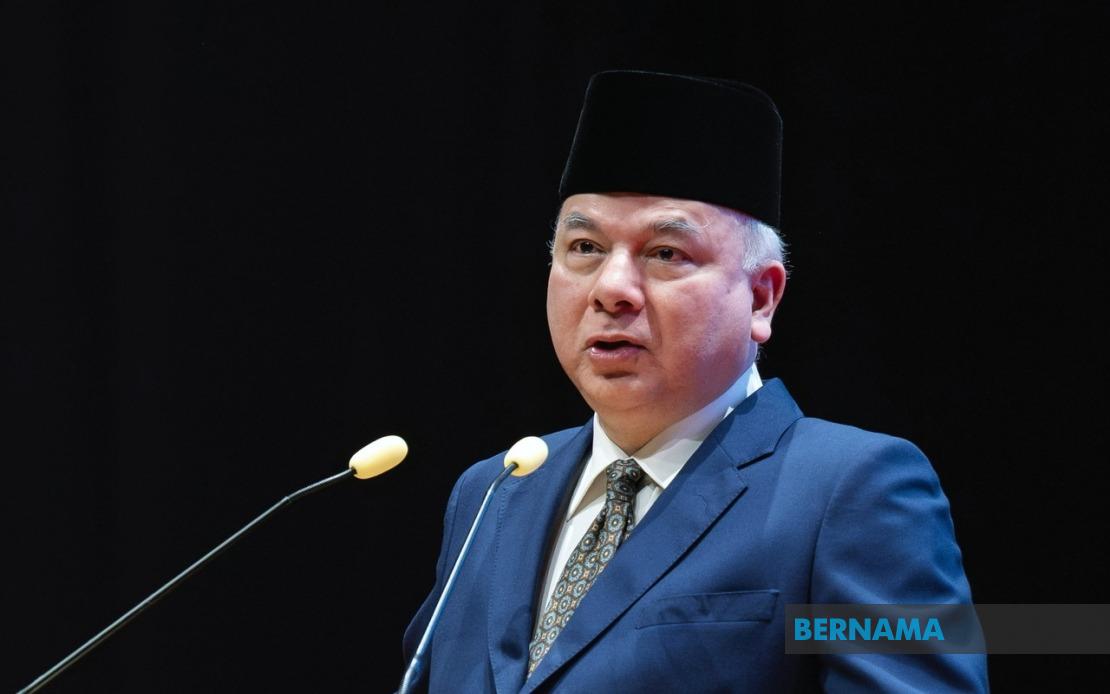
Sultan Nazrin Shah has outlined an ambitious agenda to revitalise the global waqf sector by establishing unified governance principles that could be voluntarily adopted across Muslim-majority nations. Speaking at the International Waqf Da'wah Convention 2026 in Kuala Lumpur, the Perak Sultan stressed that Islamic endowments represent an enormous untapped resource constrained by fragmented management practices and institutional fragility. His intervention signals high-level recognition of waqf's potential as both a development instrument and a tool for regional cooperation in Southeast Asia.
The Sultan's proposal centres on creating what he termed an internationally consultative working group tasked with synthesising existing waqf frameworks already in use across different jurisdictions. Rather than imposing a single standardised model, he envisioned a flexible architecture drawing from successful governance models pioneered by Indonesia, Kazakhstan, and standards established by the Accounting and Auditing Organisation for Islamic Financial Institutions. This pragmatic approach acknowledges the diversity of waqf traditions across the Muslim world while seeking common ground on core administrative and financial principles. By building on proven frameworks rather than starting afresh, the proposal recognises that multiple pathways to effective waqf management can coexist within a broader international consensus.
The Sultan suggested that INCEIF University, Malaysia's leading institution in Islamic finance education, could assume a coordinating role as secretariat for this international effort. This placement reflects Malaysia's growing position as a regional hub for Islamic finance innovation and positions the country as a convener rather than merely a participant in global Islamic financial governance. INCEIF's existing networks across Muslim-majority nations and its research infrastructure provide practical capacity for managing what would inevitably be a complex, multi-stakeholder initiative involving governments, religious authorities, and financial institutions.
A critical weakness identified in the current waqf landscape involves the deterioration and underutilisation of endowed assets. The Sultan painted a stark picture of waqf properties lying dormant across the Muslim world, hampered by incomplete documentation, unresolved ownership disputes, and administrative dysfunction. This systemic underperformance reflects not merely technical failures but a deeper erosion of institutional capacity and governance discipline. Many waqf institutions operate with minimal transparency, outdated record-keeping systems, and limited public accountability—conditions that have allowed billions of dollars in potential development capital to remain locked away or mismanaged.
To address this transparency deficit, Sultan Nazrin proposed accelerating the adoption of digital cash waqf platforms equipped with real-time public dashboards. Such systems would fundamentally alter how waqf institutions operate, moving them from opacity to radical transparency. Digital platforms would enable donors to track precisely how their contributions are deployed, allowing waqf administrators to demonstrate impact and maintain public trust. For Malaysia specifically, this modernisation agenda aligns with the government's broader digital transformation initiatives and positions the country as a leader in fintech applications within Islamic finance. Real-time dashboards would also facilitate regulatory oversight and reduce opportunities for misappropriation or drift from original beneficiaries' intentions.
The Sultan's most ambitious proposal involved a pilot initiative called "Waqf for Peace and Planetary Resilience" spanning Malaysia, Indonesia, and other ASEAN nations. This initiative would channel waqf resources toward renewable energy development and climate-resilient infrastructure, embedding environmental sustainability and interfaith cooperation within waqf's traditional charitable mandate. The framework explicitly links Islamic stewardship principles to contemporary climate challenges, suggesting that waqf can serve as a vehicle for addressing the region's most pressing development needs. Such a programme would demonstrate waqf's relevance to 21st-century concerns while fostering regional integration through shared climate and development priorities.
Underlying these practical proposals lay a deeper philosophical argument about waqf trustees' responsibilities. The Sultan invoked the Islamic concept of amanah—sacred trusteeship—to emphasise that managing waqf assets carries profound spiritual and ethical weight beyond mere regulatory compliance. Trustees must uphold standards of integrity that reflect not only financial probity but also fidelity to donors' intentions and commitment to beneficiary welfare. This reframing positions governance excellence as a religious obligation rather than a technical requirement, potentially mobilising deeper commitment from religious authorities and institutional leaders who might otherwise treat governance as a bureaucratic burden.
The gathering brought together significant political and religious figures, including Sarawak Premier Tan Sri Abang Johari Tun Openg, who chairs the Malaysian Islamic Welfare Organisation, and Minister Zulkifli Hasan from the Prime Minister's Department overseeing religious affairs. This convergence of state, religious, and civil society leadership underscores official commitment to waqf revitalisation as a priority national and regional agenda. Malaysia's willingness to champion international waqf governance standards reflects its strategic interest in positioning itself at the centre of Islamic finance discourse and leveraging waqf modernisation as a tool for regional soft power.
The proposed international framework would incorporate core principles of balance, justice, mercy, and trusteeship into waqf governance architecture. Rather than purely technical standards, these principles anchor governance reform within Islamic jurisprudential traditions, ensuring legitimacy among religious scholars and community leaders. This balanced approach—combining international best practice with Islamic ethical foundations—may prove crucial for gaining acceptance across diverse Muslim-majority contexts where governance frameworks must resonate with both modern institutional norms and traditional Islamic values.
For Southeast Asian policymakers, Sultan Nazrin's intervention carries immediate relevance. The region hosts significant waqf holdings across Malaysia, Indonesia, and Brunei, yet lacks coordinated governance standards or regular dialogue mechanisms on waqf development. A regional consensus on governance principles could unlock resources for addressing shared challenges in education, healthcare, and infrastructure. Indonesia, already pioneering innovative waqf governance models, could benefit from formalised knowledge-sharing arrangements. Malaysia's position as an Islamic finance centre positions it to facilitate these conversations and potentially host a regional waqf coordination secretariat.
The Sultan's call for urgent action—"the time for action is now"—reflects concern that current trajectories of waqf institutional decline will become irreversible without intervention. Many elderly waqf trustees lack succession plans; documentation of historical waqf endowments continues to deteriorate; and younger generations remain disconnected from waqf institutions. The moment for systemic reform, the Sultan suggested, exists now but may not persist indefinitely. This sense of urgency may accelerate international discussions already underway within AAOIFI and other Islamic finance bodies toward concrete governance frameworks.
Implementing these proposals faces substantial obstacles. Creating binding international waqf governance standards will require reconciling competing jurisprudential schools, national legal systems, and institutional interests. Digital cash waqf platforms require investment and technical capacity that many institutions lack. Regional cooperation demands political will and sustained bureaucratic coordination across ASEAN nations with divergent governance philosophies. Nevertheless, Sultan Nazrin's articulation of a coherent vision provides a blueprint around which stakeholders can organise efforts and allocate resources. His framing of waqf governance as simultaneously a development imperative, an environmental strategy, and a spiritual obligation may prove sufficiently encompassing to build the diverse coalitions necessary for sustained reform.

