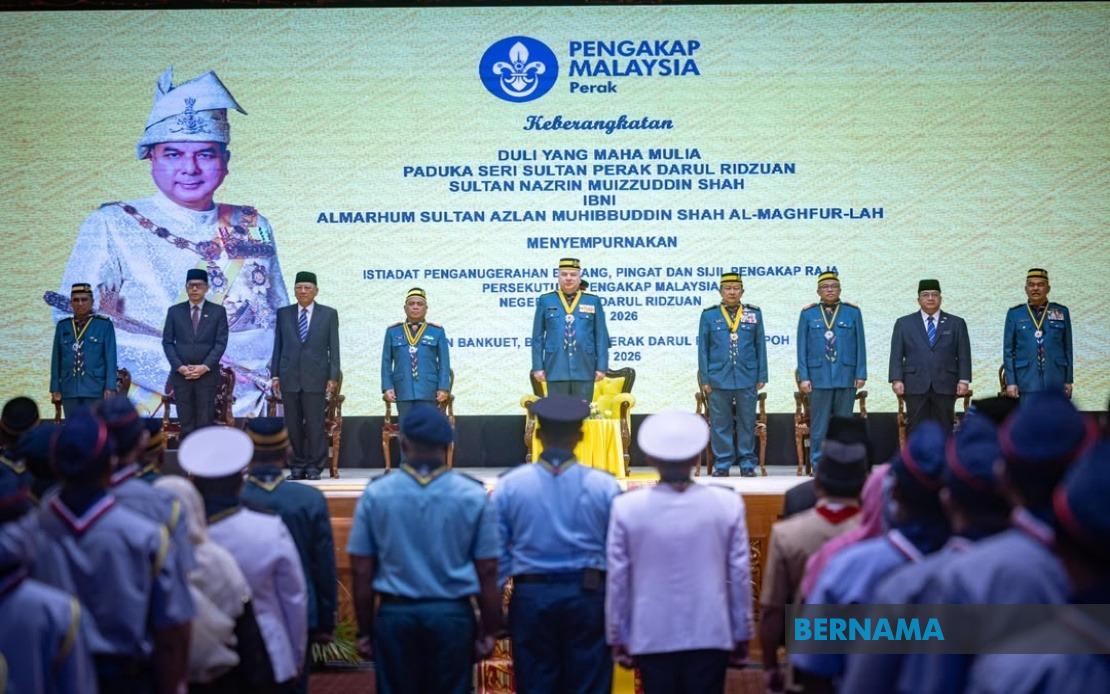
Sultan Nazrin Shah of Perak presided over the presentation of King's Scout Awards in Ipoh on July 25, honouring 239 recipients with decorations, medals and certificates from the Perak branch of the Scouts Association of Malaysia. The ceremony underscored the royal patronage that the scouting movement enjoys in the state, with Menteri Besar Datuk Seri Saarani Mohamad and National Chief Scout Maj Gen Prof Datuk Mohd Zin Bidin in attendance. The recognition of such a substantial cohort of award winners signals the vibrancy of scouting activities across Perak's districts and the consistent dedication of members at all levels within the organisation.
Among the decorated recipients was Gusti Kanjeng Ratu Mangkubumi Hamemayu Hayuning Bawono Langgeng Ing Mataram, Head of the Regional Scout Council of Yogyakarta's Special Region, who received the Bintang Semangat Rimba Emas (BSR-E) award. This honour represents the third-highest recognition within the Scouts Association of Malaysia, conferred upon individuals whose contributions have substantially advanced the scout movement. The presence of an international scouting leader among the awardees reflects the cross-border connections that Southeast Asian scouting networks maintain and the shared commitment to youth development that transcends national boundaries.
Mohd Zin's remarks at the ceremony positioned the Scouts Association at a pivotal moment, announcing that the organisation is embarking upon a comprehensive transformation aimed at modernising its approach while maintaining its core values. The transition encompasses far more than superficial rebranding; it represents a deliberate strategy to equip the movement with contemporary mechanisms that resonate with younger generations whilst preserving the foundational principles of character development and community service. The redesigned uniform, new logo and restructured identity signal the association's confidence in navigating future obstacles with renewed vigour.
A significant development highlighted during the event was Malaysia's elevated status within global scouting structures. With Kuala Lumpur now serving as the headquarters of the World Scout Bureau, the nation has positioned itself as a central hub within the worldwide scouting network. This institutional placement creates tangible advantages for Malaysian scouts and leaders, facilitating knowledge exchange with international counterparts and enabling participation in collaborative initiatives that span the globe. For Malaysian youth involved in scouting, this proximity to the global centre provides unprecedented opportunities to engage with international best practices and forge connections with scouts across diverse cultures and regions.
Mohd Zin emphasised that the transformation initiative addresses both operational and philosophical dimensions of the movement. The rebranding exercises and uniform redesigns are manifestations of the association's determination to remain relevant and appealing in an evolving social landscape. The investment in modernisation demonstrates an understanding that scouting must adapt its methods and messaging to attract and retain membership among young Malaysians who face unprecedented digital connectivity and shifting recreational choices. Without such evolution, even traditionally respected youth organisations risk losing ground to competing interests.
The Perak branch approaches a landmark achievement with the pending centenary in 2026, marking one hundred years of continuous scouting activity in the state. This milestone carries symbolic weight for Malaysian scouting generally, representing continuity through periods of dramatic social and political change. The century-long presence of Perak Scouts within the state's communities underscores the durability of the scouting concept and its successful embedding within Malaysian civil society. The upcoming anniversary provides an occasion to reflect upon generational transmission of values and the ways young Malaysians have been shaped through scouting programmes.
For Malaysia's broader youth development agenda, the state of the scouting movement carries implications beyond ceremonial recognition. Scouting organisations serve as alternative pathways for character formation, leadership training and civic engagement, complementing formal education systems. As Malaysia navigates demographic and technological shifts, maintaining robust youth organisations becomes increasingly important for social cohesion and developing future leaders equipped with both technical competence and ethical grounding. The transformation initiative announced at the Perak ceremony addresses this necessity head-on.
The gathering in Ipoh also reflected traditional structures of authority and patronage within Malaysian institutions. Royal involvement in youth and community organisations remains a defining feature of Malaysian governance and civil society. The Sultan's direct participation in awarding decorations to individual scouts personalises the recognition and elevates the psychological significance of the honour for recipients. This intersection of formal institutional change with traditional ceremonial practices demonstrates how Malaysia's constitutional monarchy continues shaping contemporary governance.
Regional dimensions of Malaysian scouting merit consideration as well. Within the broader Southeast Asian context, scouting movements have historically served as instruments of social integration and national-building, particularly during post-colonial nation-formation periods. The continued prominence of scouting in contemporary Malaysia suggests enduring faith in the movement's capacity to develop responsible citizens and foster cross-communal understanding among young Malaysians from diverse backgrounds. The Perak branch, operating within a state of significant demographic diversity, embodies these integrative aspirations.
Looking forward, the Scouts Association faces the challenge of sustaining momentum through the transformation process while maintaining the trust and engagement of existing members and attracting new participants. The modernisation initiatives require careful calibration to avoid alienating long-standing supporters whilst appealing to younger demographics accustomed to different modes of communication and engagement. The organisation's success in managing this transition will likely influence the trajectory of youth development in Malaysia throughout the coming decade.

