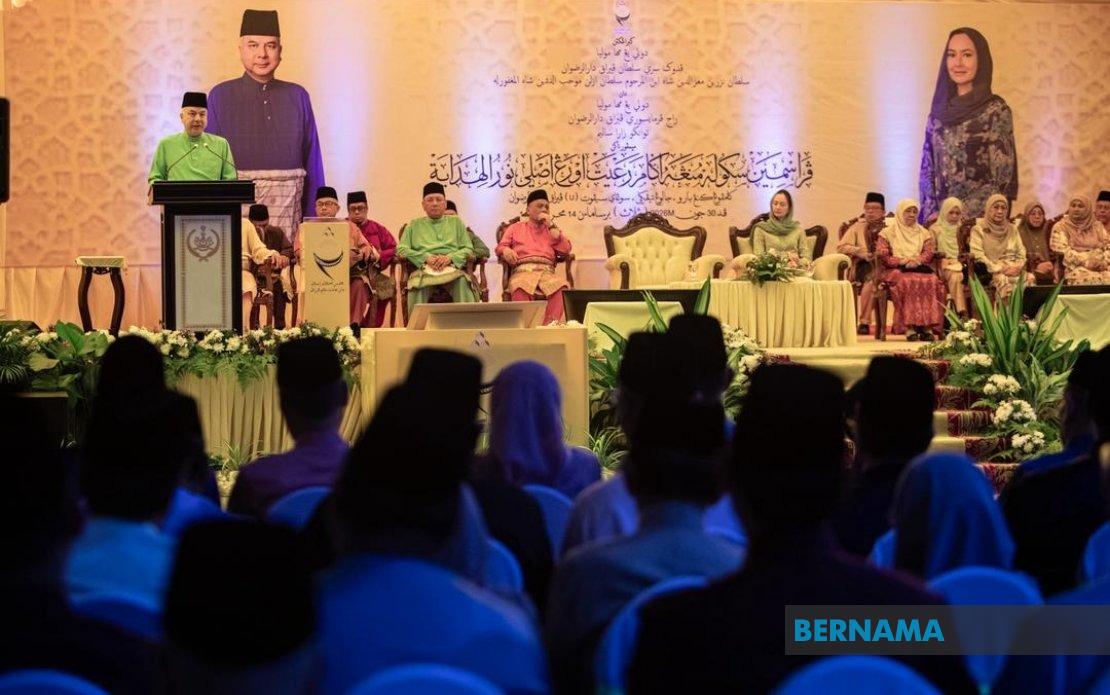
Sultan Nazrin Shah, the Sultan of Perak, has officially inaugurated Sekolah Menengah Agama Rakyat (SMAR) Orang Asli Nurul Hidayah in Kampung Kenang, Sungai Siput Utara, in a ceremony that underscores the state's commitment to advancing educational opportunities for the indigenous Orang Asli population. The opening marks a watershed moment in efforts to integrate quality education with religious instruction tailored specifically for Orang Asli youth in Perak, addressing long-standing gaps in educational access and quality that have historically affected Malaysia's indigenous communities.
The Raja Muda of Perak, Raja Jaafar Raja Muda Musa, and the Raja Di Hilir Perak, Raja Iskandar Dzurkarnain Sultan Idris Shah, joined the Sultan at the ceremony, lending royal prominence to the occasion. Menteri Besar Datuk Seri Saarani Mohamad, alongside senior officials from the Perak Islamic Religious and Malay Customs Council (MAIPk) and the Perak Islamic Religious Department (JAIPk), were also present, reflecting the multi-institutional effort behind the school's development and operation.
What distinguishes SMAR Orang Asli Nurul Hidayah is its unique position as the first institution of its kind nationwide—a dedicated Islamic secondary school designed specifically for Orang Asli learners. The school's journey reflects pragmatic education policy: it evolved organically from a basic religious learning centre into a comprehensive secondary institution offering an integrated curriculum that bridges conventional academics with Islamic religious training. This developmental trajectory demonstrates how initial community need can catalyse institutional growth when properly supported by government bodies and religious authorities.
Sultan Nazrin framed the school's significance beyond mere infrastructure, characterising its establishment as a transformative investment in the future trajectories of Orang Asli children across Perak. He stressed that founding an educational institution for marginalised indigenous communities represents more than classroom construction; it embodies state recognition of Orang Asli rights to equitable opportunity and dignified participation in Malaysia's social and economic mainstream. This framing carries particular resonance in Perak, where Orang Asli populations face compounded disadvantages stemming from geographic isolation, limited economic opportunity, and historical underinvestment in community development.
The Sultan emphasised the school's alignment with broader national educational objectives, particularly the principle that every Malaysian child—regardless of ethnicity, socioeconomic background, or residential location—deserves genuine access to quality schooling. SMAR Orang Asli Nurul Hidayah thus represents institutional commitment to narrowing educational disparities that have historically perpetuated cycles of disadvantage within indigenous communities. By combining rigorous academic instruction with Islamic religious education, the school addresses both immediate skill-building needs and longer-term aspirations for cultural and spiritual development.
Remarkably, the school has operated for more than three decades, establishing a proven track record of meaningful community impact within Kampung Kenang and surrounding Orang Asli settlements. Former students have reportedly returned to serve their communities as educators and community leaders, demonstrating how education investments generate multiplicative returns when they equip indigenous youth with both knowledge and commitment to collective advancement. This alumni-driven community development model illustrates organic capacity-building within Orang Asli societies themselves, moving beyond external aid provision toward endogenous community leadership.
The Sultan articulated a comprehensive vision of education extending beyond knowledge transfer. He characterised effective education as a holistic developmental process encompassing intellectual, spiritual, emotional, and physical dimensions, grounded in both knowledge and religious values. This conceptualisation resonates with contemporary educational discourse across Southeast Asia, where policymakers increasingly recognise that sustainable development requires graduates possessing not merely technical competence but also ethical grounding and cultural rootedness. For Orang Asli communities particularly, this integrated approach helps youth navigate modernisation while maintaining cultural identity and community bonds.
Sultan Nazrin highlighted the school's distinctive achievement in producing academically accomplished students whilst simultaneously nurturing strong Islamic faith, moral character, and leadership capacity. This balancing act—combining secular academic excellence with religious and cultural education—addresses a central challenge in educating indigenous populations: enabling participation in Malaysia's modern economy and governance structures without eroding cultural identity or community cohesion. The school's success in this domain offers a potential model for other Orang Asli educational initiatives across Malaysia.
The opening of SMAR Orang Asli Nurul Hidayah occurs within a broader context of growing recognition that Malaysia's indigenous populations represent both urgent educational priority and significant human capital potential. Orang Asli communities have historically experienced the lowest educational attainment levels nationwide, with corresponding impacts on employment prospects, health outcomes, and economic participation. Perak's initiative demonstrates how focused state investment in culturally-appropriate, academically rigorous education can begin reversing these entrenched disparities.
For Malaysian policymakers and regional observers, the school's establishment and expansion offer instructive lessons regarding indigenous education strategy. Rather than imposing external curricula or governance structures, the approach enabling SMAR Orang Asli Nurul Hidayah's growth—beginning with grassroots religious learning before expanding into formal secondary education—demonstrates how indigenous communities themselves can identify educational needs and shape institutional responses. This participatory approach builds community investment in educational outcomes and ensures curriculum relevance to Orang Asli aspirations and contexts.
Sultan Nazrin's emphasis on education as fundamental to individual and societal progress speaks to an understanding that sustainable development in Perak and Malaysia broadly depends upon unlocking the potential of historically marginalised populations. Education functions as both equaliser—providing tool access to opportunity—and dignifier, affirming that all Malaysians deserve society's investment in their flourishing. For Orang Asli communities specifically, quality education represents pathway toward genuine participation in national development, economic advancement, and cultural preservation on terms indigenous peoples themselves help determine.

