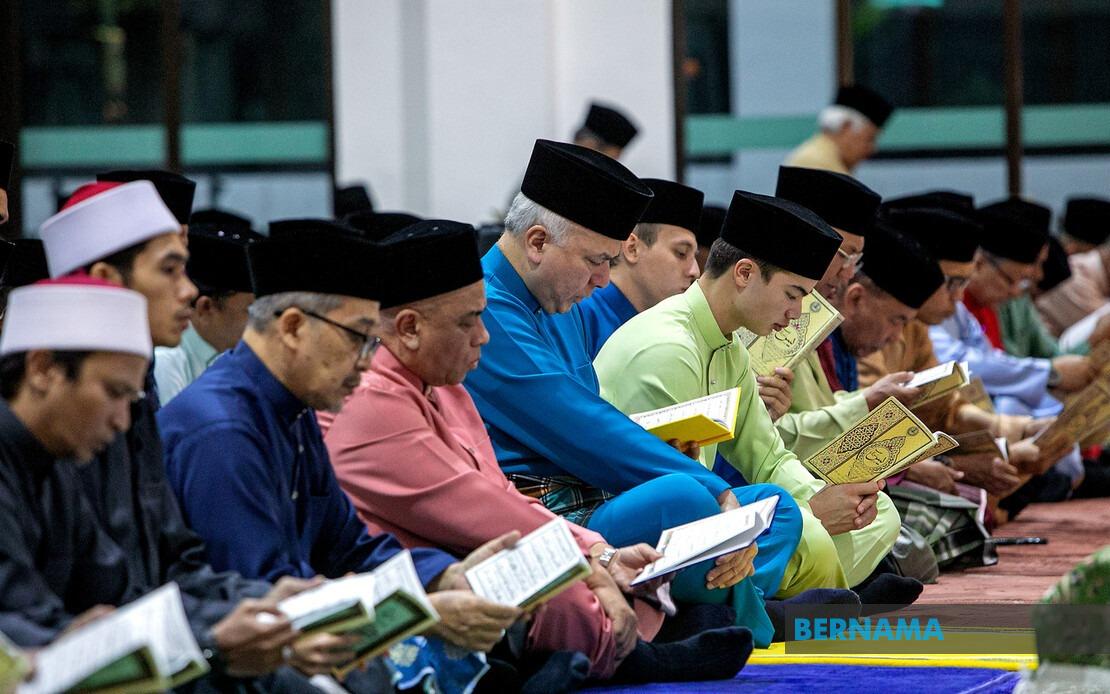
Sultan Nazrin Shah, the reigning Sultan of Perak, led spiritual observances for the nation's National Day on Friday evening by presiding over Quranic recitations and supplications at Masjid Imam As Syafie in Ipoh. The ceremonial participation underscored the monarchy's continued role in anchoring religious and patriotic occasions across Malaysia's states, particularly during celebrations marking the country's independence.
The mosque, which opened its doors to the public following completion last year, represents a significant infrastructural addition to Perak's Islamic institutions. Built at an investment of RM8.7 million, the facility was engineered to accommodate approximately 1,600 worshippers during peak prayer times, reflecting the growing religious infrastructure needs of Ipoh's Muslim community. The structure itself embodies contemporary mosque design standards while serving the broader spiritual and community functions expected of such institutions.
Beyond the royal figurehead, the gathering drew substantial public participation with approximately 1,000 congregants assembling for the evening's religious programme. This attendance reflected both the religious significance of the occasion and the draw of having the state's paramount ruler participate directly in community worship. The presence of senior government and religious officials further elevated the event's standing within Perak's administrative and spiritual hierarchy.
Menteri Besar Datuk Seri Saarani Mohamad attended alongside Tan Sri Mohd Annuar Zaini, president of the state Islamic Religious and Malay Customs Council (MAIPk). Their participation demonstrated alignment between the state administration and religious governance structures in marking national occasions. This coordination reflects Malaysia's constitutional framework, which vests religious authority in state sultans whilst maintaining bureaucratic religious councils to manage implementation of Islamic affairs.
The ceremonial inauguration followed a formal protocol in which Sultan Nazrin symbolically unveiled the plaque affixed to the mosque by drawing back a curtain. This unveiling constituted the official act of commissioning the building for public worship, after which His Royal Highness joined congregants in the doa selamat—a supplication seeking blessing and protection. Such ritualistic elements remain integral to Malaysian state occasions, blending religious observance with formal governmental procedure.
Following the prayers, Sultan Nazrin participated in the Yasin recitation, a common practice during Islamic gatherings where chapters from the Quran are read collectively. The recitation was conducted under the leadership of Muhammad Luqmaan Mohd Helmi, identified as Imam II of Masjid As Syafie, alongside the accompanying tahlil—rhythmic declarations of divine praise performed by assembled worshippers. These devotional activities constituted the primary spiritual content of the state-level National Day observance.
The Sultan subsequently joined the congregation for the Isyak prayer, the final obligatory prayer of the Islamic day conducted after sunset. His participation in all programmed elements of the evening's worship demonstrated full engagement with the religious dimensions of the National Day celebrations, an approach reflecting the heightened ceremonial expectations surrounding royal involvement in state functions.
For Malaysian and Southeast Asian observers, the event illustrates the continuing prominence of Islam within Malaysia's official state culture and the monarchy's custodial role over religious matters. Unlike secular nations that strictly separate religious and governmental spheres, Malaysia's constitutional settlement grants sultans formal authority over Islam within their respective territories, making their participation in religious ceremonies a governmental function rather than purely private devotion.
The RM8.7 million investment in Masjid Imam As Syafie also signals Perak's sustained commitment to expanding religious infrastructure despite broader fiscal pressures facing Malaysian states. With capacity for 1,600 worshippers, the facility addresses legitimate expansion needs within Ipoh's expanding Muslim population, though questions regarding long-term maintenance funding and utilization rates remain pertinent for state religious authorities.
The gathering underscored how National Day observances in Malaysia frequently incorporate religious dimensions that would be unusual in many Commonwealth nations. Rather than purely secular patriotic exercises, these occasions integrate spiritual practice with national commemoration, reflecting the ummah-conscious orientation of Malaysian citizenship and the intertwined relationship between Islamic identity and national belonging within the Malaysian constitutional order.
From a broader regional perspective, such events demonstrate how Southeast Asian monarchies maintain relevance through ceremonial engagement with religious communities. The Sultan's presence elevated what might otherwise be a routine mosque opening into a state-sanctioned occasion, illustrating the continuing utility of traditional authority structures in modern governance contexts.

