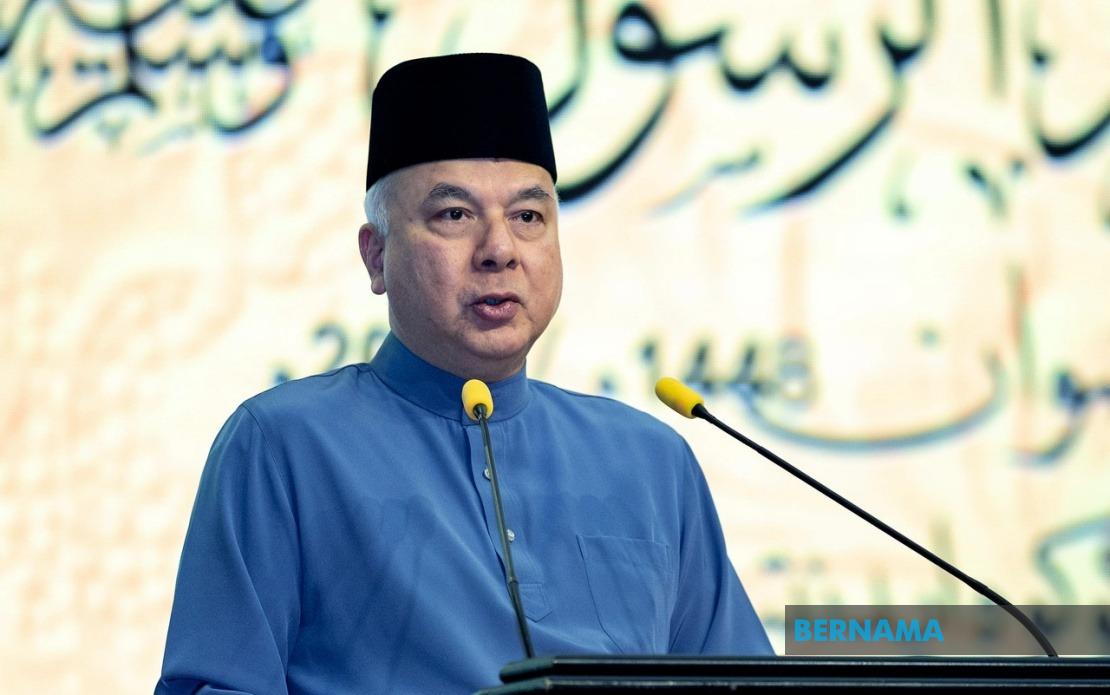
Sultan Nazrin Shah, the Sultan of Perak, has issued a significant call for Muslims to reinforce their collective identity and solidarity, cautioning that internal divisions pose an escalating threat to the strength and cohesion of the ummah. Speaking at the state-level Maulidur Rasul celebration in Ipoh on August 25, the Sultan identified political competition, sectarian differences within Islamic schools of thought, ethnic tensions, and individual self-interest as the primary drivers fracturing Muslim unity across the region. His remarks underscored a broader concern within Malaysian leadership that the pursuit of personal advantage—whether through influence, status, material wealth, or comfort—increasingly undermines the foundational Islamic principle of brotherhood that should bind Muslims together regardless of their background or beliefs.
The Sultan's intervention carries particular weight given the ongoing political fragmentation affecting Malaysia's Muslim-majority population. His emphasis on the destructive nature of unnecessary disputes and political rivalry suggests frustration with how contemporary Muslim leaders have allowed partisan competition to overshadow collective religious interests. Rather than simply lamenting these divisions, Sultan Nazrin outlined a constructive path forward by emphasising that Islamic organisations and religious leaders must actively deprioritise competitive contests for influence and instead channel their energies toward substantive initiatives that would genuinely strengthen Islamic civilisation. This reframing of the debate from blame to solutions reflects the pragmatic approach increasingly favoured by Malaysian royalty in addressing communal challenges.
Recognising that avoidance alone cannot address deep-rooted tensions, Sultan Nazrin highlighted numerous promising developments worthy of greater expansion and investment. He specifically commended efforts in Islamic education awareness, Islamic economics and finance, the halal industry, waqf endowments, digital dakwah, and the strengthening of family institutions as examples of positive-sum endeavours where Muslims can collaborate without sacrificing their sectarian or political positions. The breadth of these examples—spanning religious scholarship, commerce, technology, and social structures—demonstrates the Sultan's understanding that Muslim unity need not mean uniformity, but rather a shared commitment to advancing Islamic civilisation across multiple dimensions. These are areas where competitive advantage and collaborative benefit can coexist, potentially offering blueprints for how different Muslim factions might work together constructively.
Beyond internal Muslim divisions, Sultan Nazrin identified a parallel challenge emanating from outside pressures and global forces threatening to erode Islamic identity from within. The Sultan pointed specifically to the pervasive influence of social media, entertainment culture, popular consumer lifestyles, and modern cultural norms as vectors through which Islamic values and cultural identity face subtle but persistent erosion. This concern reflects anxieties shared across Southeast Asian Muslim societies where rapid urbanisation, digital connectivity, and globalisation have accelerated cultural change at unprecedented speed. Unlike earlier eras when cultural transmission was mediated through family and community institutions, contemporary Muslims encounter competing value systems through multiple channels simultaneously, often designed by algorithms and commercial interests to maximise engagement rather than promote spiritual development.
The Sultan's diagnosis of the identity crisis facing modern Muslims—that progress and modernisation risk displacing rather than complementing Islamic principles—touches on a fundamental tension within Muslim-majority societies. Malaysia, as a middle-income nation with sophisticated financial and technological sectors, exemplifies this challenge acutely. The country's economic development strategy depends significantly on integration into global markets and adoption of advanced technologies, yet such integration simultaneously exposes citizens to cultural influences that may challenge traditional religious frameworks. Sultan Nazrin's call for "wise approaches and strategies" that allow modernisation without sacrificing Islamic identity reflects the delicate balancing act required of policymakers and community leaders across the Muslim world.
The Sultan's emphasis on preventing modernisation from inducing "a loss of confidence in one's own identity" strikes at a psychological dimension of cultural change often overlooked in policy discussions. When societies modernise rapidly, younger generations may experience dissonance between the values transmitted through family and religious institutions and those promoted through commercial media and peer networks. This dissonance can trigger either a defensive retreat into fundamentalism or, conversely, a wholesale adoption of imported cultural templates. The Sultan appears to be advocating for a third path: confident engagement with modernity while maintaining intellectual and spiritual anchorage in Islamic principles—a stance that requires sophisticated educational and institutional support.
The attendance of Perak's Raja Permaisuri Tuanku Zara Salim, Raja Muda Raja Jaafar Raja Muda Musa, and Raja Di Hilir Raja Iskandar Dzurkarnain Sultan Idris Shah underscored the collective commitment of Perak's royal family to these concerns. The presence of Perak Menteri Besar Datuk Seri Saarani Mohamad, alongside his wife, signalled alignment between state religious leadership and the political executive on this agenda, though such alignment often masks underlying tensions between traditional and modernising impulses within government.
Sultan Nazrin's address arrives at a moment when Malaysia's Islamic institutions face mounting scrutiny regarding their effectiveness in addressing the spiritual and social needs of contemporary Muslims. While the government and religious authorities have invested substantially in halal certification, Islamic finance, and religious education, criticisms persist that these initiatives have not adequately countered either internal sectarian tensions or the attractiveness of alternative lifestyles and belief systems among younger Malaysians. The Sultan's implicit critique—that leaders have been too consumed with internal disputes to effectively champion positive Islamic initiatives—appears designed to redirect institutional energy toward measurable contributions to Muslim welfare and identity.
For Southeast Asian Muslims more broadly, the Sultan's remarks reflect broader regional anxieties about preserving Islamic identity and values amid rapid social change. Indonesia, with its sprawling archipelago and diverse Muslim populations, faces comparable challenges in maintaining doctrinal coherence and religious observance across an increasingly urbanised and digitally connected society. Singapore's Muslim minority must negotiate Islamic faith within a secular pluralist framework. Thailand's southern Muslim provinces struggle to maintain distinct Islamic identity within a Buddhist-majority nation. Sultan Nazrin's framing of these challenges as requiring constructive, solution-oriented responses rather than reactive defensiveness offers a model potentially applicable across these varied contexts.
The Sultan's invocation of the Maulidur Rasul celebration as the platform for these remarks proves symbolically significant. The celebration of the Prophet Muhammad's birth traditionally emphasises the revival of Islamic values and communal reflection. By using this occasion to address contemporary fractures within the Muslim community and their spiritual dimensions, Sultan Nazrin recontextualised a historical commemoration into an urgent call for present-day renewal. His message suggests that Muslims cannot afford the luxury of perpetual internal competition given the external pressures threatening collective identity and the immense collaborative potential remaining untapped across the ummah. Whether such exhortations from respected traditional authority figures can meaningfully shift the behaviour of competing political and religious factions remains uncertain, but they establish important normative benchmarks against which Muslim leaders' actions can be measured.

