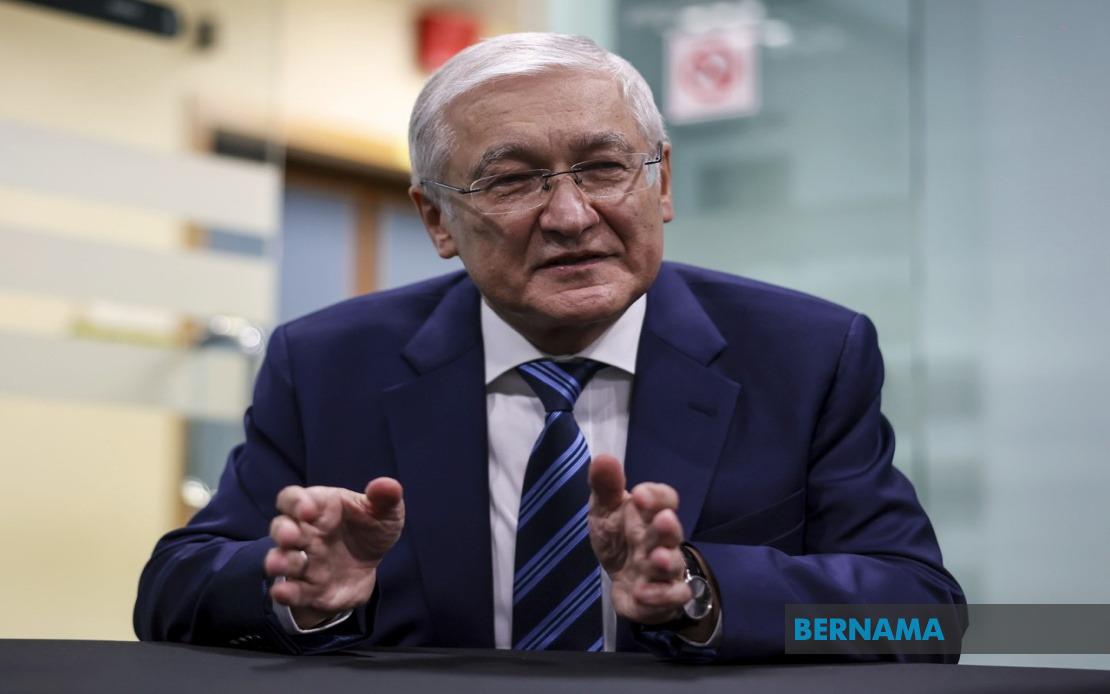
The personal engagement of Malaysia's King, Sultan Ibrahim, has fundamentally reshaped the relationship between Russia and Malaysia, transcending geographical boundaries and introducing a warmer dimension to bilateral diplomacy that surprised even seasoned observers. Russian Ambassador to Malaysia Naiyl Latypov highlighted this transformation in recent remarks, noting that His Majesty's approach has elevated the two nations' partnership into uncharted diplomatic territory. The ambassador's assessment suggests that what might ordinarily remain cordial state relations has been elevated through the singular influence of royal protocol and personal statecraft.
Historical precedent underscores the significance of Sultan Ibrahim's engagement with Moscow. When the King undertook a state visit to Russia in August last year, he became the first Malaysian monarch to do so since diplomatic ties were formally established in 1967. This groundbreaking visit broke a five-decade pattern and signalled a deliberate pivot toward deepening engagement with the Russian Federation. Rather than treating it as a singular diplomatic event, Sultan Ibrahim demonstrated his commitment by returning to Russia just months later in January for a special visit, during which he toured the Hermitage Museum in St Petersburg alongside President Vladimir Putin, an experience that symbolised cultural and political rapport at the highest level.
The King's subsequent appearance at Russia's Victory Day celebrations in May this year further consolidated the emerging partnership. For Russia, Victory Day carries profound national significance as the country commemorates those who died securing its independence and freedom. By gracing this occasion, Sultan Ibrahim paid tribute not merely as a visiting dignitary but as a statesman demonstrating respect for Russia's historical narrative. During that visit, the King held substantive discussions with President Putin that yielded concrete agreements, signalling that these exchanges transcend ceremonial courtesy and produce tangible outcomes. Ambassador Latypov expressed confidence that these accords would catalyse fresh momentum in bilateral cooperation.
A particularly noteworthy development emerged from Sultan Ibrahim's May visit: an invitation to President Putin to undertake a reciprocal state visit to Malaysia in 2027, strategically timed to coincide with the 60th anniversary of formal diplomatic relations. This gesture carries multilayered implications, positioning Malaysia as a nation confident enough to welcome a major world leader and suggesting that the relationship has matured sufficiently to warrant this level of reciprocal ceremonial engagement. The proposed visit would represent another watershed moment in bilateral history, cementing what many observers view as a fundamental reorientation of Malaysia's approach to Russia.
Beyond ceremonial diplomacy, Sultan Ibrahim's initiatives have yielded practical benefits with immediate relevance to Malaysian national interests, particularly in the critical domain of energy security. During Prime Minister Anwar Ibrahim's attendance at the ASEAN-Russia Commemorative Summit in Kazan in June, discussions focused substantially on resource cooperation. Russia committed to guaranteeing long-term supplies of petroleum, oil and gas to Malaysia—a commitment with substantial strategic weight given Malaysia's energy requirements and the volatility of global hydrocarbon markets. President Putin noted during this meeting that bilateral trade had expanded by 12.9 per cent in the previous year, characterising the figure as encouragingly robust and signalling Moscow's satisfaction with the commercial trajectory.
The bilateral trade relationship reflects Malaysia's strategic positioning as both an energy consumer and an industrial exporter. In 2025, Russia ranked as Malaysia's ninth-largest trading partner among European nations, with the total trade value reaching RM8.72 billion, equivalent to approximately US$2.04 billion. Malaysian exports to Russia are dominated by electrical and electronic products, alongside machinery, equipment, and components, alongside processed food items. Conversely, Malaysia's imports from Russia centre on petroleum products, minerals, and chemical-based materials. This complementary trade pattern suggests significant potential for expansion, particularly should political relations continue their current positive trajectory.
Additionally, Moscow has signalled receptiveness to visa policy liberalisation affecting Malaysia, with Russian news agency TASS reporting in early June that Russia aims to eliminate visa requirements for citizens of selected nations, with Malaysia among the prospective beneficiaries. Such measures, while seemingly procedural, facilitate deeper people-to-people connectivity and lower barriers to business, academic, and cultural exchange. This administrative evolution would demonstrate that the warming of official relations is translating into practical mechanisms that touch ordinary citizens and commercial actors.
Geostrategic analysts have observed that Sultan Ibrahim's brand of royal diplomacy carries dimensions beyond conventional state-to-state negotiation. Azmi Hassan, a senior fellow at the Nusantara Academy for Strategic Research, explained that royal engagement operates through alternative channels that bypass conventional diplomatic machinery, generating what he termed "windows of opportunity" inaccessible through standard protocols. The prestige associated with monarchical involvement confers gravitas and political capital that career diplomats, however accomplished, cannot independently mobilise. According to Hassan, Sultan Ibrahim's August visit catalysed cooperation extending beyond diplomatic formalities into the strategically vital realm of energy security, with Malaysia securing Russian assurances regarding sustained fuel supplies.
Looking toward the proposed 2027 summit, Hassan urged Malaysian policymakers to prioritise technology acquisition from Russia rather than limiting the agenda to traditional merchandise trade. Russia possesses technological and scientific capabilities comparable to Western nations but offers access to such resources at substantially reduced costs. This consideration carries particular weight for Malaysia, which seeks to enhance its technological capacity while managing expenditure constraints. Hassan's analysis suggests that the forthcoming Putin visit should catalyse discussions about acquiring advanced science and technology on favourable terms, potentially repositioning Malaysia's innovation landscape and industrial capacity.
The diplomatic relationship has evolved considerably since its formal inception on April 3, 1967, when Russia and Malaysia signed their initial trade agreement. Institutional development followed methodically: Russia established its Trade Office in Kuala Lumpur in November 1967 and subsequently opened its embassy in April 1968, while Malaysia reciprocated by establishing its embassy in Moscow in November 1968. For decades thereafter, relations remained correct but relatively subdued, characterised by standard diplomatic protocols rather than energetic engagement. The arrival of Sultan Ibrahim on the throne appears to have prompted recalibration of this approach, with the King treating Russia not as a distant or ideologically inconvenient partner but as a significant actor deserving serious bilateral engagement.
As Malaysia and Russia approach their 60th diplomatic anniversary, the trajectory established through Sultan Ibrahim's personal involvement suggests that the coming years will witness further institutional deepening, commercial expansion, and strategic coordination. The planned 2027 state visit by President Putin would represent culmination of this warming trend and potentially inauguration of an even more substantive partnership phase. For Malaysian policymakers and business communities, the opening created by royal diplomacy presents concrete opportunities to secure energy supplies, access technology, and diversify international partnerships during a period of significant geopolitical recalibration affecting Southeast Asia.

