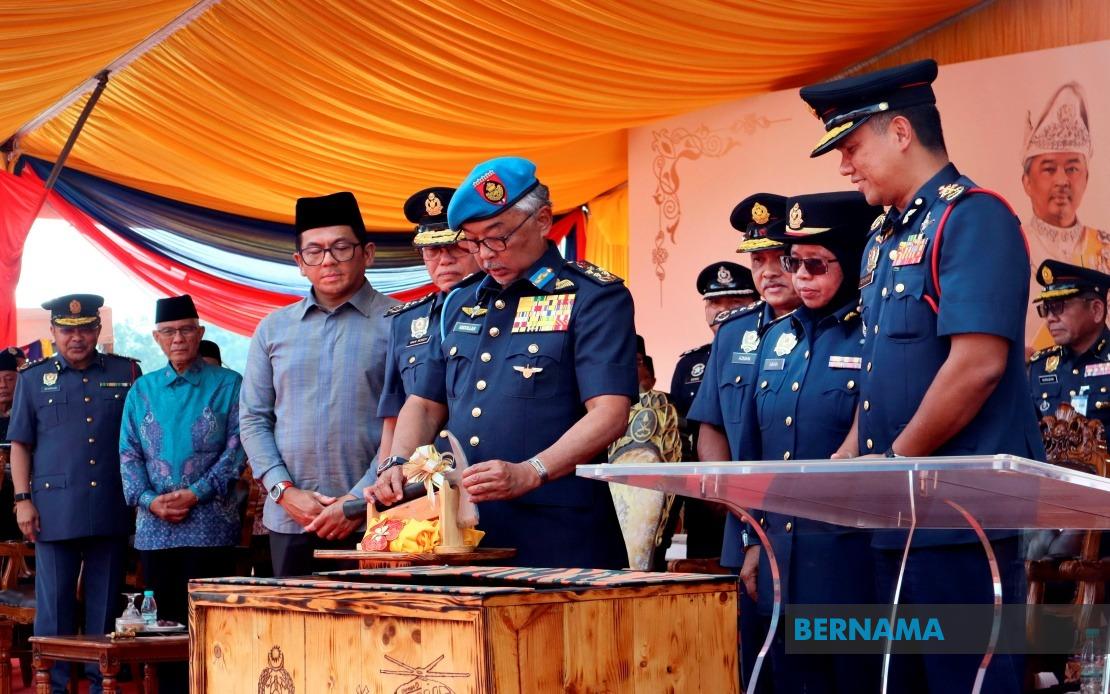
The Sultan of Pahang, Al-Sultan Abdullah Ri'ayatuddin Al-Mustafa Billah Shah, has publicly commended both the federal and state governments for their substantial financial commitments to development initiatives that directly benefit Pahang's residents. Speaking at the inauguration of the Sungai Lembing Fire and Rescue Station in Kuantan on July 2, the Sultan highlighted the significance of infrastructure spending, particularly in addressing the region's chronic flooding challenges that impact thousands of families annually.
Flood mitigation emerged as a central theme in the Sultan's remarks, reflecting the urgency of managing natural disasters in a state frequently affected by seasonal monsoon downpours. Sungai Lembing, a township in Kuantan district, occupies a strategic position in Pahang's flood warning system, often experiencing inundation before other areas. The Sultan emphasized that investment in protective infrastructure at this location serves dual purposes: safeguarding residents directly while simultaneously functioning as an early indicator for broader flooding risks across Kuantan and surrounding districts. This interconnected approach to disaster management underscores how localized infrastructure projects generate ripple benefits across larger geographic areas.
The monarch's endorsement carries significant political weight in Malaysia's constitutional framework, where rulers maintain formal ceremonial authority while wielding considerable informal influence within their respective states. By publicly acknowledging government spending on infrastructure, the Sultan effectively validated the development priorities established by both Putrajaya and the Pahang state administration led by Menteri Besar Datuk Seri Wan Rosdy Wan Ismail. The presence of senior federal officials, including Deputy Housing and Local Government Minister Datuk Aiman Athirah Sabu and Deputy Economy Minister Datuk Mohd Shahar Abdullah, underscored the national significance assigned to Pahang's infrastructure agenda.
Beyond flood management, the Sultan issued a direct directive to deepen waterways adjacent to populated zones, a practical measure intended to expand river channels and prevent overflow during intense rainfall events. This instruction reflects contemporary understanding of hydrological engineering, wherein channel capacity directly correlates with flood risk reduction. The timing of this directive suggests the Sultan views existing mitigation measures as potentially insufficient, particularly given Pahang's exposure to both annual monsoon patterns and increasingly erratic weather events attributed to climate change. Malaysian engineers and urban planners have increasingly recognized that traditional flood barriers require complementary measures such as river dredging and channel enlargement to manage extreme precipitation events.
The Sultan's remarks extended beyond infrastructure to encompass recognition of emergency services personnel, particularly firefighters and rescue workers who operate across Pahang. The monarch noted his daily monitoring of news concerning Fire and Rescue operations, suggesting close personal engagement with disaster response activities. This attention reflects a broader pattern wherein Malaysia's royal institution maintains direct involvement in community welfare and disaster management, distinguishing the constitutional monarchy's practical role from purely ceremonial functions observed in some other democracies.
An important proposal emerged regarding volunteer fire services in Kampung Bantal, Ulu Tembeling within Jerantut district. The Sultan identified geographic isolation as a critical vulnerability, noting that remote locations face response delays during emergencies that can prove life-threatening. Establishing community-based volunteer firefighting units addresses this gap by distributing emergency response capacity beyond major urban centers where professional services concentrate. This proposal aligns with regional best practices in countries like Indonesia and the Philippines, where volunteer brigades supplement government emergency services in rural and remote areas. For Malaysia, expansion of such volunteer programs could enhance overall disaster resilience while reducing pressure on professional services stretched across geographically dispersed populations.
The Sultan's repeated visits to disaster scenes and fire stations demonstrate a hands-on approach to state-level governance and public engagement uncommon among constitutional monarchs in contemporary Southeast Asia. These visits serve multiple functions: they validate government emergency personnel, provide physical comfort to affected residents, and generate media coverage emphasizing state-level commitment to public safety. For Malaysian readers familiar with periodic flooding in states like Selangor, Johor, and Perak, the Pahang Sultan's proactive stance offers a model for how traditional authority figures can complement modern administrative structures in addressing collective vulnerabilities.
The infrastructure investments mentioned by the Sultan reflect broader patterns in Malaysian development spending, where transportation, utilities, and disaster mitigation compete for limited resources. Pahang, as a state encompassing substantial rural and mountainous terrain alongside urban centers like Kuantan, faces particular complexity in distributing development spending across dispersed populations with varying infrastructure needs. The federal government's allocation of resources to state-level projects typically requires negotiation between Putrajaya's planning authorities and state administrations, meaning royal endorsement likely indicates both governments perceive Pahang's development agenda as aligned with broader national priorities.
For Southeast Asian policymakers observing Malaysian governance patterns, the Sultan's public commendation of infrastructure spending offers insights into how traditional institutions interact with modern state apparatuses. Unlike some regional democracies where ceremonial leaders maintain strictly limited roles, Malaysia's sultans exercise substantive influence over state policy priorities through both formal constitutional powers and informal consultative relationships with elected officials. The Pahang Sultan's direction to deepen rivers demonstrates this practical authority, issuing instructions that executive branches subsequently implement.
The Fire and Rescue Station opening itself represents visible evidence of the infrastructure commitments praised by the Sultan, providing a concrete focal point for discussing broader development goals. Such facilities require significant capital investment and ongoing operational funding, making them important metrics for assessing government prioritization of emergency preparedness. In Pahang's context, positioning new rescue stations strategically throughout the state suggests deliberate planning to reduce response times and improve disaster outcomes across diverse terrain and population distributions.
Looking forward, the Sultan's proposals regarding river deepening and volunteer fire services outline a development agenda extending beyond the event itself. These initiatives, if implemented comprehensively, could substantially improve Pahang's resilience to natural disasters and reduce the frequency and severity of flooding impacts. For Malaysian residents in other flood-prone states, the Pahang model offers a potential template combining infrastructure investment, emergency service expansion, and administrative directives aimed at systemic risk reduction rather than reactive disaster management.

