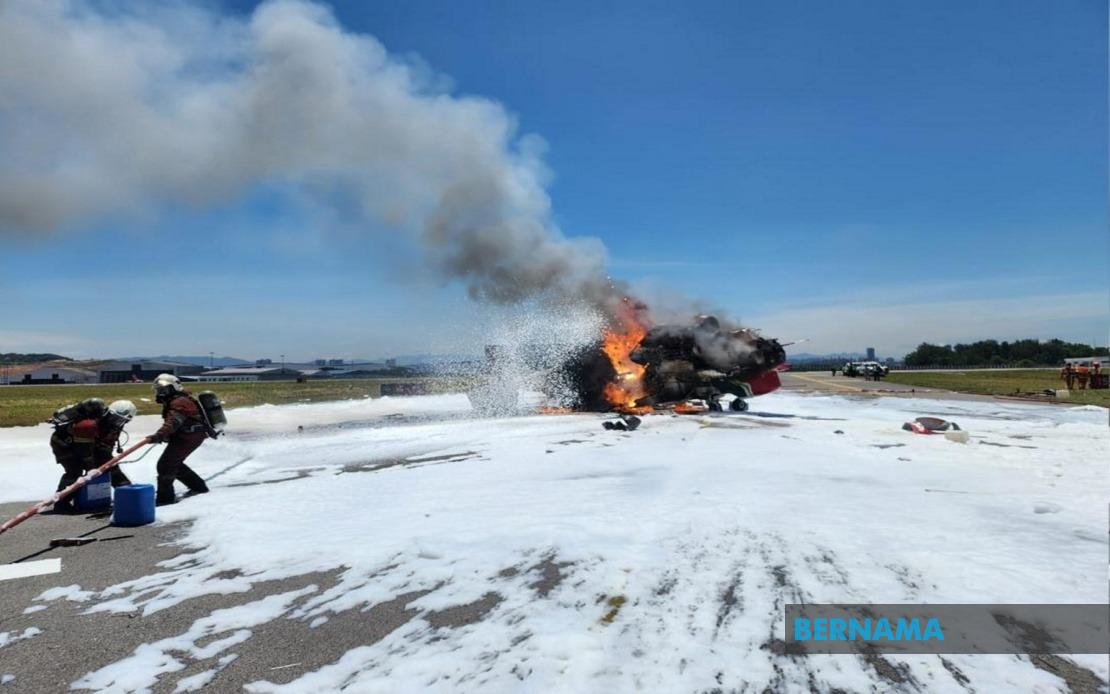
Sultan Abdul Aziz Shah Airport in Subang has restored normal runway operations following an explosive incident involving a helicopter that erupted in flames during routine maintenance work on Thursday afternoon. The Malaysian Civil Aviation Authority confirmed the runway reopened for traffic at 2.57 pm, roughly two and a half hours after the incident forced emergency closure of the airport's main operational corridor.
The explosion centered on a Kamov KaV-32S helicopter registered to a Ukrainian-based company, which ignited while undergoing an engine run-up test at Taxiway Victor. The mishap occurred at 12.28 pm as part of scheduled maintenance activities. Four Ukrainian nationals—comprising the aircraft's pilot, co-pilot, and two additional crew members—were involved in the ground-based testing procedure when the fire erupted. One crew member sustained minor injuries from debris ejected during the blast, though the extent of damage to the aircraft remains under assessment.
According to Capt Datuk Norazman Mahmud, chief executive of CAAM, the incident triggered immediate safety protocols that necessitated suspension of all departures and arrivals. The authority implemented a precautionary closure to ensure no additional aircraft were exposed to potential hazards while emergency responders attended to the damaged helicopter and assessed runway conditions. This decisive action, while operationally disruptive, reflected standard aviation safety procedures designed to protect passenger and crew welfare.
The temporary closure created significant ripple effects across the airport's flight schedule. Eight inbound aircraft destined for Subang were redirected to alternative airports across Malaysia's aviation network, while three scheduled departures suffered delays as the situation developed. Airlines operating from the facility immediately communicated revised itineraries to affected passengers, though the relatively brief two-and-a-half-hour closure limited the overall disruption to the day's operations.
Airport authorities worked swiftly to restore normal operations once preliminary investigations confirmed the runway remained suitable for flight operations. Flight information display systems throughout the terminal were updated with revised schedules reflecting the recovery timeline, allowing ground staff and airlines to resume coordinated operations. By late afternoon, passenger flows had normalised, though some travellers continued dealing with minor delays resulting from the earlier disruptions.
The incident underscores the rigorous maintenance regimes that aviation authorities require for helicopter operations across Malaysia. Engine run-up testing represents a critical component of scheduled maintenance, designed to verify mechanical integrity before aircraft return to service. However, such testing inevitably carries inherent risks, which is why these procedures are conducted in isolated ground locations removed from regular passenger traffic—a safety principle that proved effective in containing the incident's consequences.
The presence of foreign crew conducting maintenance at Sultan Abdul Aziz Shah Airport reflects the international nature of Malaysian aviation operations. Subang serves not only as a major civilian hub but also accommodates specialised aircraft operations, including helicopter maintenance and testing activities. This diversity of operations requires sophisticated coordination among regulatory bodies, airport management, and individual operators to maintain both safety and efficiency.
CAAM's transparent communication throughout the incident—providing real-time updates on runway status and passenger advisory information—demonstrated the authority's commitment to keeping stakeholders informed during operational emergencies. The relatively rapid restoration of normal activities suggests effective emergency response protocols and coordination between airport operators and civil aviation officials.
For Malaysian aviation stakeholders and the flying public, the incident highlights the resilience of safety systems embedded within the country's aviation infrastructure. While helicopter incidents attract attention, the swift response and minimal passenger impact reflect decades of regulatory refinement and operational discipline within Malaysia's civil aviation sector. The quick recovery to normal operations, coupled with injury containment, indicates that established safety procedures functioned as intended.
Moving forward, authorities will likely conduct a comprehensive investigation into the cause of the engine fire, examining whether mechanical failure, maintenance procedure deviations, or other factors contributed to the explosion. Such investigations are standard practice in international aviation and often yield valuable insights that enhance broader safety protocols across the industry. The findings may inform updated guidance for similar maintenance activities conducted elsewhere in Malaysia's aviation system.

