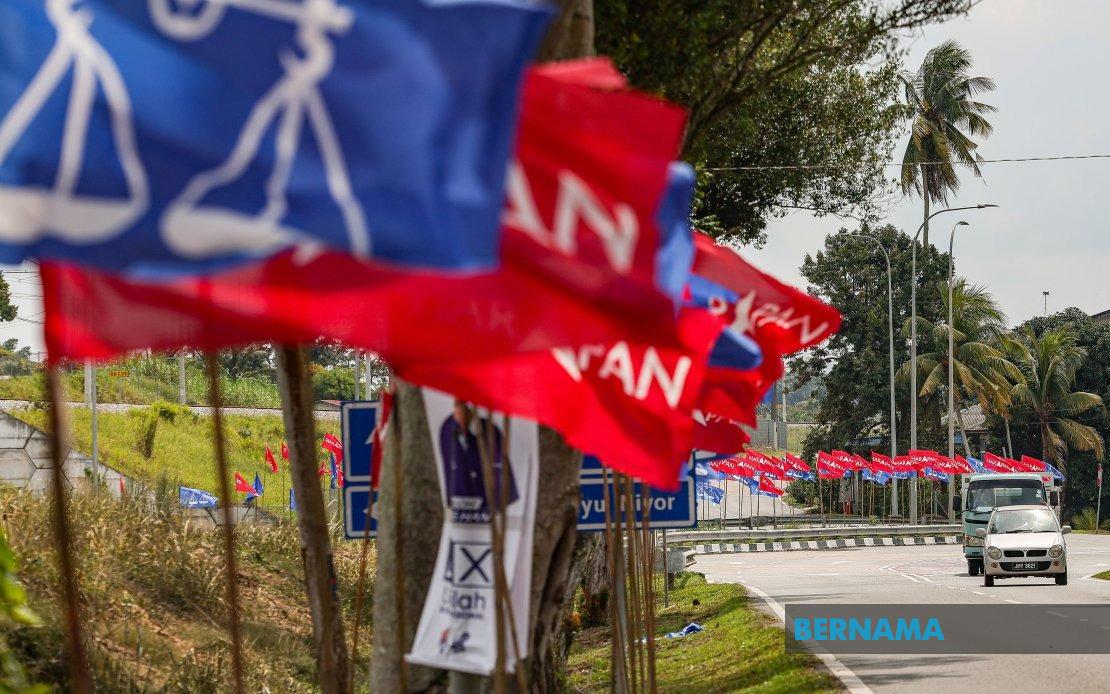
Suhaizan Kaiat, Pakatan Harapan's candidate in the Larkin constituency, believes he has a genuine opportunity to wrest control of the seat from Barisan Nasional in the upcoming 16th Johor state election, provided voter participation reaches levels comparable to recent general elections. The Pulai Member of Parliament has grounded his optimism in concrete electoral data, pointing to patterns that emerged during the 14th General Election as evidence that the constituency is not locked into perpetual BN control under conditions of strong civic engagement.
The foundation of Suhaizan's confidence rests on a critical distinction between state and federal elections in terms of voter behaviour in Larkin. During GE14, the constituency delivered its verdict decisively in favour of Datuk Mohd Izhar Ahmad, who contested under the Pakatan Harapan-Bersatu alliance banner, demonstrating that local voters are willing to back opposition candidates when circumstances align. By contrast, the 2022 Johor state election produced a markedly different outcome, with incumbent Mohd Hairi Mad Shah of BN securing victory with a majority of 6,178 votes. Suhaizan attributes this reversal not to an ideological shift among constituents but to the depressive effect of the COVID-19 pandemic on voting turnout, which languished at merely 51 per cent during that contest.
This interpretation of electoral history carries significant implications for how opposition parties approach state-level competition in Malaysia. The argument suggests that lower turnout disproportionately benefits the ruling coalition, which enjoys organisational advantages and can mobilise its support base more effectively even with reduced overall participation. Conversely, higher turnout tends to advantage opposition coalitions by bringing into the voting booth larger numbers of younger, urban, and more politically fluid voters. For Larkin specifically, Suhaizan contends that the 2022 result should not serve as a reliable predictor of this election's outcome, particularly as the electoral context has shifted substantially since then.
Beyond turnout dynamics, Suhaizan is actively pursuing a second strategic avenue: capitalising on the fractious relationship between Bersatu and PAS following recent political recalibrations at the national level. The Pakatan Harapan camp is banking on the notion that voters who previously supported Bersatu in Larkin may redirect their support toward PH candidates this time, especially given the alliance's historical collaboration prior to political realignments. Bersatu's absence from the contest—the party is not fielding a candidate in Larkin—creates an opening that Suhaizan hopes to exploit by absorbing supporters who remain dissatisfied with the Bersatu-PAS trajectory or seek alternatives to Barisan Nasional's governance model.
The Larkin constituency contest itself features a three-way race rather than the typical two-cornered fight. Competing alongside Suhaizan and the incumbent Mohd Hairi are Norsinah Abu, representing Bersama, a newer political formation in Malaysia's fragmented landscape. This configuration introduces additional uncertainty into the calculation, as votes may fragment among three significant contenders rather than consolidating along traditional government-opposition lines. Such three-way contests can produce counterintuitive outcomes, where a plurality victory becomes possible with a diminished share of the overall vote, fundamentally altering the dynamics that apply in simpler electoral matchups.
For Malaysian voters following the Johor contest, this election carries implications beyond a single state. Johor remains a crucial political battleground, and the outcome will shape perceptions of momentum heading into potential federal elections. The state encompasses 56 contested seats, with 172 candidates competing in total, making it a substantial electoral exercise that reflects broader sentiments across the western side of peninsular Malaysia. The July 11 polling date, preceded by early voting on July 7, provides constituents with opportunities to participate under varying circumstances.
Suhaizan's emphasis on voter turnout touches on a persistent challenge facing Malaysian democracy: participation rates and their interaction with electoral outcomes. When turnout dips below 55 per cent, as it did in 2022, the electorate becomes skewed toward older, more traditionally rooted voters whose preferences may differ from the broader population. This demographic weighting can produce results that do not necessarily reflect the preferences of the majority, particularly in constituencies with significant younger populations or transient workforces who find voting logistically challenging.
The strategic framing by the PH candidate also reveals how opposition parties attempt to construct narratives around electoral setbacks. Rather than accepting the 2022 result as a genuine verdict, Suhaizan's interpretation attributes it to circumstantial factors beyond the control of candidates and campaigns. This approach allows parties to maintain morale and supporter commitment despite electoral losses, by positioning defeats as contingent rather than definitive. Whether such reasoning resonates with voters in Larkin will become apparent when polling concludes.
The broader context of Bersatu's trajectory in Malaysian politics adds another layer to Suhaizan's calculations. The party's evolution from coalition partner to PAS ally to its current uncertain standing creates openings for opposition parties willing to make appeals to formerly aligned voters. Larkin represents one of many constituencies where such realignments might manifest in voting behaviour. Suhaizan's confidence that Bersatu voters might swing toward PH reflects a tactical assessment of how shifting elite coalitions at the national level eventually filter down into state-level electoral competition.
Ultimately, Suhaizan's optimism hinges entirely on a conditional outcome: improved turnout. Should Johor voters participate at levels comparable to federal elections, his analysis suggests Larkin becomes genuinely competitive. Should turnout remain suppressed or decline further, BN's structural advantages become more pronounced. This conditional framing acknowledges the real constraints facing opposition candidates while avoiding the fatalism that sometimes accompanies electoral disadvantage. For residents of Larkin, the equation is straightforward—their own voting decision, combined with those of their neighbours, will determine whether Suhaizan's confidence in PH's prospects translates into actual representation come July 11.

