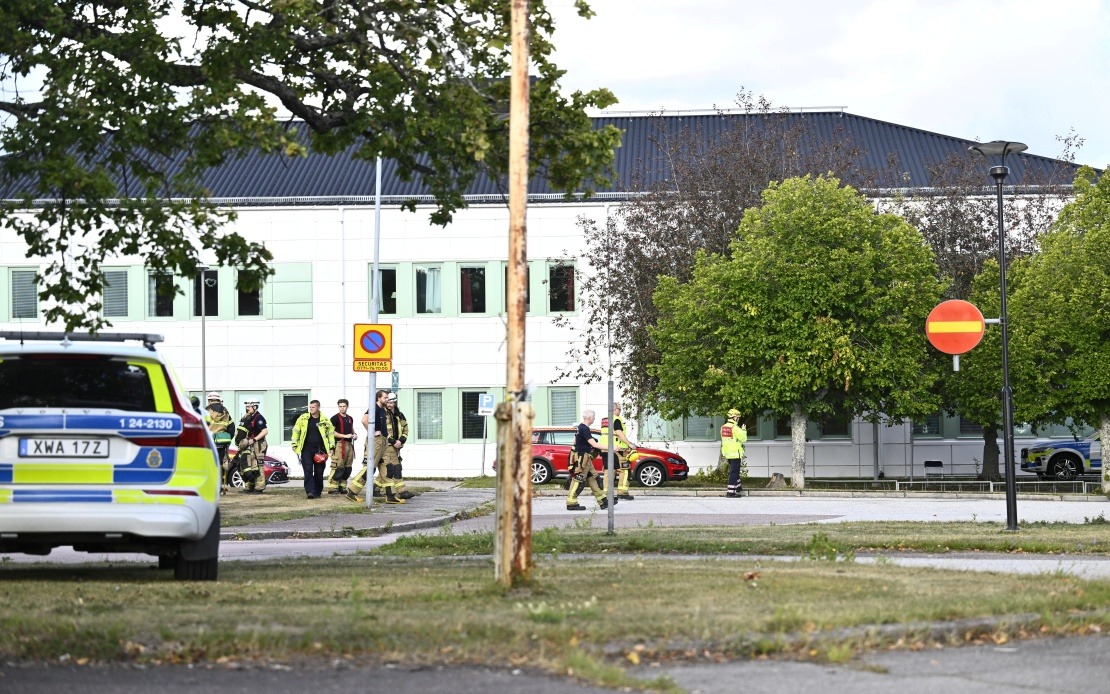
A violent sword attack at a school in central Sweden has resulted in one fatality and multiple injuries, prompting an immediate security response across the town. The incident occurred at Brinell School in Fagersta when an armed individual entered the premises and carried out the assault. Emergency services and police were alerted at 2:06 pm local time on Wednesday, arriving quickly to manage the crisis and secure the school grounds.
Among those injured in the attack were two teenage boys who sustained serious wounds but remain in a serious yet stable condition under medical care. A third person received minor injuries during the incident. The severity of the attack underscores the vulnerability of educational institutions to acts of violence, raising concerns about school safety protocols across Scandinavian nations and beyond.
Authorities have identified the suspect as an 18-year-old individual with ties to the Fagersta community. According to Swedish public broadcaster SVT, the attacker is a former student of Brinell School, suggesting he may have harboured grievances linked to his previous attendance at the institution. Police have established connections between the suspect and two separate addresses within Fagersta, and investigations are ongoing to determine the motive behind the assault.
The immediate response to the attack saw comprehensive security measures implemented throughout Fagersta. Municipal authorities placed seven separate schools and community facilities on lockdown, including Olympen, Fagerstahallen, Risbroskolan, Skogsglantan, Bjorksta, Prastkragen, and Norrbybacken. These precautions reflected the authorities' concern that additional threats might emerge and the need to protect vulnerable populations in educational and recreational settings.
Swedish Justice Minister Gunnar Strommer issued a statement confirming that the government is maintaining close coordination with law enforcement as the investigation unfolds. He emphasised that police officers are working with intensity to understand the circumstances surrounding the attack and to prevent any further incidents. The minister noted that the government remains in continuous contact with police leadership and is actively monitoring how the situation develops.
This attack represents a troubling incident within Sweden's relatively safe social context, where violent crime has historically remained lower than in many Western nations. However, Sweden has experienced periodic incidents involving weapons violence, particularly among younger individuals, reflecting broader societal challenges that extend across Northern Europe. School safety has become an increasingly important policy concern for Swedish officials as they seek to balance open educational environments with protective measures.
The use of swords or bladed weapons in attacks differs from the firearm-related incidents more commonly reported in other Western democracies. Access to military-style weapons is heavily restricted in Sweden, yet melee weapons present their own risks. The choice of weapon in this instance may have influenced both the nature of injuries sustained and the total casualties, raising questions about how effectively current Swedish regulations address all forms of weapon-related violence.
For Malaysian observers, this incident underscores how violence in educational settings remains a global concern transcending geographic boundaries and economic development levels. While Malaysian schools benefit from structured security measures and clear protocols for managing emergencies, the Fagersta incident serves as a reminder of the importance of maintaining vigilance and regularly updating safety procedures. The rapid response demonstrated by Swedish emergency services offers valuable lessons for institutional crisis management.
The arrest of a former student raises important questions about the psychological pathways leading young individuals toward violent actions, a topic of considerable interest to educators, psychologists, and policymakers across Southeast Asia. Understanding the social, emotional, and environmental factors that contribute to such incidents remains essential for prevention efforts. Swedish authorities will likely examine whether warning signs were missed and what interventions might have been available during the suspect's school years.
Community trauma following such an incident typically extends well beyond the immediate victims and their families. Students, staff, and residents of Fagersta will require psychological support and time to process the violence that occurred within their town. The psychological impact on young people who witness or experience such attacks can be profound and long-lasting, necessitating comprehensive mental health resources in the aftermath.
As investigations continue, Swedish law enforcement agencies will work to establish precise motives and circumstances surrounding the attack. The information gathered will likely inform policy discussions regarding early intervention programmes, mental health screening in schools, and enhanced security protocols. International cooperation among Nordic and European police forces may also be relevant if investigators identify any transnational elements to the case.
The incident serves as a sobering reminder that despite high standards of living, robust social support systems, and generally effective governance structures, no nation is entirely immune to acts of violence perpetrated by individuals experiencing personal crises or harbouring resentment. Moving forward, the focus will necessarily shift toward understanding how to identify and support vulnerable young people before destructive impulses translate into catastrophic actions.

