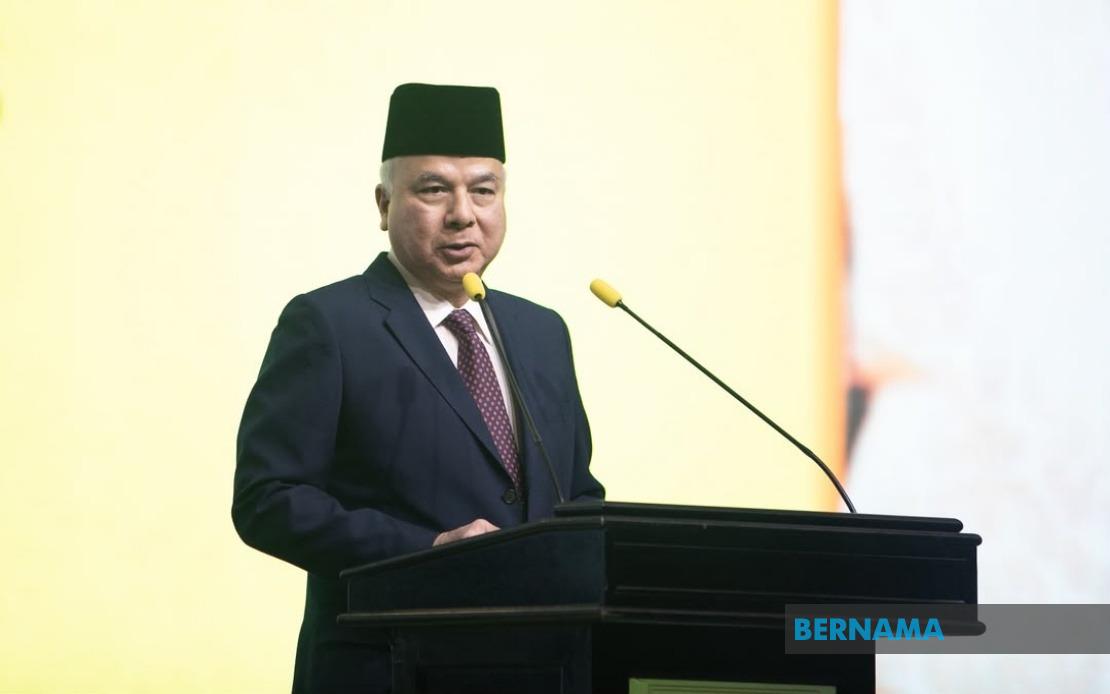
Speaking at the 8th World Conference on Islamic Thought and Civilisation in Ipoh on July 21, the Sultan of Perak, Sultan Nazrin Shah, articulated a foundational principle of statecraft: that material abundance and human talent prove insufficient without the scaffolding of robust institutions and ethical governance. His remarks struck at the heart of a challenge facing many developing nations, where natural wealth and demographic advantages have failed to translate into broad-based prosperity, precisely because the institutional architecture needed to direct such advantages toward public benefit has remained fragile or compromised by factional interests.
The Sultan's framework for good governance rests on several interconnected pillars. Institutional resilience stands paramount—organisations and systems must possess the durability to function effectively regardless of which individual occupies the highest office. This principle directly challenges governance models where power concentrates in personalities rather than structures, a pattern familiar throughout Southeast Asia where transitions of leadership have sometimes triggered institutional paralysis or reversal of policy direction. When institutions are sufficiently independent and well-designed, they provide continuity and constraint on executive overreach, preventing the kind of institutional decay that undermines investor confidence and citizen trust alike.
Transparency in public finance represents the second essential element Sultan Nazrin identified. The manner in which governments collect and deploy taxpayer resources communicates clearly whose interests they genuinely serve. When budget allocations favour connected elites while essential services for ordinary citizens remain chronically underfunded, the social contract erodes. Malaysia, as a middle-income nation aspiring toward high-income status, must ensure that public investment decisions can withstand scrutiny and demonstrate tangible benefit to citizens across income levels. The principle that a budget constitutes a moral document as much as a financial instrument resonates particularly in regional contexts where suspicions of financial mismanagement have historically damaged public confidence.
The third pillar concerns the impartial application of law and accountability mechanisms that function without regard to status or connections. Sultan Nazrin emphasised that genuine rule of law extends protection equally to the powerful and the vulnerable, creating the legal certainty necessary for commerce and social stability. In Southeast Asia, where judicial independence remains contested in several jurisdictions and perceptions of selective enforcement persist, this principle takes on heightened importance. When courts prove vulnerable to political pressure or when high-ranking officials operate with perceived immunity from accountability, the entire edifice of governance suffers credibility loss.
Political stability, the Sultan observed, does not emerge from the absence of disagreement but from channelling discord through legitimate institutional mechanisms rather than extra-constitutional means. This insight proves particularly valuable for understanding regional dynamics where political intensity sometimes manifests in street mobilisation or institutional confrontation rather than peaceful electoral competition. The most stable democracies worldwide are often those that facilitate vigorous debate within established constitutional frameworks, ensuring that losing coalitions accept outcomes and retain meaningful voice within opposition structures. Building such a culture requires deliberate cultivation of civility and mutual respect among political competitors.
The Sultan's emphasis on political culture addresses a vulnerability affecting several Southeast Asian democracies, where opposition figures sometimes face harassment or legal jeopardy, and governing coalitions treat dissent as delegitimacy rather than healthy democratic function. When electoral processes lack perceived fairness, when courts appear influenced by politics, or when public office seems available to the highest bidder, citizens increasingly disengage from formal political participation, undermining democratic institutions precisely when they require broad legitimacy. The vulnerable and marginalised suffer most acutely from such institutional erosion, losing access to redress mechanisms and policy responsiveness.
On the connection between governance quality and development outcomes, Sultan Nazrin articulated that institutional excellence represents not merely a political aspiration but an economic necessity. A civil service genuinely committed to serving all citizens impartially, regardless of ethnicity, religion, or party affiliation, embodies national unity in concrete operational form. Malaysia's multiethnic composition makes this principle particularly salient—when public institutions consistently demonstrate that merit and citizenship rather than communal identity determine access to services and opportunity, confidence in the state strengthens across all communities. Leaders who demonstrate humility, listen before imposing decisions, and recognise their authority as temporary stewardship rather than personal possession generate deeper loyalty than rhetoric alone can achieve.
The Sultan's comments on development and international cooperation acknowledge that contemporary prosperity requires deliberate engagement with global systems while maintaining domestic autonomy. Nations that embrace open trade whilst building resilient, diversified economies outperform those retreating into protectionism or depending excessively on single sectors. For Malaysia and peer economies in Southeast Asia, this framework validates the regional strategy of integrating into global supply chains whilst developing local champions and deepening regional cooperation through mechanisms like ASEAN and the Regional Comprehensive Economic Partnership.
However, the Sultan cautioned that cooperation must not become disguised dependency, and openness must not compromise national capacity for independent decision-making. This distinction matters significantly for smaller economies negotiating with larger powers or multilateral institutions. The principle of balanced engagement—welcoming foreign investment and expertise while deliberately building domestic capabilities—describes the path followed by successful late-developing nations that avoided the trap of remaining perpetually subordinate in global economic hierarchies.
The Sultan identified Islamic finance as a particularly underutilised mechanism for South-South cooperation and development financing. Beyond mere compliance with prohibitions on interest, Islamic finance embodies a distinctive philosophical approach emphasising risk-sharing, asset-backing, and equitable participation in economic returns. Malaysia has established itself as a global centre for Islamic finance, from sukuk markets to takaful insurance to Syariah-compliant fund management. If Islamic finance principles were deployed seriously to support infrastructure development across the Organisation of Islamic Cooperation, small and medium enterprise financing, and long-term patient capital for addressing development challenges from water access to renewable energy, the instrument could become transformative for South-South cooperation.
The Sultan's address comes at a moment when several Southeast Asian nations face institutional pressures from political turbulence, economic competition from major powers, and demographic transitions. His framework suggests that sustainable competitive advantage derives not primarily from geographic position or natural resources but from the quality of institutions, the integrity of leadership, and the health of political culture. Nations demonstrating institutional strength, genuine rule of law, and governments accountable to citizens rather than narrow interests will prove most resilient in navigating complex regional and global dynamics, attracting investment, retaining talent, and maintaining social cohesion through inevitable periods of economic or political strain.

