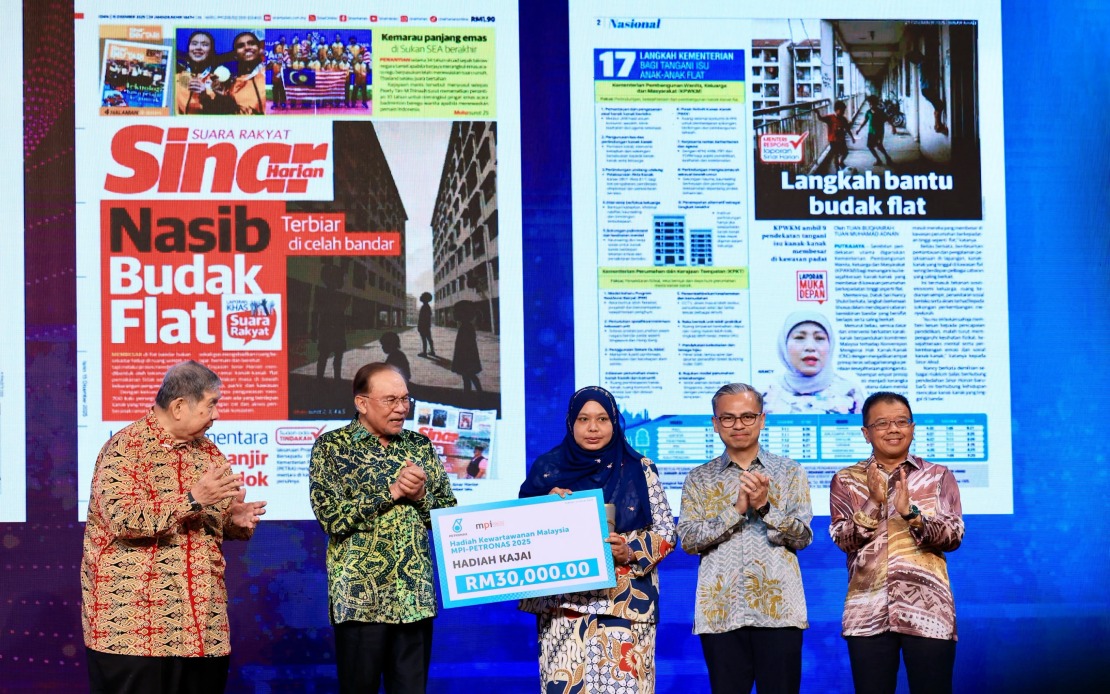
Malaysia's Communications Minister Datuk Seri Fahmi Fadzil has underscored the indispensable role that ethical, independent and responsible media outlets play in fortifying democratic institutions and fostering an electorate equipped with accurate information. Speaking at a high-profile industry gathering, Fahmi highlighted how the contemporary information landscape has amplified both the importance and the challenges facing journalism in the digital age.
The minister's remarks come at a moment when democracies across Southeast Asia are grappling with unprecedented volumes of content distributed through multiple platforms, making the distinction between credible reporting and deliberate falsehood increasingly difficult for ordinary citizens to discern. Fahmi acknowledged this complexity, noting that the media's responsibility has grown correspondingly more demanding as misinformation and fake news proliferate with alarming speed. His comments reflect growing concerns within government circles about how unverified claims and doctored content can undermine public confidence in institutions and distort electoral processes.
Fahmi accompanied Prime Minister Datuk Seri Anwar Ibrahim to the Malaysian Journalists' Night 2026, a marquee annual event organised by the Malaysian Press Institute that celebrates journalism excellence and facilitates dialogue between the media profession and other sectors of society. The gathering served as the venue for presenting the MPI-PETRONAS Malaysian Journalism Awards 2025, recognising outstanding contributions and achievements within the field. By attending and publicly endorsing such occasions, government leadership signals its commitment to professional journalism standards and the broader democratic function that media organisations serve.
The event attracted approximately 1,000 attendees representing a cross-section of Malaysia's media landscape and institutional stakeholders. Beyond editors and journalists, the assembly included officials from federal and state ministries, representatives of major corporations, and leaders from universities and other media organisations. This diverse composition underscores how journalism's health is considered a matter of collective concern rather than the sole responsibility of newsrooms. The presence of such varied constituencies indicates that media integrity is increasingly recognised as essential infrastructure for economic, social and political stability.
Fahmi's explicit gratitude towards media practitioners for maintaining professional standards carries particular weight given the sometimes adversarial relationship between governments and press organisations in the region. By publicly thanking journalists for their commitment to truthfulness and integrity, the minister positioned these qualities not as constraints on reporting but as fundamental to serving national interests. This framing is significant because it suggests the government recognises that a free press ultimately strengthens rather than weakens state institutions by ensuring accountability and informed public participation.
The Malaysian Journalists' Night has evolved into a significant fixture within the country's media calendar, serving multiple functions simultaneously. Beyond the ceremonial recognition of excellence, the event facilitates networking and relationship-building between journalists and other power brokers. Such occasions can reduce the adversarial distance between media and government, fostering dialogue that may improve mutual understanding even where substantive disagreements persist on specific issues or editorial choices.
The timing of these remarks assumes additional relevance within Southeast Asia's broader democratic context. Several nations in the region have experienced deteriorating press freedom indices and increased pressure on independent journalism in recent years. Malaysia's explicit reaffirmation of media independence's democratic value serves as a counterweight to such trends and may influence how younger countries approach regulation of information flows. The emphasis on ethical practice rather than heavy-handed government control represents a notably different approach to managing information ecosystems.
The MPI-PETRONAS awards mechanism itself deserves scrutiny as an indicator of how media excellence is defined and incentivised within Malaysia. By honouring particular stories and journalists, these awards shape professional standards and signal which kinds of reporting the industry considers exemplary. The partnership between the Malaysian Press Institute and PETRONAS, a major government-linked company, also illustrates how private sector entities increasingly view support for journalism quality as aligned with their corporate interests and social responsibility mandates.
Fahmi's call for continued upholding of integrity and truth-telling is partly responsive to documented instances where Malaysian media outlets have published unverified claims or engaged in sensationalism. The challenge of maintaining professional standards becomes more acute as digital transformation pressures news organisations economically, creating incentives for engagement-driving content over careful verification. The minister's emphasis on these virtues suggests government is monitoring whether journalism lives up to its stated ethical codes.
The communications ministry's engagement with these issues reflects its portfolio responsibility for overseeing media regulation and information policy. Fahmi's public remarks function as both appreciation and gentle reminder that the government expects media to exercise their freedom responsibly. This balancing act—supporting press freedom while maintaining expectations around accuracy and social responsibility—represents the ongoing negotiation between state and media that characterises functional democracies.
Looking forward, the sustainability of ethical journalism in Malaysia depends partly on economic models that can support quality reporting without compromising editorial independence. As advertising revenues decline and reader willingness to pay for content remains limited, media organisations face pressure to diversify funding sources. Ensuring such funding does not compromise editorial judgement remains a critical challenge that both industry and government must address collaboratively.
The gathering also signalled the importance of intergenerational transmission of journalistic values. As digital platforms create space for anyone to publish content, professional media's distinction increasingly rests on demonstrated commitment to verification, fairness and public service rather than mere access to distribution channels. Awards ceremonies and industry events help communicate and reinforce these differentiating values to emerging journalists entering the profession.

