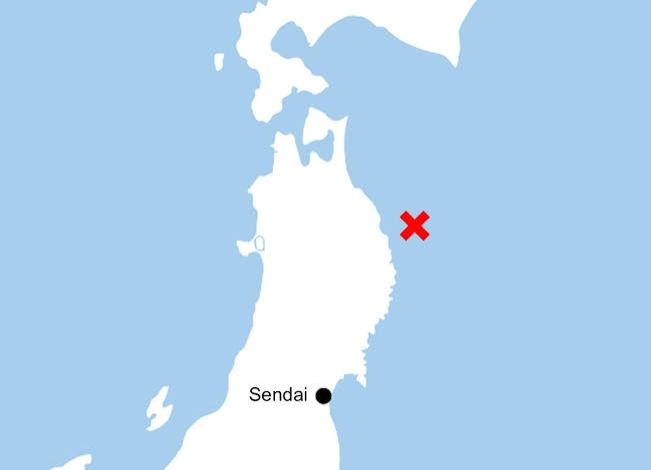
A powerful 7.2-magnitude earthquake struck beneath the sea off Iwate prefecture in northern Japan on Thursday morning, shaking the region but leaving little in its wake beyond scattered kitchenware and minor structural concerns. The tremor, centred approximately 44 kilometres below the ocean floor, rippled across hundreds of kilometres, causing light fixtures to sway in Tokyo and triggering smartphone alerts in homes and workplaces throughout the affected prefectures. Despite the considerable force of the seismic event, authorities confirmed no deaths or serious injuries, though emergency responders handled several minor incidents including people temporarily trapped in lifts and overturned vehicles.
The Japan Meteorological Agency initially recorded the magnitude as 6.9 before revising the reading upward to 7.2 in the hours following the 7:30 am local time incident on June 25. The earthquake's considerable depth—nearly half a kilometre below the surface—likely contributed to the absence of severe damage, as deeper earthquakes typically dissipate their energy more gradually across wider geographic areas. The agency's decision not to issue a tsunami warning proved accurate, suggesting the quake's characteristics posed minimal risk to coastal communities, a critical consideration for an island nation with extensive coastlines and significant maritime populations.
In Hashikami, a town in Aomori prefecture to the north, the impacts remained superficial but noticeable. Mutsumi Shimohata, a 61-year-old food processing worker, described the experience as surprising and prolonged, noting that the smartphone early-warning system activated just moments after the initial shaking began. While her residence escaped significant damage, sustaining only a fallen picture frame, her employer deemed it prudent to keep staff at home on standby after the facility's automatic entry doors malfunctioned and sections of the office ceiling partially collapsed. Television coverage across Japan captured the characteristic disorder of a major tremor: cupboards disgorging pans and utensils, supermarket shelves emptying their contents onto floors, and commercial spaces disrupted mid-operation.
The Shindo intensity scale, Japan's domestic measure of earthquake strength, registered an upper-six reading across Aomori prefecture—a level at which standing without support becomes difficult, unsecured furniture topples readily, and window glass may fracture. Emergency response systems functioned as designed, with the fire departments in Hashikami and Hachinohe receiving approximately four emergency calls, while reports indicated at least one person trapped temporarily in a lift and a commercial tanker vehicle overturned in the chaos. Some shinkansen bullet train services suspended operations briefly as a precautionary measure, and at least one primary school in the region closed temporarily as staff assessed facilities for structural safety.
Government spokesman Minoru Kihara stated that authorities held no information pointing to human casualties as of the initial damage assessment, while pledging continued monitoring of the situation. Nuclear regulatory officials, conscious of Japan's heightened sensitivity to atomic facility safety following the 2011 Fukushima disaster, reported no abnormalities at regional nuclear power stations in the wake of the tremor. Prime Minister Sanae Takaichi issued guidance to ministries and local authorities to coordinate response efforts, and urged residents to remain vigilant for possible aftershocks of comparable intensity, demonstrating the standard protocol for managing seismic incidents in Japan's well-rehearsed emergency management framework.
Japan's position atop four converging tectonic plates places it among Earth's most seismically restless regions, accounting for approximately 18 per cent of global earthquake activity despite comprising less than one per cent of the planet's land area. The nation experiences hundreds of tremors annually, ranging from imperceptible micro-earthquakes to the occasional major event capable of reshaping infrastructure and claiming lives. Most seismic activity passes virtually unnoticed by the general population, though the psychological and physical impacts accumulate over time, shaping everything from building codes to public consciousness about natural hazards.
The Thursday earthquake occurred against the backdrop of heightened seismic concerns following an earlier tremor in April of the same year. That April 20 event, measuring 7.7 on the magnitude scale, injured at least ten people and prompted authorities to issue a special advisory warning of elevated risk for earthquakes reaching magnitude 8.0 or exceeding that threshold. Such warnings, typically issued for seven-day periods following significant seismic activity, represent efforts by Japan's scientific agencies to alert the public and emergency management authorities to potentially dangerous conditions. The April advisory was subsequently lifted after the stipulated period elapsed without escalation.
The spectre of the 2011 Great East Japan Earthquake and Tsunami continues to shape Japanese disaster response and public sentiment. That catastrophic 9.0-magnitude undersea earthquake unleashed a tsunami that claimed approximately 18,500 lives, with tens of thousands more listed as missing and presumed dead. The disaster overwhelmed the Fukushima Daiichi nuclear power station, triggering the worst nuclear accident since Chornobyl and fundamentally altering Japan's energy policy and public trust in nuclear safety assurances. Every significant seismic event since then reverberates with that historical memory, prompting immediate investigations into nuclear facility integrity and reassessments of coastal preparedness.
The June 25 earthquake's relatively benign outcome demonstrates that seismic magnitude alone does not determine human impact; depth, location, time of occurrence, and population density all factor significantly into actual consequences. The early morning timing of Thursday's tremor meant fewer people were commuting or working in vulnerable commercial spaces, while the offshore location meant no direct ground rupture threatened populated areas. Japan's decades of investment in earthquake-resistant construction standards, early warning systems accessible via mobile phones, and comprehensive emergency training protocols combined to produce the minimal damage and casualty outcome that characterised this incident, offering a contrast to less-prepared nations that might face far greater devastation from a similarly powerful seismic event.

