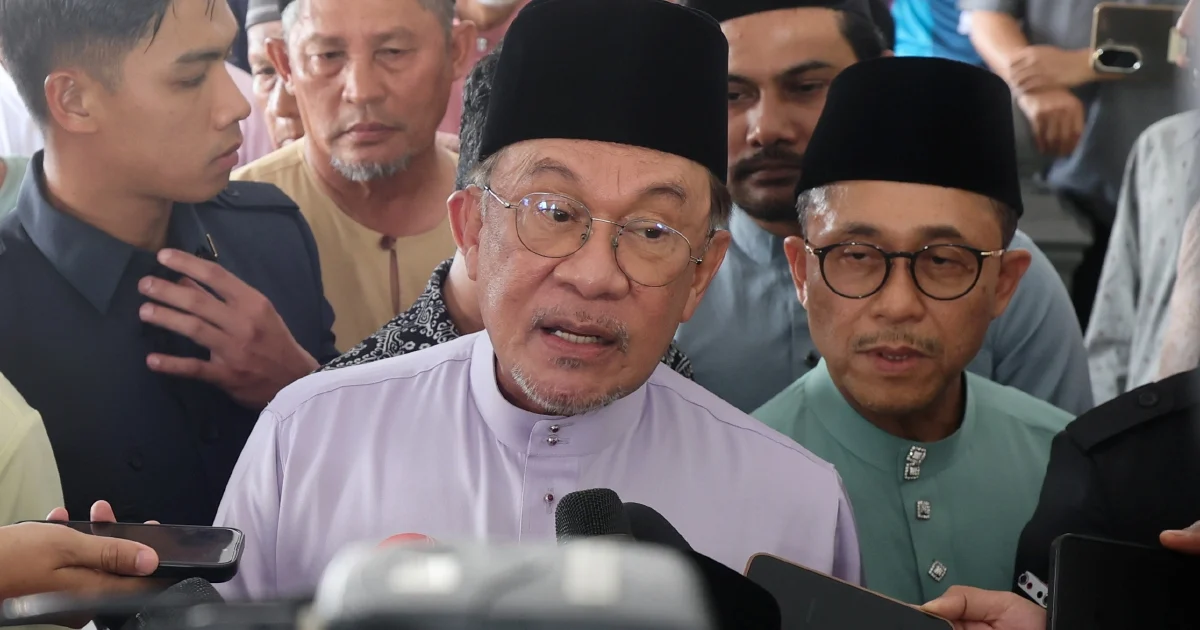
Prime Minister Datuk Seri Anwar Ibrahim moved to allay concerns about the government's push to enhance the Syariah court framework, emphasising that such measures will proceed without diminishing the religious liberties that Malaysia's non-Muslim communities currently enjoy under the Federal Constitution.
The assurance comes amid heightened scrutiny of judicial matters affecting the intersection of Syariah and civil law in Malaysia. The dual court system has long been a feature of the Malaysian legal architecture, with Syariah courts handling matters of personal law for Muslims—principally marriage, divorce, inheritance and religious obligations—while civil courts retain jurisdiction over general criminal and commercial matters affecting all citizens. Anwar's statement suggests the government views this demarcation as sufficiently robust to withstand any institutional changes aimed at improving Syariah court operations.
The Prime Minister's clarification addresses a persistent tension in Malaysia's constitutional settlement. Article 11 of the Federal Constitution guarantees freedom of religion to all citizens, allowing each person to profess, practise and propagate their faith. However, it simultaneously recognises Islam's special position in the Federation and permits the establishment of Islamic courts. This dual recognition has occasionally sparked debate about the proper boundaries between secular and religious jurisdiction, particularly when cases involve mixed marriages, apostasy matters, or the rights of children in interfaith relationships.
Anwar's remarks reflect an effort to balance two constituencies with competing interests. Malaysia's Muslim majority—roughly 70 percent of the population—has periodically called for more robust institutional support for Islamic jurisprudence and Syariah enforcement. Simultaneously, the country's non-Muslim minorities, comprising significant Christian, Buddhist, Hindu and Sikh populations concentrated particularly in urban areas and East Malaysian states, have expressed concerns about regulatory creep that might indirectly affect their communal autonomy or individual freedoms.
The government's initiative to elevate Syariah court status likely encompasses institutional improvements such as enhanced funding, expanded court infrastructure, faster case resolution mechanisms, and potentially improved judicial expertise through specialised training programmes. Such reforms could benefit Muslim litigants by reducing backlogs and improving service delivery in personal law matters. Countries across the Muslim world have pursued similar modernisation efforts without fundamentally altering the secular-religious legal balance, suggesting technical improvements need not automatically expand Syariah jurisdiction into domains previously regulated by civil courts.
From a regional perspective, Malaysia's approach to accommodating Islamic jurisprudence within a plural legal framework differs markedly from neighbouring countries. Indonesia's experience with expanding Syariah court authority across additional substantive areas offers both cautionary and instructive lessons. Similarly, Brunei's comprehensive Islamic legal code and Singapore's more restrictive approach to religious court jurisdiction provide comparative reference points. Malaysia's historic middle path—maintaining dual courts with defined boundaries—has generally enabled the country to preserve inter-community relations while addressing Muslim population expectations.
The Prime Minister's statement carries particular weight given his background. Anwar Ibrahim spent time in detention under previous administrations partly due to perceived tensions between his Islamic intellectual framework and liberal democratic principles. His current positioning as PM attempting to reassure non-Muslims about Islamic institutional reforms demonstrates his effort to transcend those historical polarities and project himself as a custodian of constitutional pluralism.
Non-Muslim business groups and civil society organisations have monitored Syariah court developments carefully, particularly regarding matters affecting commercial contracts, employment relationships and property transactions. If Syariah courts were to expand jurisdiction into such areas—as has occurred in some jurisdictions—complications could arise for Malaysia's multi-ethnic business environment and foreign investment climate. Anwar's clarification attempts to signal that such expansion remains off the table, protecting the secular legal domain essential to Malaysia's economic functioning.
The timing of these reassurances suggests the government recognises that institutional or jurisdictional expansion could generate significant political backlash among non-Muslim groups, potentially destabilising the fragile coalitional structures that currently support the administration. The multiracial Pakatan Harapan coalition, despite its fractured state, has typically championed inclusive governance principles that accommodate Malaysia's religious diversity within constitutional frameworks.
Moving forward, the success of Syariah court strengthening initiatives will likely depend on their transparent articulation and careful implementation. Should the government proceed with specific reform proposals, consulting non-Muslim stakeholders and providing detailed clarification of jurisdictional boundaries would be essential to maintaining communal confidence. Malaysia's constitutional architecture, while sometimes contentious, has generally withstood decades of accumulated tensions through explicit recognition of competing values and institutional respect for defined boundaries.
Anwar's statement represents a political gambit aimed at building consensus around strengthened Islamic institutions by explicitly ruling out incursions into non-Muslim domains. Whether this reassurance satisfies both Muslim constituencies seeking enhanced Syariah court authority and non-Muslim communities concerned about legal pluralism expansion will likely determine the overall trajectory of these reforms. The statement underscores that Malaysia's constitutional project remains fundamentally about managing the interaction between secular governance principles and Islamic institutional presence—a balancing act that continues to define the nation's political equilibrium.

