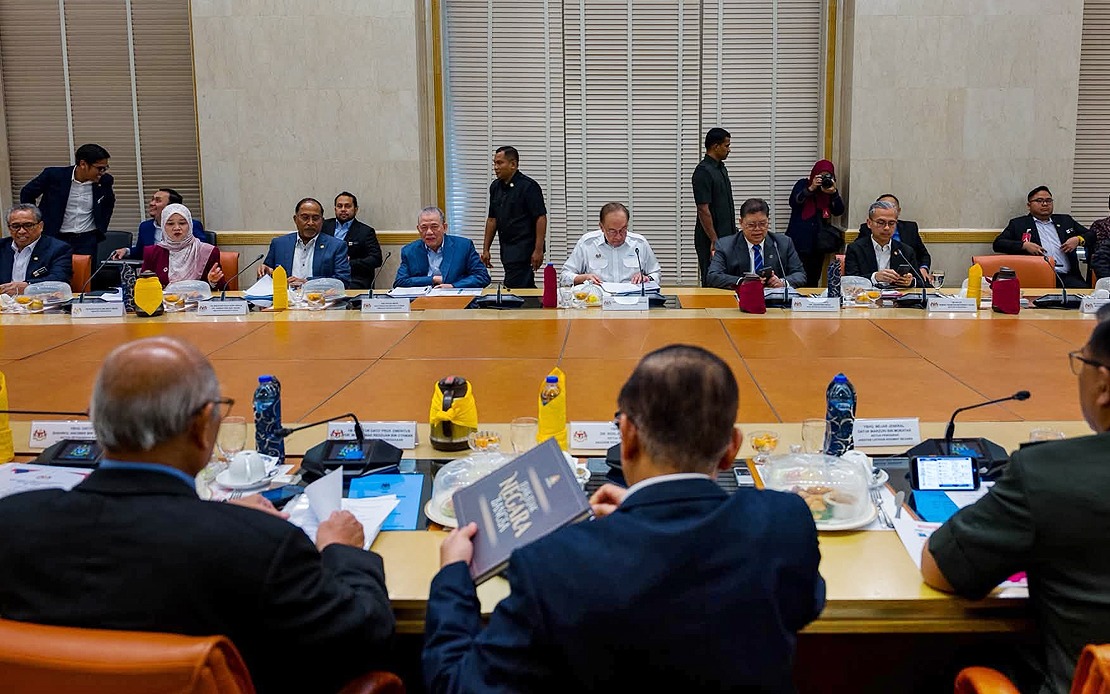
Prime Minister Datuk Seri Anwar Ibrahim has emphasised that Malaysia's progress hinges on systematically cultivating nationhood values within the population, arguing that such efforts create citizens with unwavering character and commitment to the nation's collective advancement. Speaking following a Dewan Kenegaraan Board of Governance Meeting, Anwar outlined his vision of using state institutions and programmes as vehicles for deepening patriotic sentiment and shared national identity across Malaysian society.
The Prime Minister's remarks reflect a strategic pivot toward addressing what many policymakers view as foundational gaps in national cohesion. In a multiethnic and multireligious democracy like Malaysia, the emphasis on inculcating common nationhood values serves multiple purposes: it aims to transcend communal divisions, reinforce social bonds, and establish a unifying framework within which diverse communities operate. Anwar's framing suggests that strong individual character—rooted in integrity and noble principles—forms the bedrock upon which effective nation-building initiatives depend.
Central to this approach is the National Service Training Programme, known locally as PLKN, which has emerged as a flagship mechanism for transmitting nationhood values to young Malaysians. According to the Prime Minister, preliminary feedback from both programme participants and their parents has been encouraging, indicating that the initiative resonates across demographic groups. The PLKN brings together youth from different backgrounds in a structured environment designed to foster discipline, mutual understanding, and shared commitment to national objectives, making it a practical instrument for translating abstract concepts of nationhood into lived experience.
Anwar's emphasis on expanding PLKN reflects broader regional trends in Southeast Asia, where governments increasingly recognise that military or paramilitary training programmes serve as potential catalysts for social integration. Thailand, Indonesia, and other nations in the region have similarly adopted mandatory or voluntary national service schemes as mechanisms for bridging urban-rural divides, fostering cross-ethnic relationships, and imparting civic consciousness. For Malaysia, where questions of national identity have periodically surfaced in public discourse, the strategic reinforcement of PLKN signals commitment to addressing such concerns proactively.
The governance meeting also highlighted the role of the Nationhood Fellows initiative, which brings together prominent intellectuals, former statesmen, and respected public figures across ideological and ethnic lines. This deliberate inclusion of diverse voices in nation-building discourse represents an acknowledgment that reinforcing nationhood values cannot be a top-down exercise imposed by government alone. Instead, it requires buy-in from respected community leaders and thought leaders whose advocacy carries weight within their respective constituencies. By assembling such a coalition, the government attempts to create broader social consensus around core national principles.
The timing of Anwar's remarks carries particular significance given Malaysia's evolving political landscape. The Prime Minister has consistently positioned himself as an advocate for inclusive governance and national reconciliation, particularly following the 2022 general elections which produced a fractured parliament and coalition dynamics requiring unprecedented cooperation across traditional party lines. Emphasising nationhood values in this context serves to transcend partisan differences and appeal to a higher-order commitment to Malaysia's collective interest, potentially helping to stabilise coalition governments that might otherwise fragment along party or factional lines.
Malaysia's experience offers pertinent lessons for other Southeast Asian democracies grappling with centrifugal forces. Unlike larger, more geographically compact nations, Malaysia's multicommunal composition and federal structure mean that nationhood must be actively cultivated rather than assumed. Regional tensions periodically surface around issues of language policy, religious authority, constitutional provisions, and historical narrative—all domains where differing conceptions of what Malaysia represents can generate friction. Anwar's push to strengthen nationhood values implicitly acknowledges these fault lines and proposes a countervailing strategy of positive national reinforcement rather than restrictive enforcement.
The emphasis on integrity and noble principles within the nationhood values framework also speaks to governance challenges confronting Malaysia. The nation has grappled with high-profile corruption cases, institutional integrity questions, and public confidence deficits in state apparatus. By framing nation-building around individual ethical development and principled conduct, Anwar positions personal virtue as inseparable from national well-being. This approach potentially resonates with voters fatigued by political scandals and seeking assurance that leadership takes accountability seriously.
For Malaysian society more broadly, sustained emphasis on nationhood values through institutional channels carries implications extending beyond immediate political objectives. Young people passing through PLKN or exposed to Nationhood Fellows discourse may develop stronger identification with Malaysia as a national project transcending parochial loyalties. Such psychological and cultural shifts, accumulated across cohorts, could gradually reshape national political culture toward greater emphasis on shared civic identity. However, success depends on consistent implementation, adequate resourcing, and genuine commitment to pluralistic principles rather than covert majoritarian messaging.
Regionally, Malaysia's investment in nationhood-building through structured programmes and intellectual engagement positions it as a model other ASEAN nations might study. Vietnam, for instance, maintains mandatory military service partly to cement national identity following decades of division. Indonesia has similarly experimented with national service initiatives. Malaysia's particular contribution lies in attempting to balance nationhood reinforcement with explicit multicommunal inclusivity—a challenging but potentially instructive balance for regionally comparable societies.
Anwar's strategic emphasis on cultivating nationhood values represents his administration's bet that Malaysia's challenges stem partly from insufficient internalisation of shared national purpose. Whether these initiatives ultimately strengthen the nation or prove insufficient to address deeper structural tensions around identity, resource distribution, and political representation remains to be determined through implementation and long-term observation. The Prime Minister's commitment signals recognition that nation-building in Malaysia demands continuous, deliberate effort rather than reliance on inherited national sentiment.

