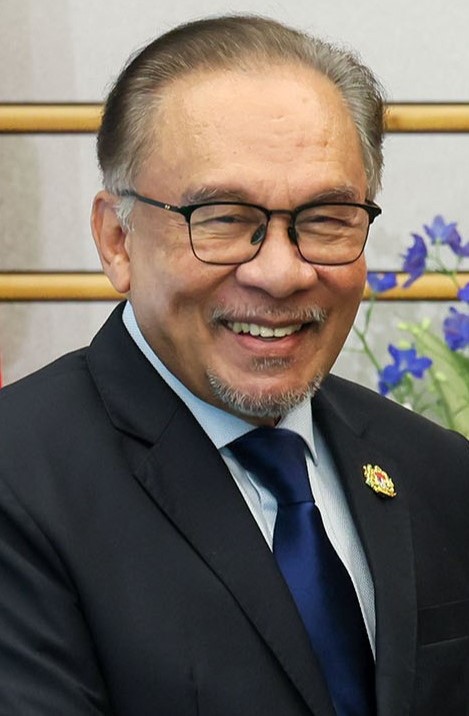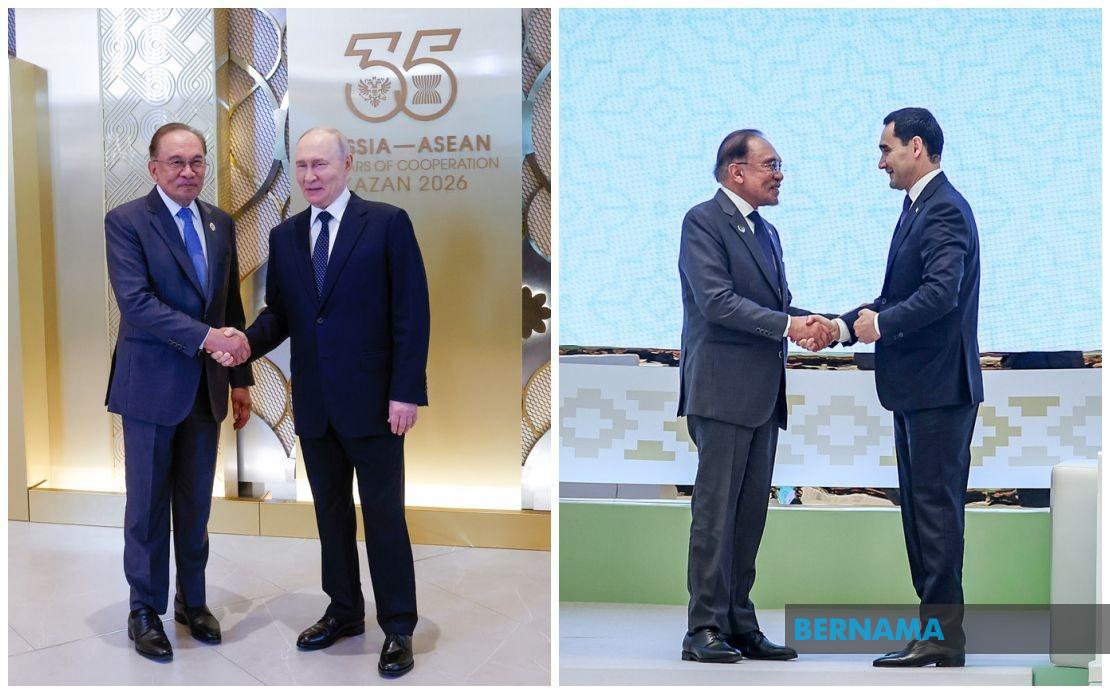
Prime Minister Datuk Seri Anwar Ibrahim's official travels to Russia and Turkmenistan represent a watershed moment for Malaysia's energy diplomacy and international standing, according to senior government officials who have praised the tangible outcomes secured during the two-nation tour. The visits, undertaken in a carefully orchestrated sequence, are being framed not merely as ceremonial exchanges but as concrete breakthroughs that address Malaysia's long-standing vulnerabilities in energy security while simultaneously positioning the country as a credible partner for major resource development across Eurasia.
The centrepiece of the Russia leg, conducted in Kazan within the Republic of Tatarstan, centres on Moscow's commitment to supply Malaysia with crude oil and refined petroleum products over a two-decade timeframe. Housing and Local Government Minister Nga Kor Ming underscored the profound implications of this arrangement, emphasising that the extended timeline provides Malaysian policymakers with unprecedented certainty in energy planning. Rather than navigating the volatility of annual contract renewals or seasonal spot purchases, Malaysia now enjoys the prospect of predictable, long-term supply flows that fundamentally alter the calculus of domestic fuel subsidies and broader economic forecasting.
The stability afforded by this long-term Russian engagement carries particular relevance for the government's BUDI MADANI RON95 subsidy programme, which has maintained petrol at RM1.99 per litre as a cornerstone of the administration's cost-of-living narrative. Nga argued that the energy security underpinning such price stability depends critically on diversified sourcing arrangements that reduce exposure to sudden market disruptions or supply shocks from any single vendor. The Russian agreement, in this framing, transforms subsidy maintenance from a perpetually contested budgetary burden into a more defensible commitment backed by contractual guarantees stretching across two decades.
The Turkmenistan dimension of the diplomatic mission addresses Malaysia's positioning within the global energy architecture through an altogether different mechanism. Petronas, the national oil corporation and a linchpin of Malaysia's energy strategy, has been appointed as operator of one of the world's largest gas fields in Turkmenistan—a triumph that Human Resources Minister Datuk Seri R. Ramanan characterised as emblematic of Malaysian corporate excellence on the global stage. The significance transcends the immediate commercial opportunity; it represents international validation of Petronas's technical prowess, financial capacity, and political acceptability in one of the planet's most resource-rich yet geopolitically intricate regions.
Ramanan noted that Petronas, currently ranked 139th among Fortune Global 500 enterprises, possesses realistic potential to breach the top hundred threshold should the Turkmenistan project be managed with the rigour and success that has historically characterised the company's operations. This advancement would carry symbolic weight beyond shareholder returns, recasting Malaysia as a nation capable of exporting world-class energy expertise and establishing its corporations as preferred partners in resource-rich economies where reputation and reliability constitute decisive competitive advantages.
The Turkmenistan assignment simultaneously opens pathways for technological and human capital collaboration that extend well beyond the gas field itself. Malaysian companies and workers embedded in the project will acquire exposure to frontier energy development practices whilst establishing supply chains and professional networks across Central Asia. Human Resources Minister Ramanan suggested that skills transfer, high-level workforce training, and technology partnerships emerging from the venture would generate lasting dividends for Malaysia's broader technological competitiveness and knowledge economy ambitions.
For Malaysia's geopolitical positioning, these twin accomplishments signal a deliberate pivot toward deepening engagement with non-traditional regional partners precisely when global energy markets face structural uncertainty. The diversification of supply sources away from Middle Eastern dependencies—historically the default for Southeast Asian energy importers—reflects strategic learning from the volatilities that have repeatedly destabilised regional economies. By establishing credible partnerships with both Russia and Turkmenistan, Malaysia reduces concentration risk whilst gaining leverage within future multilateral energy negotiations.
The timing of these visits also carries geopolitical subtlety. Malaysia's cultivation of Russia represents a calculated position within the contemporary international environment, wherein many Western-aligned nations maintain energy embargo restrictions on Moscow. By securing a 20-year supply arrangement, Malaysia signals both independence from Western sanctions regimes and confidence in the durability of Russian energy infrastructure despite external pressures. Similarly, the Turkmenistan appointment underscores Petronas's and Malaysia's willingness to operate amid complex Central Asian political economies where transparent governance, technical neutrality, and professional execution become paramount assets.
The energy security implications for Malaysia extend beyond mere supply assurance into the realm of economic competitiveness and manufacturing resilience. Reliable, long-term hydrocarbon availability enables downstream industries—petrochemicals, fertilisers, power generation—to operate with reduced hedging costs and greater production planning certainty. These conditions, in turn, support Malaysia's efforts to remain an attractive investment destination for energy-intensive manufacturing sectors that might otherwise migrate to competitors offering superior input cost predictability.
The diplomatic architecture underlying both agreements also merits consideration. Prime Minister Anwar's personal engagement and direct negotiation signal that these arrangements command the highest levels of governmental attention and political capital. This personalisation of energy diplomacy suggests confidence that the partnerships will endure beyond single administrations or routine bilateral cycles, embodying instead strategic commitments that transcend ordinary commercial transactions. For Malaysia's negotiating partners in Russia and Turkmenistan, the Prime Minister's direct involvement conveys that Malaysia's commitment is authentic and backed by constitutional authority rather than delegated corporate authority alone.
The broader context reveals a Malaysian government consciously constructing a diversified energy portfolio that balances traditional Middle Eastern relationships with emerging Eurasian partnerships. This pluralistic approach acknowledges that no single energy source or region can sustainably anchor a modern economy, particularly one as energy-dependent as Malaysia's in pursuit of high-growth development targets. By simultaneously maintaining existing relationships whilst cultivating new ones, Malaysia positions itself as a pragmatic, reliable partner capable of navigating complex geopolitical terrains without ideological rigidity.
For Southeast Asia more broadly, Malaysia's diplomatic successes carry instructive significance. The region's energy security challenges—dominated by import dependency and exposure to supply volatility—mirror Malaysia's own historical vulnerabilities. The precedent established through PM Anwar's visits suggests that disciplined, high-level diplomatic engagement coupled with the availability of credible national enterprises like Petronas can yield tangible advances in securing long-term resource stability. Other regional economies may find themselves studying Malaysia's approach as a potential template for their own energy diplomacy, particularly where establishing direct bilateral relationships with major hydrocarbon producers proves feasible.
The immediate economic benefits, while substantial, constitute merely the opening chapter in what government officials are characterising as a multi-year unfolding of opportunity. The 20-year Russian supply arrangement and the Turkmenistan gas field development represent foundational commitments upon which further cooperation in technology transfer, workforce development, and investment partnerships are expected to accrue. Successfully executing these initial agreements will position Malaysia favourably for expanded engagement across both nations' respective spheres of influence, potentially extending into infrastructure development, telecommunications, and other sectors where Malaysian companies might contribute distinctive capabilities.