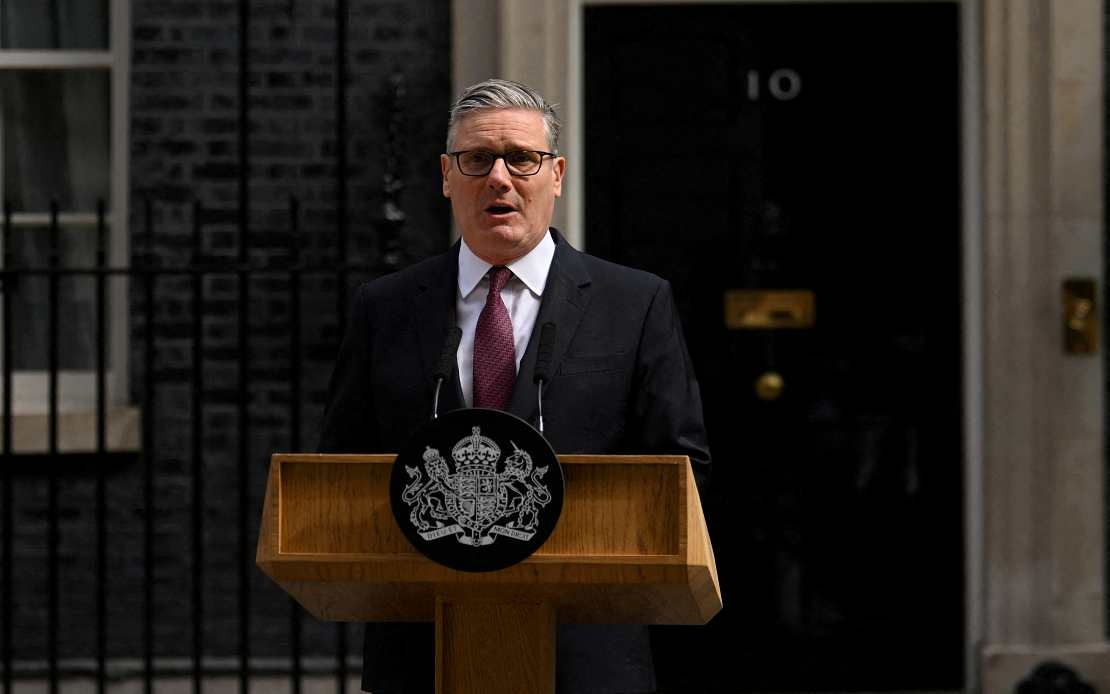
Prime Minister Keir Starmer announced Monday that he will resign from his position, with a successor to be selected before parliament reconvenes in September. The decision marks a dramatic reversal for the Labour leader, who less than two years ago secured a commanding electoral mandate that was intended to restore stability to British governance. Starmer indicated he would back whoever emerges from the leadership contest to succeed him, remaining as a caretaker during the transition period.
The political crisis confronting the Prime Minister had been brewing for months but reached a critical juncture on Friday when Andy Burnham, the long-serving Greater Manchester mayor, secured a decisive by-election victory. Burnham's win came at the expense of a candidate from Nigel Farage's Reform UK party, which has maintained a commanding lead in national opinion polling for over a year. This result injected fresh momentum into discussions within Labour circles about alternative leadership, with many lawmakers viewing Burnham as a potential architect of the party's revival.
Burnham's credentials have attracted support from colleagues desperate to arrest the party's declining fortunes under Starmer's tenure. A seasoned politician with strong media presence and communication abilities, Burnham represents a stark contrast to the incumbent Prime Minister, whose approval ratings have fallen to historic lows for any British leader. The Greater Manchester mayor's parliamentary return after several years outside Westminster comes at a moment when Labour faces an increasingly hostile electorate and internal party fracturing that shows little sign of abating.
However, Burnham's policy positions remain largely undefined beyond general statements about the need for fundamental economic transformation and relief for households struggling with the cost of living. He has offered scant detail on his vision for foreign policy, economic strategy, or defence spending—areas where any incoming British leader will face immediate and complex decisions. This ambiguity raises questions about whether he can transcend the constraints that have hamstrung Starmer's premiership.
The incoming administration, whether led by Burnham or another candidate, will inherit formidable economic headwinds. Britain currently carries the highest borrowing costs among wealthy Group of Seven nations, a consequence of elevated debt levels, substantial interest payments, persistent weak growth, resistance to spending cuts, and pressing requirements for investment in defence and critical infrastructure. Bond market investors have demonstrated little appetite for additional fiscal stimulus, creating a straightjacket that limits the scope for the transformative policies that angry voters increasingly demand.
Burnham's previous public statements about freeing Britain from dependence on financial markets create potential friction with institutional investors whose confidence remains essential for government financing. Comments made last September suggesting the country needed to move beyond being "in hock to the bond markets" have prompted skepticism from major financial institutions. Citibank economists warned Friday that a Burnham administration would confront a "precarious fiscal situation with few tools to deliver meaningful change," signalling that market operators view his policy promises with caution.
The timing of Starmer's departure—should it proceed as outlined—reflects pragmatic calculations about managing the transition. Rather than fighting a formal leadership contest, the Prime Minister appears to have concluded that an orderly succession provides the party with its best chance of stabilising public perception. The plan would enable him to attend a scheduled UK-European Union reset summit in July before departing office, while allowing Burnham or another successor adequate preparation time to assume power in September.
Starmer's departure would add Britain's seventh prime minister since the 2016 Brexit referendum to a list marked by unprecedented turnover. This recurring instability has become a defining characteristic of British politics over the past decade, reflecting deep voter dissatisfaction with successive governments' failure to improve living standards, strengthen public services, or address concerns about irregular migration. The churn in leadership at this pace represents the highest rate of prime ministerial turnover in nearly two centuries, an extraordinary measure of political volatility.
For Malaysian and Southeast Asian observers, the British political upheaval illustrates the precarious position of even ostensibly commanding governments when they fail to deliver tangible improvements to public welfare. Despite winning a landslide mandate, Starmer's administration crumbled in less than twenty-four months, a cautionary reminder about the fragility of electoral legitimacy without sustained policy success. The financial constraints that will bind any incoming British leader—dictated by bond markets and inherited debt—also highlight the economic interdependencies and fiscal disciplines that shape governance across developed democracies, irrespective of domestic political ambitions.