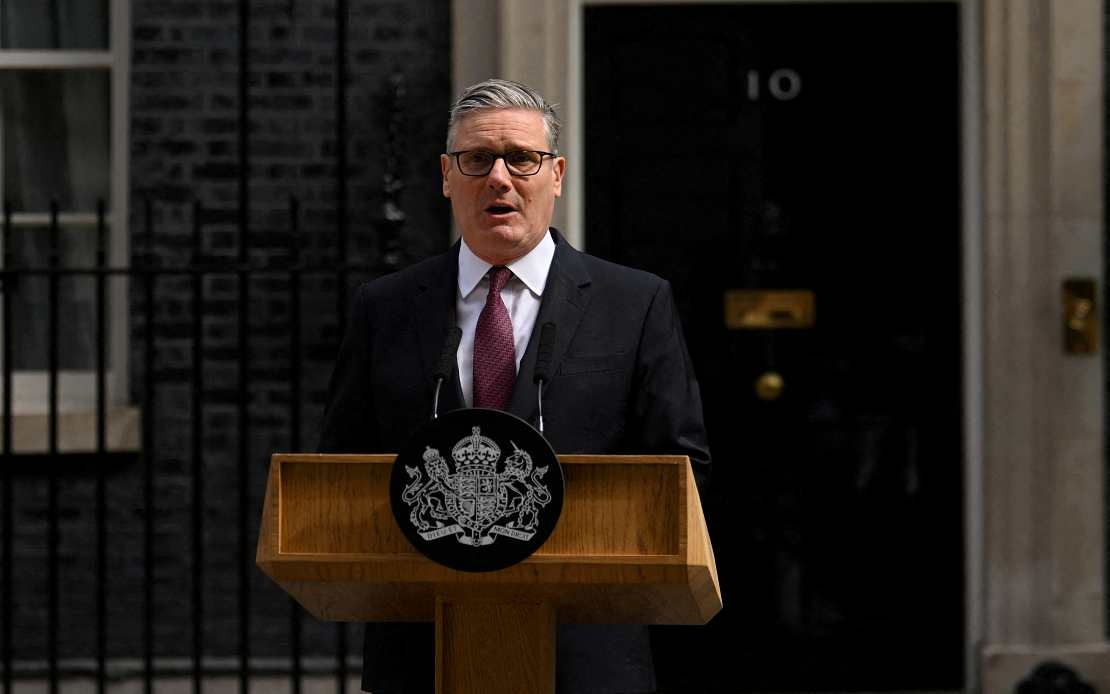
Keir Starmer delivered his valedictory remarks as British prime minister on Monday, stating that his tenure had accomplished its objectives and that he was departing office with satisfaction. Standing in Downing Street before proceeding to Buckingham Palace to formally tender his resignation to King Charles, Starmer indicated that he would hand over leadership to Andy Burnham, marking a significant transition within the Labour government that had governed the United Kingdom for the past two years.
The outgoing prime minister, accompanied by his wife Victoria Starmer alongside colleagues and supporters gathered at his official residence, characterised the nation's condition as having improved substantially during his stewardship. Starmer's decision to step aside comes after leading Labour through a transformation that culminated in a decisive electoral victory in 2024, fundamentally reshaping the party's prospects after years of internal turmoil and electoral setbacks.
Starmer's journey to the premiership began with the Labour Party facing its most severe crisis in recent history. Following the 2019 general election defeat, the party had appeared directionless and fractured. The new leader embarked on an intensive period of party renewal, fundamentally restructuring Labour's approach, messaging, and organisational culture. This modernisation programme proved instrumental in restoring public confidence in the party and preparing it for electoral competition.
The 2024 general election victory represented the culmination of these efforts, delivering Labour a commanding parliamentary majority that seemed improbable just years earlier. Starmer's ability to unite a diverse coalition of voters—from traditional working-class Labour supporters to suburban professionals—demonstrated strategic political acumen. The landslide result validated his patient, methodical approach to party rehabilitation and his willingness to make difficult decisions regarding party direction and personnel.
During his two years in office, Starmer implemented policies addressing numerous domestic challenges facing Britain. His administration confronted persistent economic headwinds, labour relations difficulties, and demands for public service reform. The government pursued its legislative agenda with the advantage of substantial parliamentary numbers, enabling passage of significant legislation without the constraints that minority administrations face.
Starmer's characterisation of Britain as "stronger and fairer" reflects his administration's claims regarding its policy achievements. The government highlighted economic stabilisation efforts, investments in public services particularly the National Health Service, and social policy initiatives aimed at broadening opportunity and addressing inequality. These accomplishments, according to the departing premier, constitute the core objectives he had set upon assuming office.
The transition to Andy Burnham represents a continuation of Labour governance while introducing new leadership. Burnham, who previously served in senior Labour positions and currently holds prominence within the party hierarchy, represents the next chapter of Labour administration. His elevation to the premiership ensures stability in governance while potentially introducing modified priorities and governing approaches reflecting his political perspective and vision for Britain's future direction.
This leadership succession within a governing party, rather than occurring through electoral defeat, is comparatively rare in modern British politics. It reflects internal party dynamics and Starmer's decision to voluntarily relinquish office rather than contest the next electoral cycle. The timing and manner of this transition may shape Labour's political positioning and public perception as it moves into its subsequent phase of governance.
For Malaysian and Southeast Asian observers, this development illustrates patterns of democratic leadership transition within established Westminster-system democracies. Britain's mechanisms for managing prime ministerial changes within governing parties, the role of parliamentary procedure, and the structured approach to power transfer offer comparative perspective on how stable democracies manage executive succession. The peaceful, planned nature of this transition underscores institutional robustness and acceptance of established constitutional conventions.
Starmer's departure also marks the conclusion of a notable political trajectory. From backbench Labour member through shadow cabinet positions to party leader and ultimately prime minister, his rise occurred during a period when Labour appeared to many observers to be in terminal decline. His success in reversing that trajectory, rebuilding party credibility, and winning a decisive mandate demonstrates the resilience of British political institutions and the capacity of major parties to undergo fundamental renewal when faced with existential challenges.
The broader implications for British politics extend beyond the immediate transition. Starmer's tenure established policy frameworks and institutional approaches that his successor will inherit and likely develop further. The Labour government's legislative programme, international relationships particularly with European neighbours and traditional allies, and domestic reform initiatives will shape Britain's trajectory in subsequent years. How Burnham builds upon or redirects these initiatives will influence Labour's long-term political fortunes and Britain's position within the evolving international system.

