Suresh Sallay presents an unusual figure in the landscape of global counterterrorism expertise. The retired major general, once celebrated for his credentials addressing the Pentagon and United Nations on how social media fuels radicalisation and extremism, now sits in a Sri Lankan court facing charges that he himself orchestrated one of Asia's deadliest terrorist attacks. His February arrest under anti-terrorism legislation has unveiled a dark chapter in Sri Lankan politics, where the line between security apparatus and alleged conspiracy appears increasingly blurred.
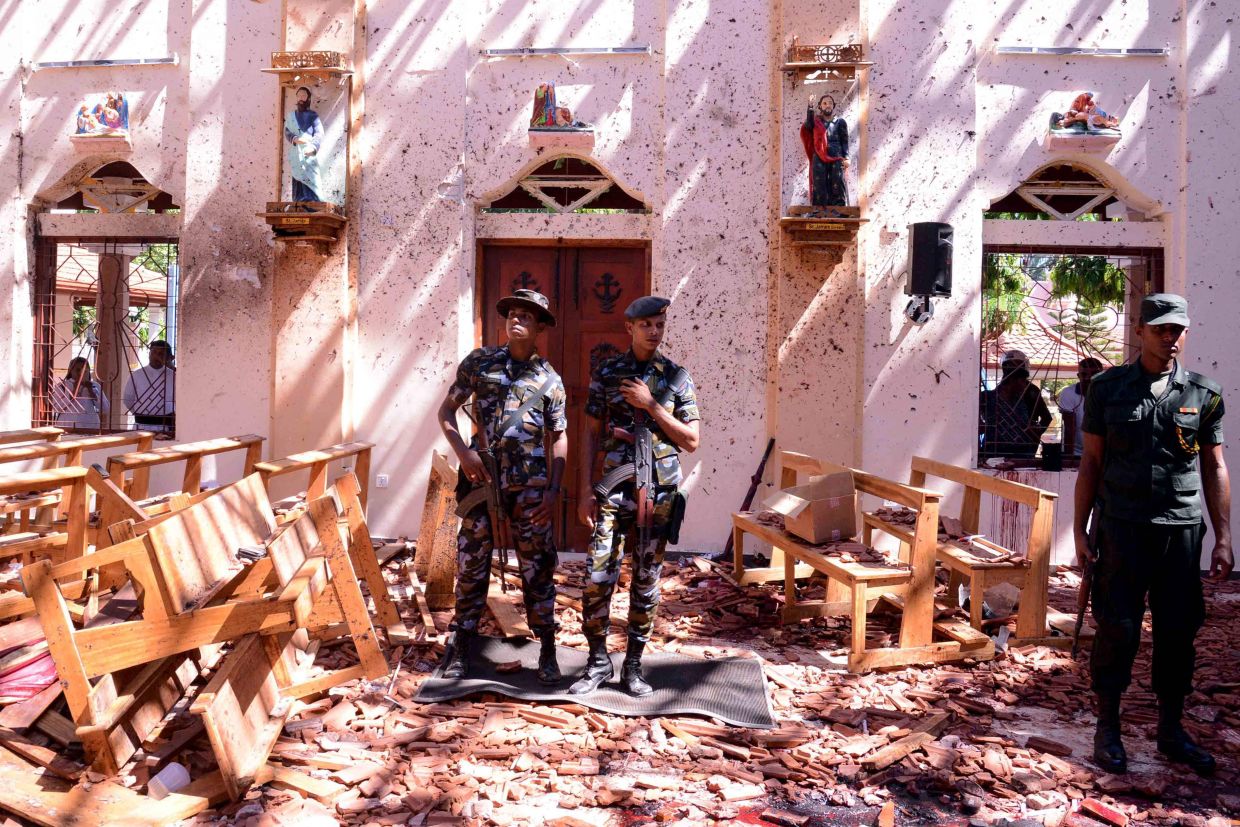
The Easter bombings of April 21, 2019, remain etched in Sri Lankan memory as a catastrophe that shook the nation to its core. Nearly 280 civilians perished in a coordinated assault spanning three luxury hotels and three churches across the island, with more than 500 others wounded. The death toll included 45 foreigners—tourists and business travellers from Australia, Britain, China, Denmark, the Netherlands, Japan and the United States—making the attacks not merely a domestic tragedy but an international incident that prompted global condemnation. Initial investigations pointed to Sunni Muslim suicide bombers inspired by Islamic State ideology, a narrative that dominated international reporting and shaped immediate policy responses from Colombo.
Yet the official story has undergone a profound transformation. Rather than viewing the bombings as an intelligence failure—despite credible Indian warnings that were inexplicably ignored—the government now promotes a radically different thesis: that the attacks were orchestrated by elements within the state apparatus itself. Public Security Minister Ananda Wijepala's parliamentary statement in June marked an unprecedented moment when a sitting minister publicly identified Sallay as the "mastermind" who "conspired with and strategically directed Islamic extremists" to execute the attacks. Wijepala's assertion that Sallay met with Muslim men just three weeks before the bombings to gather targeting intelligence suggests a level of premeditation that transforms the narrative from militant extremism to state-sponsored terror.
The emerging picture suggests a sophisticated conspiracy far removed from spontaneous jihadist activity. Investigators have documented connections between the bombers and at least two state intelligence agencies, raising uncomfortable questions about institutional knowledge and deliberate inaction. The alleged plot, according to court testimony, was designed to create a security crisis that would position Gotabaya Rajapaksa, then seeking the presidency, as the strong leader capable of restoring order. Rajapaksa's historical reputation stemmed from his role as Defence Secretary during the final phase of Sri Lanka's 26-year civil war against Tamil militants, a context that made his law-and-order messaging particularly resonant with Buddhist majority voters anxious about security threats.
British investigative journalism has lent credibility to these claims of conspiracy. Channel 4's 2023 reporting detailed allegations from a whistleblower that the attacks were permitted to proceed specifically to boost Rajapaksa's electoral prospects by demonstrating the threat level facing the nation. This interpretation reframes the bombings not as a failure of security services but as a calculated sacrifice of civilian lives to achieve political objectives. It echoes a darker chapter in Sri Lankan security history: the Rajapaksa administrations have openly acknowledged funding jihadist groups during the civil war era, ostensibly to gather intelligence on Tamil separatists. The distinction between handlers and assets became dangerously blurred, with some militants allegedly turning against their state sponsors.
Sallay's own trajectory illuminates the complex relationship between Sri Lankan security institutions and their manipulation by political actors. A career military officer with impressive international credentials—he studied at India's prestigious National Defence College and British universities—Sallay represented the professional face of Sri Lankan counterterrorism expertise. His assignments to Sri Lankan diplomatic missions in France and Malaysia, combined with his published work on suicide terrorism and social media radicalisation, positioned him as a respected voice in global security circles. Yet when Gotabaya Rajapaksa secured the 2019 presidency, Sallay was appointed to head the State Intelligence Service, becoming the first military officer to hold this traditionally civilian position. The elevation appeared to validate his expertise; the arrest suggests it may have reflected political loyalty.
The irony intensifies when examining Sallay's own institutional actions. In 2020, while serving as intelligence chief, he orchestrated the arrest of Muslim human rights lawyer Hejaaz Hizbullah, accusing him of being the "mastermind" of the Easter bombings. Hizbullah spent 22 months in detention before authorities released him, unable to substantiate their allegations with credible evidence. The pattern of accusation without demonstrable proof is now turning upon Sallay himself, who remains uncharged despite months in custody and a court hearing scheduled for July 10. His denial of wrongdoing carries weight precisely because the evidence presented thus far appears circumstantial—meetings with Muslim men before the attacks, meetings that could plausibly relate to legitimate intelligence gathering rather than bombing orchestration.
Sallay's personal background underscores the complexity of religious identity in Sri Lankan society. A Muslim married to a Buddhist woman, with a Catholic mother who has appealed to Pope Francis for his release, Sallay embodies the multicultural reality of modern Sri Lanka. His family's religious diversity contrasts sharply with the polarised narrative of Muslim extremism versus Buddhist nationalism that has dominated post-2019 discourse. In a nation where Buddhists comprise 70 per cent of the 22 million population, with Muslims representing only 10 per cent, such cosmopolitan identity becomes politically vulnerable, particularly when security apparatus actors exploit communal anxieties for electoral advantage.
The allegations against Sallay represent more than a criminal prosecution; they constitute a potential reckoning with how Sri Lankan political actors have weaponised counterterrorism frameworks to consolidate power. The government's shifting narrative from tragic intelligence failure to deliberate state conspiracy invites scrutiny of whether justice is genuinely being pursued or whether Sallay has become a convenient scapegoat for institutional failures that implicate higher-ranking political figures. The court proceedings will reveal whether the government can substantiate claims of conspiracy with forensic evidence or whether the case rests primarily on circumstantial connections and institutional convenience.
For regional observers, particularly Malaysian authorities monitoring Islamic militancy and security threats in Southeast Asia, the Sri Lankan case offers cautionary lessons about the dangers of instrumentalising security frameworks for political purposes. When counterterrorism apparatus become tools for political consolidation rather than genuine threat mitigation, the distinction between handler and asset, between intelligence operation and criminal conspiracy, dissolves into opacity. Sallay's transformation from Pentagon-addressing expert to accused mastermind illustrates how quickly institutional credibility can evaporate when political actors manipulate security narratives. The outcome of his trial will shape how Sri Lanka's security establishment is perceived internationally and whether other regional governments view similar arrangements as viable governance strategies or as potential sources of political instability.

