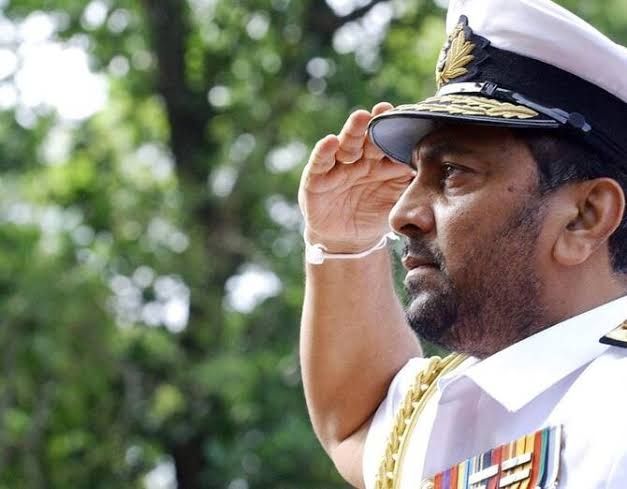
Sri Lanka's anti-corruption authorities have taken into custody retired Admiral of the Fleet Wasantha Karannagoda following allegations that he improperly enabled the military recruitment of Yoshitha Rajapaksa, the son of former president Mahinda Rajapaksa, without the candidate possessing the necessary qualifications. The 73-year-old former navy commander was arrested by the Bribery Commission over events dating to 2006, signalling a significant escalation in the country's pursuit of high-level corruption cases linked to the influential Rajapaksa dynasty.
The specific charges centre on Karannagoda's role in circumventing recruitment standards to enlist Yoshitha Rajapaksa into the navy, followed by facilitation of his attendance at overseas training programmes. This case is closely connected to a separate investigation into Yoshitha Rajapaksa's attendance at Britain's naval college in Dartmouth, where he allegedly used public funds to finance his education. The younger Rajapaksa remains out on bail following his arrest last month in relation to the training scandal, as he awaits trial on multiple counts.
Karannagoda's career trajectory reflects his prominence during pivotal moments in Sri Lankan military history. He served as navy commander when the country's protracted conflict with Tamil separatist forces concluded in 2009, a conflict that fundamentally shaped the nation's political landscape and international standing. Subsequently promoted to admiral of the fleet in 2019, he has maintained no active operational duties within the naval hierarchy since that elevation, yet his retirement from active service has not insulated him from legal scrutiny.
Beyond the recruitment allegations, Karannagoda confronts a formidable array of additional charges that underscore the complexity of investigating military-era misconduct in Sri Lanka. British authorities imposed sanctions against him in March 2025 following credible allegations of serious human rights violations and extrajudicial killings. These designations reflect international concern about accountability for actions taken during and shortly after the civil war's conclusion. He also faces charges related to a conspiracy to murder 11 young men whose deaths occurred between 2008 and 2009, a period when the conflict was actively concluding and in its immediate aftermath.
The trajectory of these conspiracy charges illuminates the shifting political winds within Sri Lanka. The Bribery Commission initially dismissed the murder allegations in October 2021 during the presidency of Gotabaya Rajapaksa, Mahinda Rajapaksa's younger brother, suggesting political protection extended to military figures closely associated with the ruling family. However, since President Anura Kumara Dissanayake assumed office in September 2024 following electoral victory on an explicit anti-corruption platform, authorities have revived these previously shelved accusations, demonstrating institutional willingness to pursue cases that implicate former military leadership.
The renewal of prosecutorial energy reflects broader institutional changes within Sri Lanka's government. Dissanayake's ascension represented a significant political realignment, breaking the political dominance the Rajapaksa family had maintained over much of the past two decades. His campaign centred squarely on pledges to dismantle corruption networks and to prosecute unresolved high-profile crimes that had languished under previous administrations. The acceleration of cases against Rajapaksa family members and their associates since September 2024 demonstrates that these campaign commitments are translating into concrete legal action.
Yoshitha Rajapaksa's personal legal jeopardy extends well beyond the naval training matter. He confronts additional criminal charges stemming from his inability to account for the funds used to purchase residential property during his father's presidency from 2005 to 2015. When questioned by investigators about these financial sources, he claimed to have raised capital through the sale of gemstones gifted by his grandaunt. However, the grandaunt herself could not provide coherent explanations regarding how she originally obtained these precious stones, creating a suspicious chain of custody that prosecutors have pursued aggressively.
The Rajapaksa family's legal difficulties extend beyond Yoshitha and his father. Gotabaya Rajapaksa, who served as president immediately following Mahinda Rajapaksa's tenure and previously held influential defence ministry positions, was recently subjected to a foreign travel prohibition. The restriction emerged in connection with his suspected involvement in the 2019 Easter Sunday bombings, coordinated attacks that claimed 279 lives across multiple churches and hotels. This sanction represents a striking reversal for a figure who once wielded tremendous state power and had enjoyed apparent immunity from prosecution.
The cascade of investigations targeting the Rajapaksa network carries significant implications for Sri Lanka's institutional development and regional governance standards. The cases demonstrate that no individual—regardless of military rank or family political prominence—is categorically immune from prosecution, a principle that may strengthen democratic accountability mechanisms. For a nation that has struggled with post-conflict justice and reconciliation, these prosecutions offer the possibility of addressing longstanding allegations that were previously shielded by political convenience or institutional reluctance to scrutinise military conduct.
For Southeast Asia more broadly, Sri Lanka's handling of these cases may establish precedents regarding how regional nations approach accountability for security force conduct and high-level financial corruption. The region has historically witnessed weak enforcement of anti-corruption frameworks, making Sri Lanka's current trajectory noteworthy. Whether these prosecutions ultimately produce convictions will substantially influence perceptions of institutional independence and the genuine commitment to rule of law within the country and across the broader region.
The investigations also illuminate the intersection of civil-military relations and democratic governance in post-conflict societies. Karannagoda's arrest signals that Sri Lankan authorities are willing to examine conduct that occurred during wartime, when military decision-making often operated under different scrutiny standards. This willingness could encourage victims of alleged wartime abuses to seek accountability through legal channels, potentially addressing grievances that have accumulated since 2009. Conversely, such prosecutions may generate defensiveness within military circles if perceived as retrospective punishment for wartime decisions made under operational pressures.

