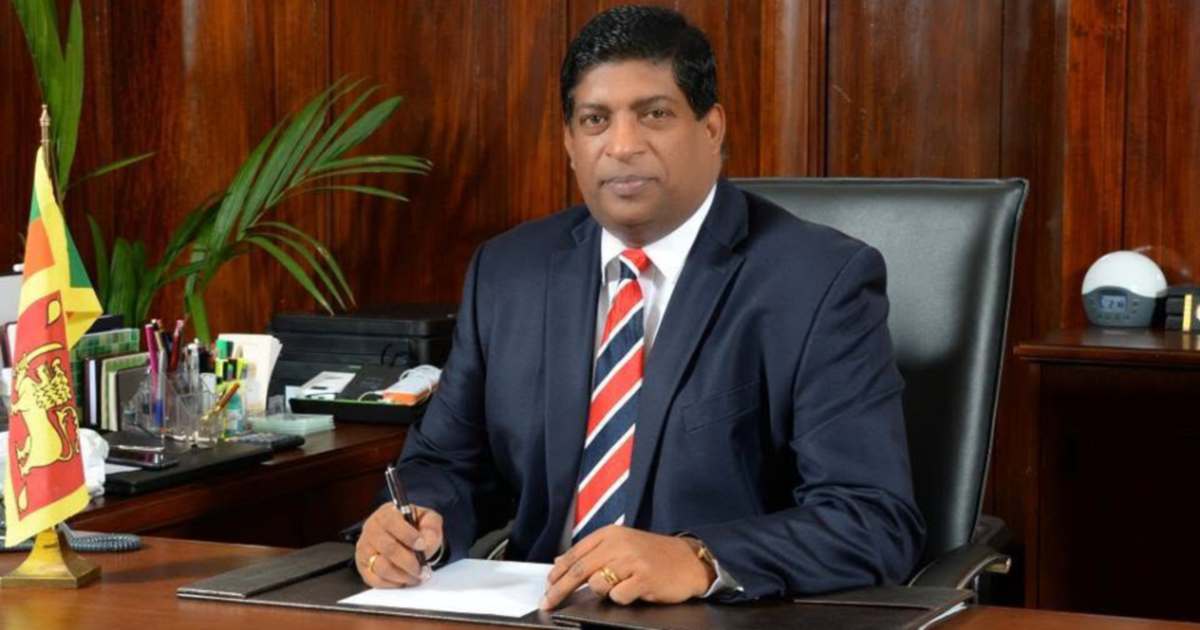
Sri Lanka's former finance minister Ravi Karunanayake was taken into custody on Monday after being accused of improperly channelling state funds toward remuneration of his personal workforce, according to allegations levelled by the country's leading anti-corruption enforcement agency. The arrest represents a significant development in the island nation's ongoing battle against high-level financial misconduct within government circles.
The case underscores persistent concerns about fiscal discipline and accountability in Sri Lankan administration, issues that have periodically surfaced during previous administrations. Karunanayake, who previously held the crucial finance portfolio, now faces investigation regarding the suspected diversion of public money for what authorities characterise as unauthorised private employment arrangements. The specific nature of these alleged transactions remains under examination by investigative teams.
For Malaysian observers, this situation reflects broader governance challenges affecting several South Asian economies. Nations across the region have grappled with similar allegations of public resource misallocation, where government officials are suspected of leveraging state treasuries for personal or politically-connected purposes. The arrest signals that Sri Lanka's accountability mechanisms are functioning sufficiently to pursue prominent figures regardless of their previous official standing, though questions remain about whether such enforcement occurs consistently across all levels of administration.
The timing of Karunanayake's arrest occurs amid Sri Lanka's broader economic recovery efforts following the severe financial crisis that gripped the nation in 2022. During that tumultuous period, questions about governmental financial stewardship became paramount, with citizens demanding greater transparency in how state resources were managed. The current investigation into the former finance minister's tenure thus assumes additional significance, as it speaks to institutional responses toward preventing future fiscal mismanagement.
Anti-corruption operations targeting senior officials generate considerable political ramifications within any nation's power structure. In Sri Lanka's context, where political allegiances frequently shift and former rivals occasionally reconcile, such prosecutions inevitably intersect with broader factional dynamics. The arrest of a high-profile former minister demonstrates either genuine commitment to accountability or serves as a tool within competitive political calculations—determining which requires monitoring how thoroughly investigations proceed and whether similar cases emerge across different political cohorts.
The allegation specifically centres on conversion of government resources for private remuneration purposes, a charge that extends beyond simple nepotism or favouritism. Using state funds to pay individuals outside the formal civil service structure—particularly personal employees—violates fundamental principles of public financial administration. Such arrangements would circumvent standardised procurement procedures, auditing mechanisms, and tax compliance requirements that typically govern legitimate government expenditure. If substantiated, the charges would represent systematic rather than incidental financial impropriety.
Institutional capacity within Sri Lanka's anti-corruption sector has been gradually strengthened through legislative reforms and international cooperation frameworks, though observers note that investigation timelines frequently extend considerably. The speed of Karunanayake's apprehension following allegations suggests at least preliminary evidence sufficient to satisfy judicial requirements for arrest. However, the pathway from arrest to conviction typically demands extensive documentary evidence, witness testimony, and complex forensic accounting work that may consume considerable time.
Regionally, this development invites comparison with graft investigations occurring simultaneously across South and Southeast Asia. Malaysia itself has witnessed comparable high-profile cases involving former government officials and misappropriation allegations. The outcomes of such cases—particularly conviction rates and sentence severity—communicate important signals about whether governing elites face genuine accountability or encounter merely theatrical enforcement mechanisms. Southeast Asian observers often evaluate governance quality partly through monitoring how aggressively nations prosecute financial crimes involving their own leadership.
The anti-corruption agency's capacity to move decisively against individuals who previously wielded substantial governmental authority suggests institutional autonomy, though independence remains an essential prerequisite for credible enforcement. Political pressure frequently complicates such investigations, creating incentives either to pursue cases aggressively as retribution against rivals or conversely to shield investigation subjects due to continuing political relationships. Transparency regarding investigative methodology and evidence evaluation becomes crucial for maintaining public confidence in accountability institutions.
Karunanayake's previous tenure as finance minister positions him as a significant figure in Sri Lankan economic policymaking. The investigation therefore carries implications extending beyond individual accountability to broader questions about whether institutional failures or individual misconduct generated the alleged improprieties. Understanding whether such transgressions reflect systemic deficiencies or unauthorised individual actions shapes policy responses aimed at preventing recurrence. This distinction proves particularly relevant as Sri Lanka endeavours to reconstruct public confidence in governmental financial stewardship following the recent economic turbulence.
Moving forward, this case will be monitored closely by international observers, including development partners and rating agencies assessing Sri Lanka's governance trajectory. The vigour with which authorities pursue the investigation and the eventual judicial outcome will substantially influence external perceptions regarding institutional strength and commitment to accountability. For Malaysia and other regional observers, the case exemplifies both promising dimensions of anti-corruption enforcement capacity and continuing vulnerabilities within systems intended to police high-level financial conduct.

