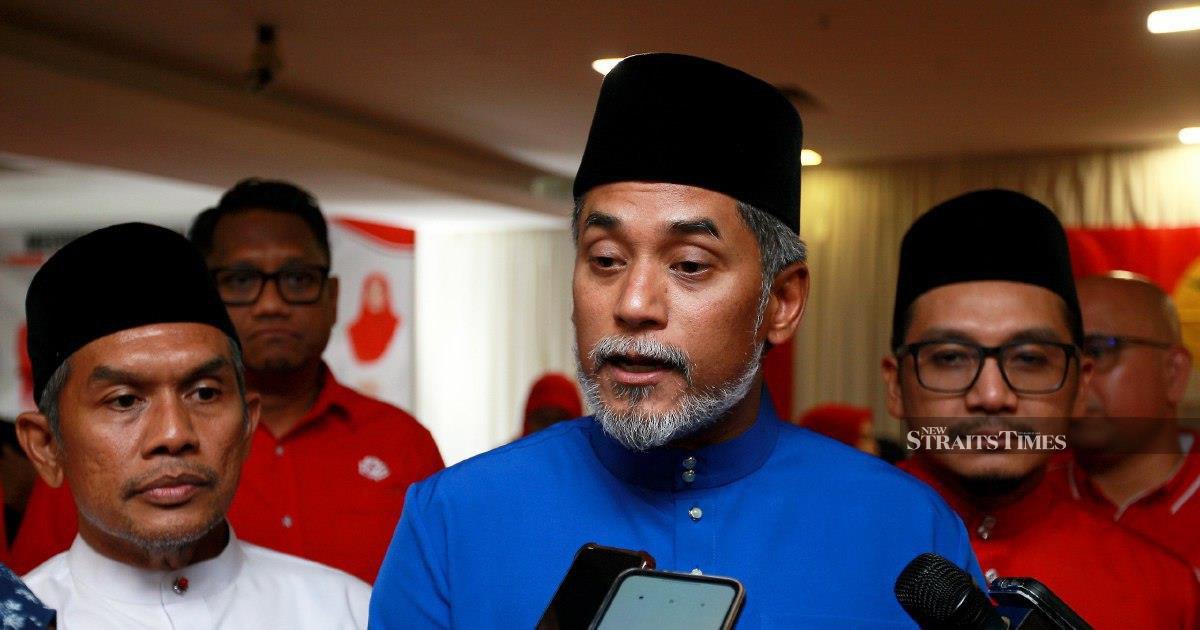
Former Umno Youth chief Khairy Jamaluddin has raised a significant concern about electoral dynamics in Negri Sembilan, warning that unless Barisan Nasional and Perikatan Nasional coordinate their efforts effectively, the division of Malay votes between competing coalitions could prove costly for both. Speaking in Shah Alam, Khairy underscored the strategic importance of maintaining unified support among the Malay-Muslim voter base to ensure electoral success in the state assembly elections.
The fractionalisation of traditionally aligned voting blocs presents a persistent challenge in Malaysian electoral politics, particularly when multiple Malay-majority coalitions compete simultaneously in the same constituency. In Negri Sembilan, where constituencies contain significant Malay and Muslim populations, this dynamic has the potential to reshape political outcomes dramatically. When the Malay-Muslim vote splinters across different competing coalitions, minority parties or opposition groups may secure victories in contests where neither major coalition individually commands sufficient consolidated support to win outright.
Barisan Nasional, which for decades dominated Malaysian politics and continues to hold substantial influence across numerous state administrations, has increasingly confronted challenges to its traditional voter support networks. The emergence of Perikatan Nasional as a significant political force, particularly following its performance in recent general elections and various state contests, has introduced new competitive dynamics within constituencies historically considered safe for Barisan. Both coalitions appeal substantially to similar demographic groups, creating a situation where their electoral competition directly diminishes their respective vote shares among core supporters.
Khairy's intervention reflects broader conversations occurring within Umno and Barisan regarding strategic positioning ahead of state elections. The logic underlying his argument is straightforward: if voters who would otherwise support Malay-dominant or Islam-focused parties within the Barisan coalition instead split their ballots between Barisan and Perikatan candidates, the total support available to either coalition becomes fractured. This creates openings for opposition parties, particularly those representing non-Malay constituencies or those with alternative political messages, to capture seats they might otherwise lose in a consolidated contest.
Negri Sembilan occupies particular significance within the Malaysian political landscape. As a state with a royal Sultan and a mixed demographic composition, it serves as a barometer for broader political trends. Recent electoral cycles in the state have demonstrated volatility, with voters showing willingness to shift support between major coalitions. The state's relatively moderate size—with a manageable number of state assembly seats—means that strategic coordination or lack thereof can substantially influence final seat tallies and coalition control of the state government.
The former Umno Youth leader's remarks carry particular weight given his position within the party establishment and his track record in articulating intra-party concerns. Khairy has historically positioned himself as a modernising voice within Umno, yet his warning here adopts a more traditional analysis focused on consolidated Malay voter mobilisation. This suggests that despite broader political debates about party reform and evolution, practical electoral mathematics still revolves substantially around managing community voting patterns and preventing vote fragmentation among key demographic constituencies.
Cooperation between Barisan and Perikatan, should it materialise, would likely involve seat-sharing arrangements where each coalition contests different constituencies, allowing their combined voter base to translate into maximum seat acquisition. Such arrangements have precedent in Malaysian politics, though they often prove contentious within party structures, as individual politicians and party wings may object to standing aside in contests where they believe they could independently secure victory. The challenge intensifies when determining which coalition receives which seats, as this necessarily involves subjective assessments of relative strength in specific areas.
For Malaysian voters and observers, this dynamic illustrates the complex mathematics underlying electoral democracy in a multi-ethnic, multi-party system. Victory or defeat often hinges not merely on total support received but on how that support distributes geographically across constituencies and how competing forces fragment available votes within specific demographic groups. In Negri Sembilan, the stakes involve control of state-level governance, significant patronage networks, and representation of constituent interests at the state assembly.
The implications extend beyond Negri Sembilan itself. Should Barisan and Perikatan successfully coordinate in that state and achieve the landslide results Khairy referenced, it could establish a template for similar arrangements in future electoral contests, whether in other state elections or in subsequent general elections. Conversely, if coordination efforts falter and fragmented voting allows opposition advances, it may reinforce lessons about the electoral cost of disunited competition within the Malay-Muslim political sphere and influence strategic calculations ahead of subsequent contests.
Khairy's warning additionally reflects awareness that demographic change, generational shifts in voting preferences, and evolving political messaging mean that traditional assumptions about consolidated bloc voting cannot be taken as permanent. Younger voters, urban constituencies, and increasingly diverse communities may not automatically fragment their votes along lines their predecessors followed. Understanding and adapting to these changing patterns while simultaneously managing the mechanics of vote division within established coalitions represents an ongoing challenge for Malaysian political organisations across the spectrum.

