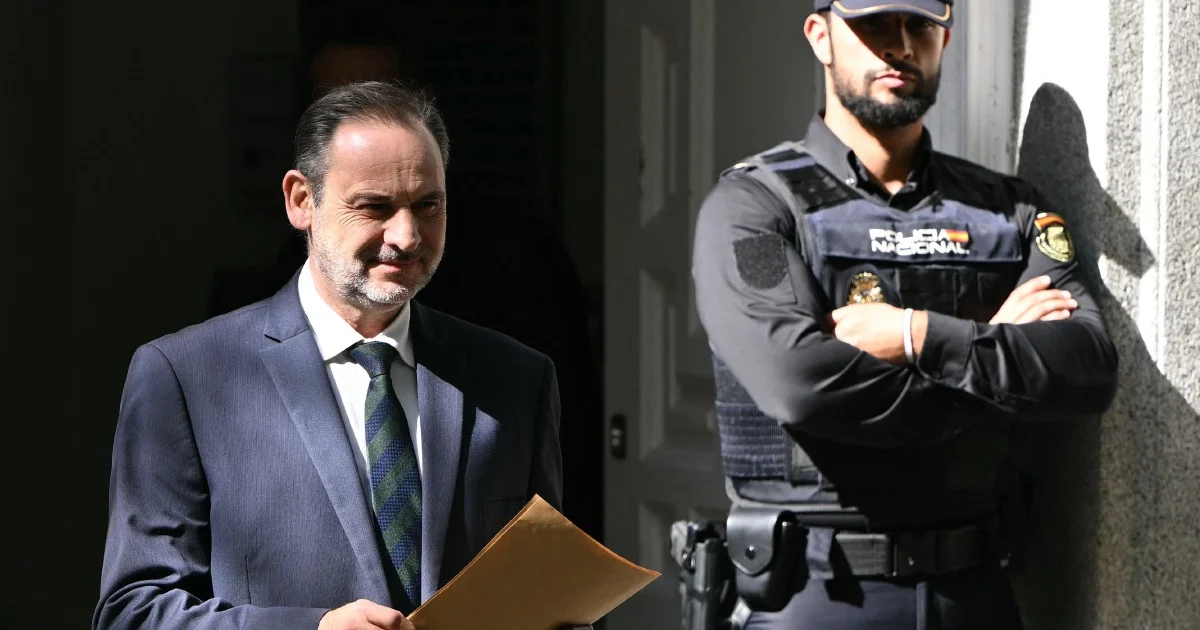
Jose Luis Abalos, who served as Spain's transport minister and counted among Prime Minister Pedro Sanchez's most trusted advisers, has been sentenced to 24 years in prison on corruption charges following a court ruling in Madrid. The conviction represents one of the most high-profile graft cases to touch the Spanish government in recent years, raising questions about oversight within the Cabinet and the consequences of unchecked political authority.
Abalos held considerable influence within the Socialist administration, managing critical infrastructure portfolios and serving as a key confidant to Sanchez during pivotal moments of his premiership. His downfall illustrates how even those closest to the centre of power remain subject to judicial scrutiny when evidence of wrongdoing emerges. The case will likely intensify public scrutiny of governance practices across Spanish institutions and may prompt broader discussions about transparency and accountability at ministerial level.
The judicial process culminated in the Madrid court's decision to impose the substantial 24-year sentence, signalling the severity with which Spanish courts view corruption at such elevated levels of government. This penalty exceeds many sentences imposed in comparable cases, underscoring judicial determination to send clear messages about the consequences of abusing public office for personal gain.
For Malaysian and Southeast Asian observers, the case demonstrates how developed democracies maintain checks on executive power through independent courts capable of prosecuting sitting or former government officials without interference. Spain's judicial independence, reflected in its ability to investigate and convict a former cabinet minister despite his historical proximity to the sitting prime minister, contrasts sharply with governance dynamics in some regional contexts where similar accountability proves elusive.
The conviction may also illuminate patterns of institutional vulnerability that extend beyond Spain. Corruption in transport and infrastructure ministries has emerged as a recurring concern globally, with officials in such portfolios commanding outsized influence over major contract awards and development projects. The ease with which such positions can become vehicles for illicit enrichment demands constant vigilance, particularly in regions experiencing rapid infrastructure expansion.
Abalos's fall from grace raises practical questions about how governments screen, monitor, and hold accountable those in sensitive positions. The gap between his trusted status and criminal conviction suggests that institutional mechanisms for detecting misconduct may lag behind the sophistication with which determined individuals can conceal wrongdoing. This dynamic remains relevant across jurisdictions wrestling with corruption prevention strategies.
The timing of the conviction also carries political significance for Sanchez, who continues serving as prime minister while his former principal aide faces a quarter-century in prison. The juxtaposition emphasizes the distinction between political association and personal criminal liability—a distinction that courts must maintain even when public figures face reputational consequences from associates' convictions. Nevertheless, the case inevitably invites scrutiny of Sanchez's judgment in selecting and retaining Abalos in influential positions.
International observers tracking Spain's anti-corruption efforts will view this verdict as evidence that the country's judicial system possesses genuine investigative capacity and prosecutorial will. However, the length of time required to reach conviction also highlights common challenges in complex graft cases: the resources demanded, the technical expertise necessary, and the procedural protections that, while essential for justice, necessarily prolong proceedings. Southeast Asian countries modernizing their anti-corruption frameworks might benefit from studying both Spain's successes in prosecuting high-level officials and the institutional pressures that slow such cases.
The transport ministry specifically has proven a historically problematic portfolio in multiple countries, given its jurisdiction over substantial budgets, major infrastructure projects, and relationships with private contractors who benefit from regulatory decisions. Abalos's conviction will prompt other governments to examine whether their oversight mechanisms adequately protect against similar abuses in this sector.
For Spain domestically, the sentence addresses longstanding public concerns about corruption in government and provides tangible evidence that no position offers immunity from prosecution. Spanish media coverage will likely emphasize both the conviction's vindication of judicial integrity and the troubling questions it raises about how such corruption developed undetected within the prime minister's inner circle. The verdict may also influence how government appointees approach ethical boundaries, knowing that courts retain authority to prosecute even former officials.
Looking forward, the case will probably prompt legislative and administrative reforms aimed at strengthening transparency and preventing recurrence. Infrastructure procurement processes, gifts and conflicts-of-interest declarations, and audit mechanisms may face renewed scrutiny as Spain's government seeks to demonstrate responsiveness to public concern about governance standards. These reforms, if implemented effectively, could strengthen broader institutional resilience against corruption.
The 24-year sentence stands as a stark reminder that political proximity and executive authority provide no refuge from criminal consequences when courts operate independently. For countries across Southeast Asia and beyond grappling with corruption, Spain's ability to prosecute its own former cabinet ministers—whatever the duration required—demonstrates an essential principle: no tier of government exists beyond the reach of the law.