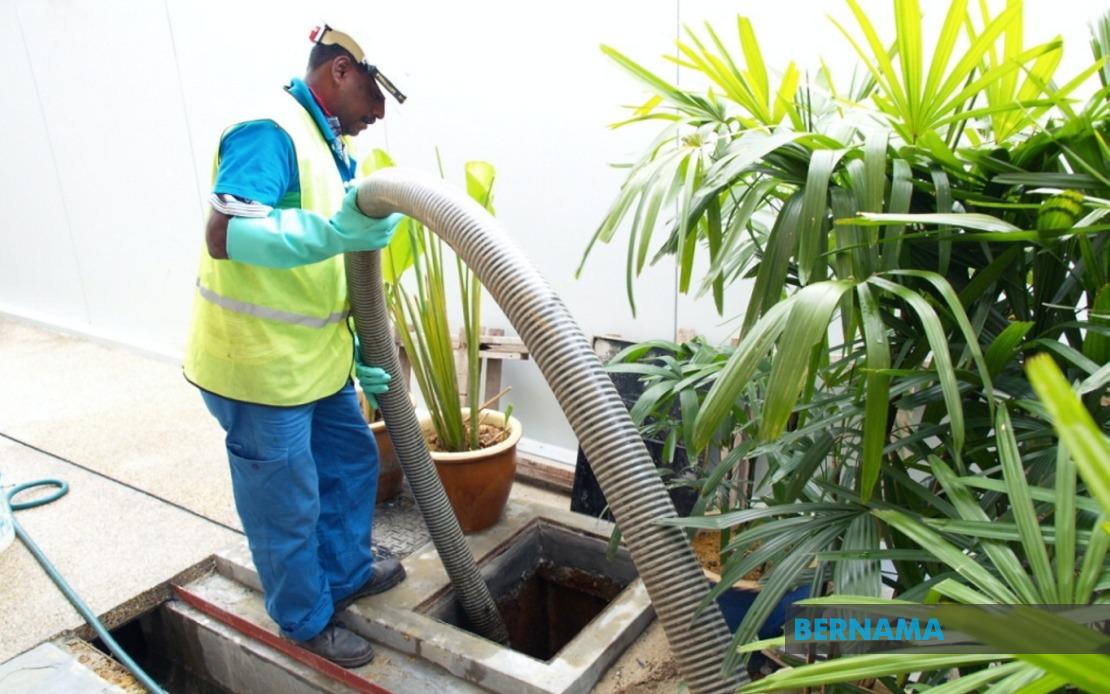
The National Water Services Commission (SPAN) has intensified its enforcement operations in Sungai Petani, issuing 270 compliance notices to premises owners who have neglected their mandatory septic tank maintenance obligations. The notices were distributed during Ops Padi 2, a three-day compliance campaign that ran from August 4 to 6, targeting the town's business district where longstanding maintenance failures have created public health and environmental concerns.
The enforcement operation examined 341 premises across the Sungai Petani area, encompassing 242 commercial establishments and 99 residential properties. According to Ainal Yusman Mohamad Yusop, director of SPAN's Operations Division Enforcement Section, the overwhelming majority of inspected locations had breached previous notices issued by Indah Water Konsortium Sdn Bhd (IWK), the licensed sewerage operator responsible for managing such systems. The scope of non-compliance revealed during the operation underscores persistent gaps in how property owners discharge their legal obligations under Malaysia's water services regulatory framework.
What emerged from the enforcement drive is a troubling pattern of long-term neglect rather than isolated incidents. Many of the buildings subjected to inspection were constructed during the 1970s and 1980s, and their septic tank systems appear to have received minimal professional attention over decades. SPAN officials documented instances where septic tanks had gone without any desludging or maintenance for periods exceeding 15 years, with some facilities showing last service records from 1997 and 1999—gaps of over two decades. This extended deterioration raises serious questions about water quality, soil contamination, and potential public health risks in affected commercial zones.
The legal framework governing such maintenance stems from Section 65(1)(c) of the Water Services Industry Act 2006 (Act 655), which explicitly mandates that premises owners bear responsibility for maintaining their septic systems by engaging licensed service providers or permit holders to perform desludging operations. This statutory obligation reflects Malaysia's commitment to sanitation standards, yet the Sungai Petani operation demonstrates widespread non-compliance with a regulation that has been in force for nearly two decades. The disconnect between legal requirements and actual practice suggests inadequate awareness, insufficient enforcement capacity, or deliberate negligence among property operators.
Property owners who received compliance notices now face a 14-day window to respond and take corrective action by engaging licensed contractors to empty their septic tanks. This grace period provides an opportunity for voluntary compliance, but it also represents SPAN's final warning before escalation of enforcement measures. Those who ignore the notice risk facing additional penalties, including formal offence notifications or investigative proceedings that could result in formal charges.
The potential financial consequences for non-compliance are substantial. Under the Water Services Industry Act 2006, violations of Section 65(1)(c) carry maximum fines reaching RM50,000 per offence. Given that some premises may have accrued violations over multiple inspection cycles or extended periods of non-maintenance, accumulated penalties could expose business owners to significantly larger exposure. For commercial establishments operating on tight margins, such fines represent a meaningful financial burden, creating incentives for immediate corrective action.
The Sungai Petani operation reflects broader challenges across Malaysia's water services sector regarding the maintenance of aging infrastructure and ensuring public compliance with sanitation regulations. Septic tank systems, while individual installations, feed into broader municipal sewerage networks and environmental water systems. Poorly maintained tanks contribute to soil and groundwater contamination, create public health hazards through potential bacterial transmission, and degrade water quality in surrounding areas. The accumulated effect of hundreds of unmaintained systems in a town the size of Sungai Petani can significantly impact local water security and environmental conditions.
The enforcement drive also highlights the role that regulatory bodies like SPAN must play in bridging the gap between written regulations and actual implementation. While the Water Services Industry Act 2006 established clear legal standards, compliance depends on consistent monitoring and willingness to impose consequences for violations. The decision to conduct Ops Padi 2 represents SPAN's recognition that voluntary compliance cannot be assumed and that periodic, systematic enforcement operations remain necessary to maintain standards across Malaysia's diverse property landscape.
For property owners and facility managers in Sungai Petani and similar towns across Malaysia, the enforcement operation carries clear messages. First, septic tank maintenance is not optional but a mandatory legal requirement with potentially severe financial penalties for breach. Second, regulatory authorities are actively conducting compliance inspections and will not overlook systematic failures. Third, engaging licensed service providers for desludging represents both a legal necessity and a practical safeguard for long-term property viability and community health.
Looking forward, SPAN's experience in Sungai Petani may inform future enforcement strategies in other commercial districts across Peninsular Malaysia and beyond. The discovery of widespread non-compliance despite existing regulatory frameworks suggests that education campaigns, clearer communication of deadlines, and perhaps simplified access to licensed service providers could improve voluntary compliance rates. Simultaneously, the willingness to conduct large-scale operations demonstrates that regulatory authorities possess the capacity to enforce standards when non-compliance becomes systemic.
The 270 compliance notices issued in Sungai Petani represent an important regulatory intervention, but their ultimate success will depend on property owners' response over the coming weeks. Those who use the 14-day period to hire licensed contractors and complete necessary maintenance will avoid penalties and contribute to improved local sanitation standards. Those who neglect the notices will face formal enforcement action, serving as cautionary examples for other jurisdiction. The operation thus functions both as an immediate correction mechanism and a broader message about Malaysia's evolving commitment to water services compliance.

