A diplomatic confrontation between two major European Union members has erupted over migration control, with Spain announcing it will reinstate temporary internal border checks on arrivals from Italy. The decision, unveiled on Friday and effective from Saturday, represents an unusual resort to barriers within the supposed borderless Schengen zone, underscoring the strain that uncontrolled migration places on European solidarity and freedom of movement principles.
The underlying cause stems from Italy's unilateral decision to reintroduce its own border controls on Spanish arrivals beginning August 1 without advance consultation. Madrid characterised Rome's action as "unjustified, discriminatory and contrary to the interests of the European Union," viewing it as a heavy-handed response that violated the spirit of European integration. Spain's retaliatory measures, scheduled to remain until September 7 or whenever circumstances permit, will involve random checks on identity documents at ports and airports, mirroring the enforcement tactics adopted by Italian authorities.
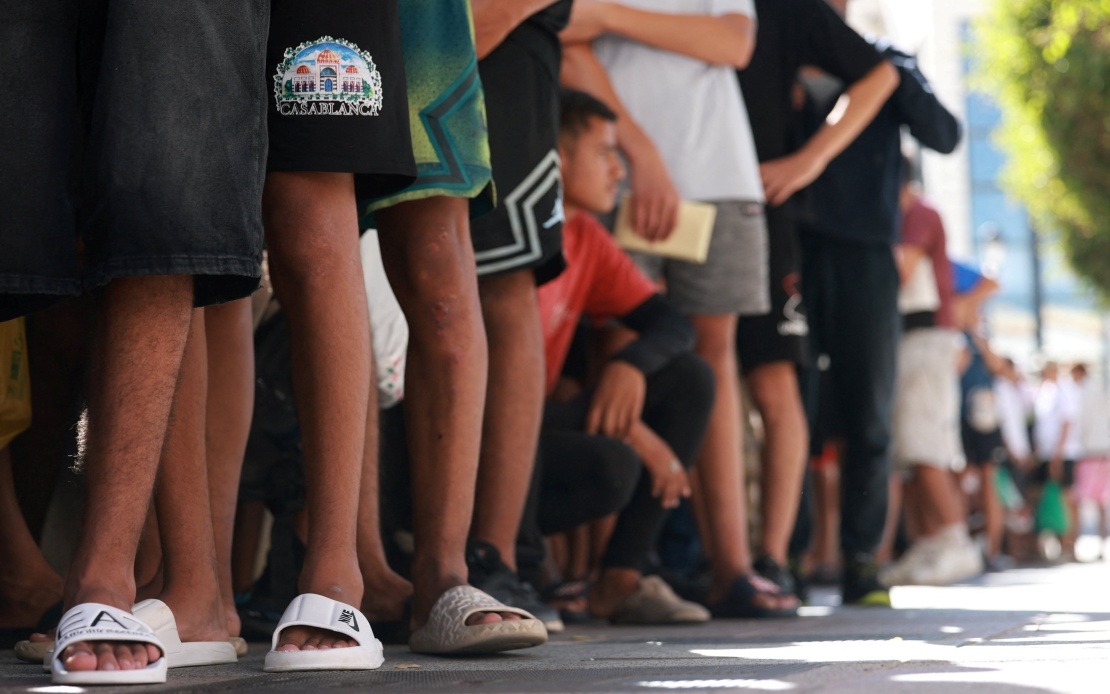
The crisis triggering this standoff originated in Ceuta, Spain's enclave on the North African coast, where an extraordinary surge of migrants attempted entry at the month's end. Within days, approximately 80,000 people crossed into the Spanish territory, creating an immediate humanitarian and administrative nightmare for local authorities. While roughly 75,000 of these individuals subsequently chose to return voluntarily to Morocco, between 3,000 and 5,000 remained stranded, according to Ceuta President Juan Jesus Vivas. The persistence of thousands in the enclave has overwhelmed reception and processing facilities, generating severe shortages of food, water, and shelter.
Italian Prime Minister Giorgia Meloni's decision to impose border controls followed directly from this migration emergency, framed as a necessary precaution against the possibility of onward movement within the Schengen zone. Rome maintained on Friday that it would sustain temporary checks on third-country nationals from Spain through at least August 15, citing legitimate national security and border-management concerns. The Italian government emphasised that it would not accept external pressure on decisions it regards as essential to its sovereignty, particularly on matters of internal security.
A crucial distinction in Italy's approach centres on which travellers face scrutiny. The controls apply specifically to third-country nationals, while EU citizens and Spanish travellers using air or sea routes are exempted. This technical distinction allows Italy to argue compliance with EU freedom of movement principles while still exercising protective measures. Italian border authorities have additionally pledged to minimise disruption to legitimate cross-border commerce and travel, suggesting an intention to calibrate enforcement to avoid excessive economic or social damage.
The escalating row reflects deeper anxieties within the European Union about burden-sharing in migration management. Mediterranean member states, particularly Spain and Italy, have long felt that the bloc's asylum and movement protocols place disproportionate responsibility on countries that physically border Africa and the Middle East. When migrants mass at these external boundaries, internal solidarity mechanisms often prove inadequate, forcing individual nations to adopt protective measures that contradict the EU's foundational openness.
For Southeast Asian observers, the Spain-Italy dispute offers instructive parallels to regional migration challenges. Malaysia, Thailand, and Indonesia have grappled with similar pressures from displaced populations and irregular migration flows, often adopting bilateral and unilateral border controls despite commitments to regional frameworks like ASEAN. The Spanish-Italian episode demonstrates that even wealthy, institutionally developed nations resort to frontier barriers when their capacity to manage migration feels overwhelmed—a pattern likely to intensify as climate change and geopolitical instability displace populations globally.
The Schengen zone's weakness in this crisis lies in its assumption of shared trust and burden-sharing among member states. When that trust erodes, as it has between Spain and Italy, the system fractures quickly into unilateral self-protection. Neither Spain nor Italy views the other as acting in good faith, with each interpreting the opponent's border controls as a betrayal. This breakdown suggests that European integration, despite decades of institution-building, remains vulnerable to the surges and shocks that international migration creates.
The humanitarian dimension of the Ceuta crisis cannot be overlooked. Thousands of vulnerable individuals—many fleeing poverty, conflict, and persecution—find themselves trapped in inadequate facilities or forced to choose between remaining indefinitely or returning to uncertain circumstances. The administrative and security focus of governmental responses, while understandable, often eclipses the desperation driving migration in the first place. Spain and Italy's dispute, while about border management mechanics, occurs atop layers of human suffering.
Looking forward, the temporary nature of these Spanish border checks suggests potential room for negotiation and de-escalation. Both governments retain flexibility, with Spain open to withdrawing its measures if Italy does the same, and Italy offering the August 15 date as a potential reviewing point. However, without substantive agreement on how to manage future migration surges, the Schengen zone's internal borders may become increasingly porous again—not in the intended direction of free movement, but in the form of creeping restrictions that undermine the system's fundamental purpose. The coming weeks will reveal whether European solidarity can survive the heat of immediate pressure or whether each nation must ultimately fend for itself.

