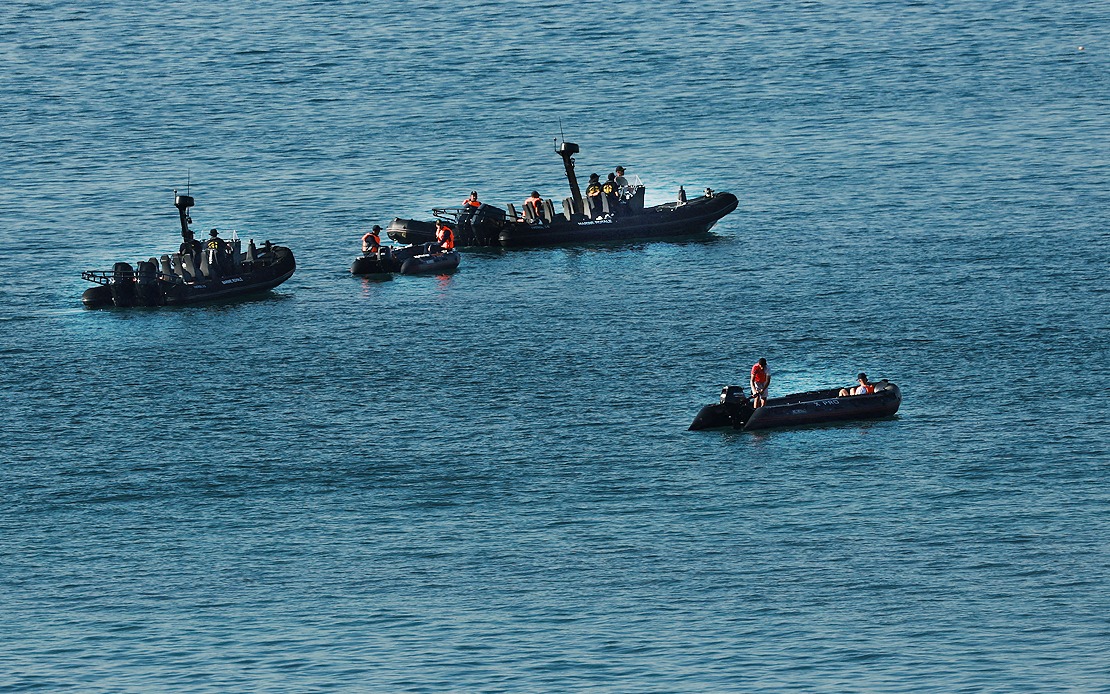
Spanish authorities are engaged in an ongoing recovery operation in the waters surrounding Ceuta, the autonomous Spanish city situated on Morocco's Mediterranean coast, as they search for additional victims from what has become one of the most significant migratory incidents in recent European history. The search follows a dramatic surge in which approximately 50,000 migrants crossed into the territory within just a few days, overwhelming a location with a permanent population of only 85,000 residents. To date, search teams have retrieved 67 bodies from the sea—individuals who perished while attempting to swim across the maritime border to reach European Union territory.
The scale of this humanitarian tragedy has prompted Spanish authorities to prepare contingency facilities with the capacity to house up to 200 bodies, a sobering indicator of the scale of losses feared by officials coordinating the response. The preparation of such facilities reflects not merely bureaucratic planning but rather an assessment of the genuine risks posed by the treacherous conditions migrants face when attempting the crossing. Many of those who drowned were among the most desperate migrants, attempting the perilous sea route when land borders became overwhelmed or inaccessible.
According to recent reports, conditions along the Ceuta coastline have stabilised significantly. Television coverage from Sunday showed a relatively tranquil maritime environment, with the primary visible activity consisting of workers installing buoy systems that will form a physical barrier in the water. This infrastructure project represents a critical component of Spain's response strategy, designed not only to manage migrant flows but also to address a legal vulnerability that may have inadvertently encouraged the recent surge. The barrier aims to establish a clear demarcation that will allow Spanish authorities to exercise greater control over who enters through maritime routes.
The underlying trigger for this crisis traces to a Spanish Supreme Court decision that created an unexpectedly permissive interpretation of asylum law. According to the ruling, individuals who enter Spain irregularly by crossing unfortified sections of the border—particularly through maritime routes—become entitled to individual asylum assessments rather than automatic rejection. This legal loophole appears to have circulated through migrant networks and networks of smugglers, creating the perception that a window of opportunity existed for entry into Spanish territory. The recent mass movement may represent migrants and smuggling networks capitalising on this perceived opening before enhanced enforcement measures could be implemented.
While Spanish authorities have reported that the majority of the migrants who reached Ceuta have since voluntarily returned to Morocco, the crisis has nonetheless generated significant political tension within European leadership circles. Left-leaning government officials in Madrid have faced sharp criticism from fellow EU leaders regarding their management of the situation. This political dimension adds complexity to what is fundamentally a humanitarian emergency, as questions about border security, sovereignty, and migration policy become entangled with partisan disagreements about how the Spanish government has handled both the immediate crisis and its longer-term policy implications.
For Malaysian and Southeast Asian observers, this crisis offers instructive lessons about how legal ambiguities can rapidly create unintended consequences at scale. The Ceuta situation demonstrates that court rulings affecting border procedure—even when motivated by humanitarian concerns regarding fair asylum assessment—can generate perverse incentives that ultimately endanger migrants themselves. In regions like Southeast Asia where migration pressures remain significant and legal frameworks continue to evolve, policymakers might consider how specific provisions create cascading effects that migrate through smuggling networks and informal information channels.
The physical barrier installation undertaken by Spanish authorities represents a practical response to address the legal loophole identified by their Supreme Court. Rather than seeking to overturn the court ruling directly—which might invite accusations of undermining judicial independence—Spain is attempting to establish clear physical demarcation that may allow different legal classifications to apply to migrants who breach fortified versus unfortified sections. This approach reflects the complex interplay between constitutional limitations and practical security needs that confronts many democracies managing migration pressure.
The geopolitical context surrounding this crisis also warrants consideration. Ceuta's status as a Spanish enclave on African soil has long been a point of contention in Spanish-Moroccan relations, and migration flows through this channel inevitably carry diplomatic implications. Morocco's apparent inability or unwillingness to prevent the mass movement from its territory during the surge period suggests either significant security challenges within Moroccan border enforcement or potentially tactical decisions by Moroccan authorities. Understanding these bilateral dimensions is essential for grasping why this crisis emerged when it did and how it may affect future cooperation on migration management between Spain and its North African neighbour.
The death toll from the crossing attempt underscores the lethal reality of irregular migration routes. Each of the 67 recovered bodies represents an individual whose desperation outweighed the evident dangers of attempting to swim across open water into European territory. For many migrants, the decision to attempt such crossing reflects calculations made in the context of profound economic despair, conflict, or persecution. The tragedy in Ceuta serves as a stark reminder that migration policy divorced from humanitarian considerations can generate outcomes that harm the very populations such policies purport to manage.
Moving forward, the installation of maritime barriers and the legal reconsideration of asylum procedures will likely have broader implications for migration patterns throughout the Mediterranean and Atlantic approaches to European territory. Other enclaves like Melilla, Spain's other North African possession, may experience increased pressure as migrants and smugglers seek alternative routes if Ceuta becomes more heavily fortified. The efficacy of physical barriers in preventing irregular crossing remains contested among experts, with some noting that determined migrants often find alternative routes or methods to circumvent such obstacles.
The crisis also highlights vulnerabilities in the broader EU migration management system. When a single member state experiences a surge, the burden falls disproportionately on that country unless burden-sharing mechanisms within the EU prove robust. Spain's experience may reinvigorate debates about Dublin regulations and responsibility-sharing for asylum processing, conversations that have remained contentious within European capitals for years. The political fallout from Ceuta will likely reverberate through upcoming EU discussions on migration policy, potentially influencing how member states coordinate border enforcement and asylum procedures.

