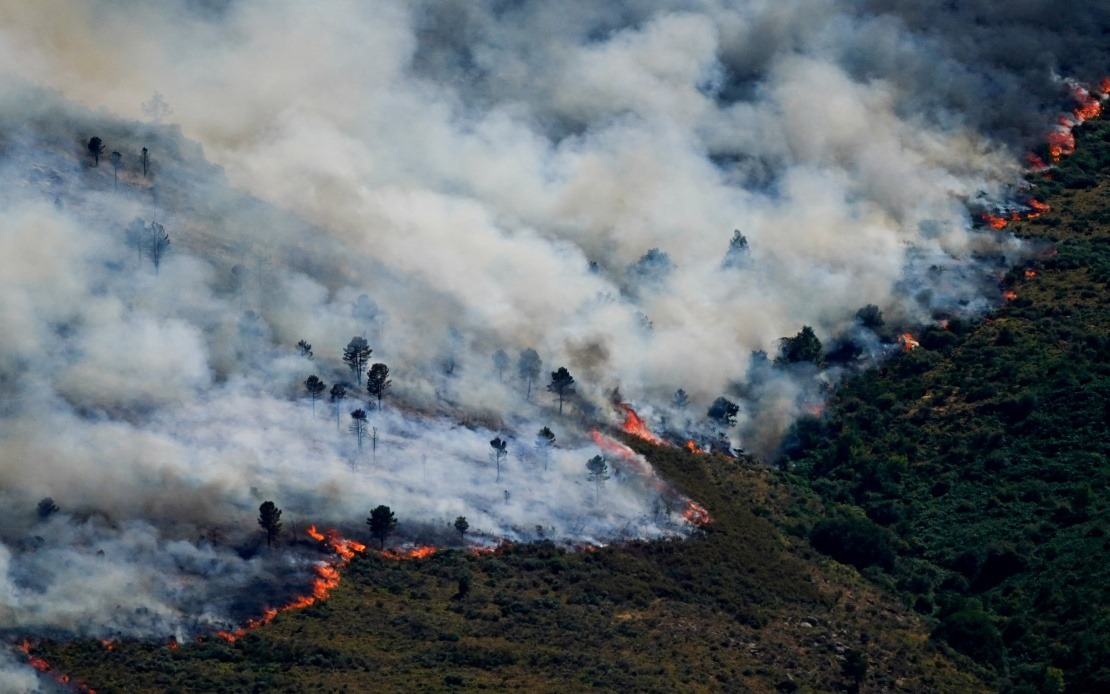
Spain's emergency services mobilized to protect tens of thousands of residents on Saturday as raging forest fires continued to threaten communities across the Madrid region and surrounding provinces. The scale of the evacuation underscores the intensity of the blazes, with nearly 60,000 people forced to abandon their homes in a single day as flames spread across multiple districts north-west of the Spanish capital.
In Ávila province, which sits north-west of Madrid, the evacuation effort concentrated on removing 30,000 residents from immediate danger, according to Francisco Martín Aguirre, the Spanish government's prefect for Madrid. The scale of displacement in this single province illustrates how rapidly the fires had expanded, consuming vast tracts of forest and threatening residential areas with little warning. Such large-scale evacuations require coordinated logistics across multiple agencies, from transportation networks to temporary shelters and emergency provisions.
The evacuation extended well beyond Ávila's borders. An additional 29,488 people were moved to safety from communities encircling Madrid itself, creating a humanitarian challenge that stretched emergency response capabilities across the metropolitan area. The cumulative figure of nearly 60,000 evacuees represents one of Spain's most significant wildfire-related displacement events in recent memory, comparable to major natural disasters that demand national-level response.
Beyond those successfully evacuated, the situation remained dire for thousands unable to leave their homes. The ministry reported that over 28,000 people were trapped in affected areas, unable to depart due to the advancing flames. The greater Madrid area alone accounted for 20,262 people sheltering in place, while a further 8,000 remained in Ávila. This distinction between evacuated and stranded populations highlights the severity of the emergency—as evacuation corridors became impassable, residents faced the harrowing choice of remaining in homes threatened by encroaching fire or attempting dangerous escape routes.
Recognizing the critical nature of the crisis, Prime Minister Pedro Sánchez's administration invoked extraordinary measures on Friday by declaring a "state of emergency of national significance" across the Greater Madrid area and Ávila province. Such declarations grant governments expanded authority to mobilize military resources, requisition materials, impose movement restrictions, and coordinate responses across jurisdictions. The decision reflected official assessment that civilian authorities required additional powers to manage the unfolding emergency effectively.
A significant turning point emerged on Saturday morning when meteorological conditions improved overnight, offering firefighting teams their first meaningful opportunity to gain ground against the flames. The Spanish Interior Ministry acknowledged this shift, signaling that more favorable weather patterns might allow suppression efforts to become more effective. Improved conditions typically mean reduced wind speeds, higher humidity levels, and lower ambient temperatures—all factors that dramatically improve firefighters' ability to contain and extinguish active fires.
From his position at the emergency services' command centre, Sánchez publicly assessed the unfolding situation, cautioning that while the overnight weather improvement created a realistic possibility of controlling the fires during the weekend, such optimism remained heavily qualified. The Prime Minister emphasized that the operational environment remained fundamentally challenging despite marginal improvements in atmospheric conditions. His guarded tone reflected the unpredictability of wildfire behavior and awareness that meteorological forecasts could shift rapidly.
Throughout his public remarks, Sánchez prioritized a singular objective above all competing concerns: preserving human life. The statement encapsulated the government's primary focus on preventing casualties rather than minimizing property damage or environmental impact. For Malaysian readers familiar with regional typhoon and flooding responses, this hierarchy mirrors standard emergency management doctrine—life safety takes precedence over infrastructure, economic, or ecological considerations. The thousands of people either evacuated or sheltering in threatened areas represented the central justification for the emergency declaration and deployment of all available resources.
The Spanish wildfire crisis carries implications extending beyond Iberia. Southern European countries including Spain, Portugal, Greece, and Italy face increasingly severe fire seasons as climate patterns shift, with longer, hotter, drier periods extending the annual fire window. The Madrid incident exemplifies how modern infrastructure and concentrated population settlements in fire-prone regions create mass evacuation scenarios. For Southeast Asia, which confronts similar challenges during haze seasons and dry periods, Spain's experience demonstrates the necessity of robust emergency planning, early warning systems, and coordinated evacuation protocols when rapid-onset disasters threaten populated areas. The Spanish government's decision to declare national emergency status also underscores how regional catastrophes increasingly demand centralized coordination rather than local-level response, a lesson relevant to ASEAN nations preparing for escalating climate-related emergencies.

