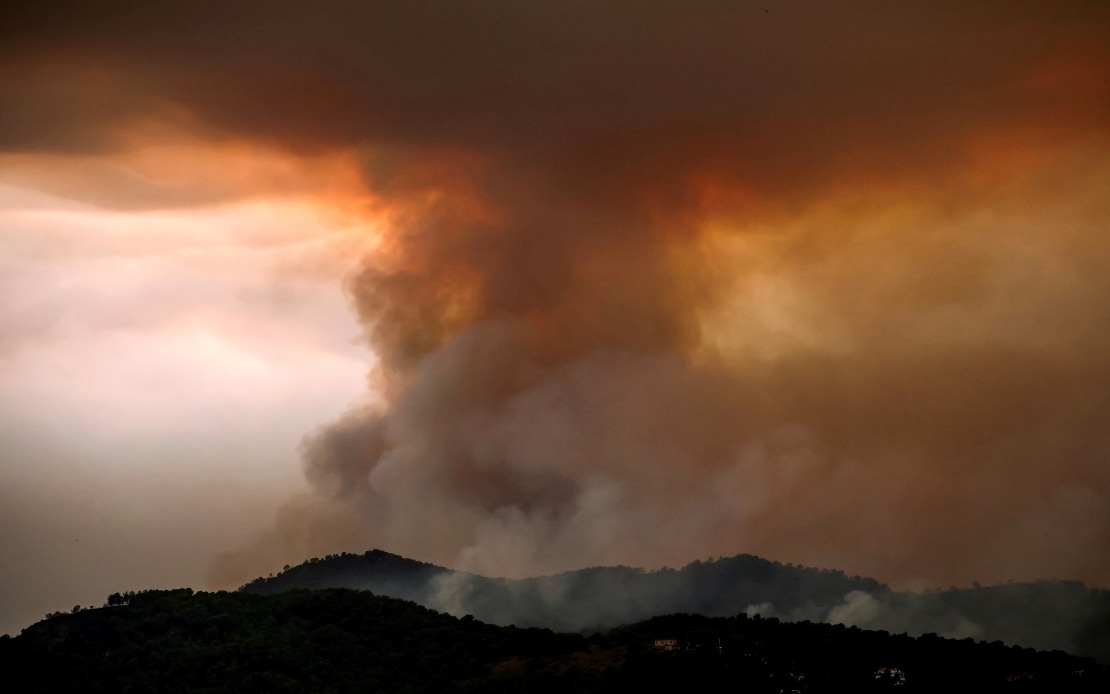
Spain is grappling with an unprecedented wildfire crisis that has consumed vast swaths of central territory, marking the nation's largest fire incident in recorded history. The blaze centred in Avila province alone has already consumed approximately 50,000 hectares, with the overall burned area across the Madrid region, Avila, and Toledo provinces reaching more than 77,000 hectares by late July. The scale of destruction reflects the intensifying climate pressures facing southern European nations, which have become increasingly vulnerable to catastrophic fire seasons as temperatures climb and drought conditions persist across the Mediterranean.
The human toll of the disaster extends across a broad geographical footprint, with nearly 100,000 residents either evacuated from their homes or instructed to remain indoors for their safety. These displacement orders affect communities across 46 municipalities in the three hardest-hit provinces, fundamentally disrupting daily life for tens of thousands of families. The scope of this emergency response underscores the gravity of the situation and represents a substantial logistical challenge for regional authorities attempting to coordinate shelter, supplies, and ongoing communications with affected populations. Concurrently, a separate wildfire that ignited in Castellon province in eastern Spain has threatened an additional 16,000 residents spread across 18 municipalities, suggesting that the crisis is not isolated but reflects broader environmental conditions affecting multiple regions simultaneously.
Responding to the magnitude of the emergency, Spanish authorities have mobilised extensive firefighting resources on an exceptional scale. Thousands of firefighters have been deployed across the affected zones, working in coordination with the Spanish Military Emergency Unit, known as UME, alongside aerial support provided by firefighting aircraft and helicopters. This comprehensive deployment reflects the complexity of managing fires across such vast territory and challenging terrain. Lieutenant General Francisco Javier Marcos Izquierdo, commanding the UME, provided tactical updates indicating that while the fires in Avila and Madrid maintain separate perimeters, they have begun to converge along what he described as a very small and discontinuous front near San Martin de Valdeiglesias. Although firefighters have managed to contain the flame spread at this junction point, securing the complete fire perimeter remains an ongoing operation with uncertain timelines.
Sara Aagesen, Spain's Third Deputy Prime Minister and Minister of Ecological Transition, has been coordinating the national emergency response from an advanced command centre in Navalcarnero, located west of Madrid. She characterised the developing situation as notably complex, with emergency personnel simultaneously managing multiple active fire fronts across distinct geographical zones. Her assessment highlighted the dynamic nature of the crisis, suggesting that conditions could deteriorate further if wind patterns shift or temperatures remain elevated. She explicitly warned that additional evacuation orders may become necessary depending on how the fires progress, and she emphasised that residents displaced from their homes would only be permitted to return once safety conditions had been verified by competent authorities.
Prime Minister Pedro Sanchez visited the affected regions on Sunday to assess conditions firsthand and communicate with emergency responders. Despite acknowledging the extremely complex operational challenges confronting firefighting teams, Sanchez offered a cautiously optimistic assessment, suggesting that the overall trajectory of the crisis appeared to be moving in a positive direction with portions of the fires already brought under control. His statement, while providing some reassurance, also implicitly recognised the volatile nature of wildfire incidents and the possibility of unexpected setbacks. The Prime Minister's physical presence in the disaster zone served both symbolic and practical purposes, demonstrating governmental engagement with the crisis while gathering real-time intelligence about emergency response effectiveness.
The Spanish monarchy also responded to the emergency, with King Felipe VI and Queen Letizia visiting the affected areas to receive detailed briefings on emergency operations and convey solidarity with both displaced residents and the firefighting personnel working under dangerous conditions. These high-level visits underscore the political significance of the disaster within Spain and signal the national priority accorded to resolving the crisis.
The present wildfire emergency must be contextualised within the broader pattern of fire activity affecting Spain throughout 2024. As of 24 July, before the peak of the current crisis, Spanish authorities had recorded 172,453 hectares burned nationwide across multiple incidents. The ongoing fires in central Spain represent a significant acceleration of this trend, suggesting that 2024 could rank among the most destructive fire years in Spanish history. For Malaysian and Southeast Asian observers, Spain's struggle offers concerning parallels to the regional peatland and tropical forest fires that periodically devastate Indonesia, Malaysia, and neighbouring countries, particularly during El Niño episodes when drought conditions intensify. The Spanish experience demonstrates how inadequately prepared even developed nations can be for fire crises at scale, and how climate change is expanding both the frequency and intensity of such disasters across multiple continents simultaneously.
The economic and social ramifications of such extensive evacuations extend far beyond immediate safety concerns. Displaced residents face disrupted access to employment, education, healthcare, and social networks during an indefinite period. Agricultural operations across the affected region have been severely impacted, with farms and rural enterprises potentially suffering long-term productivity losses. The psychological toll on evacuated populations, particularly those facing potential permanent displacement if their homes are destroyed, compounds the immediate physical dangers posed by the advancing flames. Recovery from disasters of this magnitude typically requires multi-year governmental investment and international assistance, straining public budgets already stretched by competing demands.
For Spain, the present crisis represents an urgent impetus to reassess fire prevention strategies, land management practices, and emergency response protocols. The nation's experience illustrates how rapidly natural disasters can escalate beyond pre-established response capacity and how climate variables are increasingly determining the boundaries of what emergency services can effectively manage. The integration of UME military resources alongside civilian firefighting represents an appropriate escalation response, yet such mobilisations remain ultimately reactive rather than preventative. Addressing the root drivers of increasingly severe fire seasons requires long-term environmental and land-use policies that many European nations have only recently begun implementing at scale.

