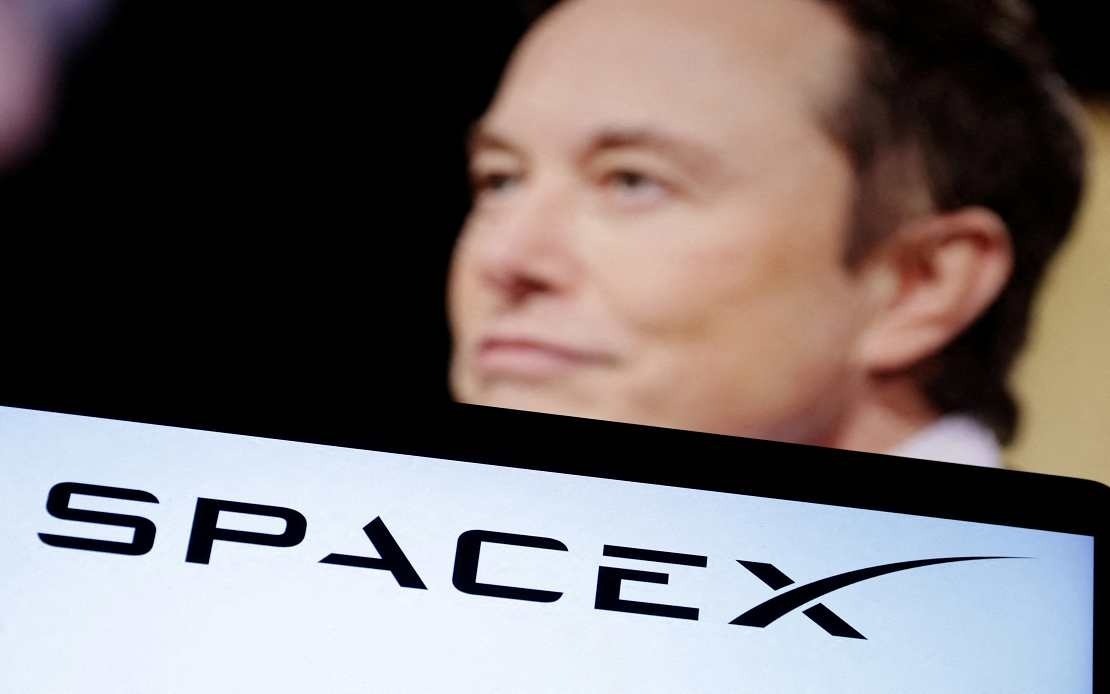
Elon Musk's SpaceX has delivered mixed financial results for the quarter that culminated in the company's landmark initial public offering, revealing the substantial losses that persist beneath a revenue expansion story. The space company posted a net loss of US$541 million for the period, though this represents a significant improvement from the approximately US$1 billion shortfall recorded a year earlier, demonstrating the trajectory toward profitability even as the company continues to burn through substantial capital in pursuit of its ambitious agenda.
The headline that dominates SpaceX's earnings narrative is the dramatic revenue acceleration, which climbed nearly 92 per cent year-on-year to reach US$7.8 billion. This result substantially outpaced analyst consensus expectations, which had clustered around US$6.9 billion, signalling that SpaceX's commercial operations are expanding faster than the financial community had modelled. The company's ability to exceed such expectations provides strategic ammunition for Musk as SpaceX navigates the complexities of being a publicly traded enterprise while pursuing ventures that traditional aerospace and telecommunications firms have deemed too risky or capital-intensive.
Starlink, the company's satellite internet constellation, has cemented its position as SpaceX's principal wealth generator. In the latest quarter, Starlink revenue approached US$4.3 billion, representing growth of roughly two-thirds compared to the same period last year. This expansion reflects not merely geographic market penetration but also a diversification of the customer base, with commercial aviation emerging as a meaningful segment. Airlines increasingly view Starlink's in-flight connectivity as a competitive necessity, providing SpaceX with a stable, high-margin revenue stream that contrasts sharply with the project-based economics of government space contracts.
Operating profit surged 80 per cent to approximately US$1.66 billion, illustrating that SpaceX's operational efficiency is improving even as the company scales. The distinction between operating profit and net loss reveals the weight of capital expenditure, financing costs, and other non-operational drains on the balance sheet—a dynamic that will prove critical as SpaceX transitions from private funding and customer contracts to the scrutiny of public market investors demanding clearer paths to sustained earnings.
The Starlink subscriber base expanded from 10.3 million to 12 million customers within just three months, a growth rate that underscores the service's market appeal across geographies and demographics. This expansion becomes particularly significant when viewed against SpaceX's stated ambition to deploy next-generation satellites capable of linking smartphones directly to the Starlink network. Should this technology mature commercially, it would position SpaceX in direct confrontation with terrestrial telecommunications operators, potentially disrupting the incumbents' profitable core consumer markets and forcing a fundamental reckoning about the future of wireless connectivity architecture.
SpaceX's June IPO was extraordinary by any measure. The company raised US$75 billion at an issue price of US$135 per share, valuing the enterprise at approximately US$1.8 trillion. That valuation reflected an enormous bet on future cash generation and technological breakthroughs, not current financial performance—a disconnect that invited scrutiny regarding whether markets had become untethered from fundamentals. SpaceX's public statements justified the valuation through its artificial intelligence investments and long-term strategic positioning, essentially asking investors to purchase growth and optionality rather than current earnings streams.
The stock market's reception has proven volatile since the IPO. In the weeks immediately following the public listing, retail investor enthusiasm drove the share price above US$225, a 67 per cent premium to the initial offering level. However, this rally proved unsustainable. By Tuesday's close, the stock had retreated to approximately US$125, erasing its post-IPO gains and trading below the issue price. This decline suggests that initial investor euphoria has given way to more sober assessment of the earnings trajectory and the substantial capital outlays required to execute SpaceX's strategy.
The earnings announcement itself triggered another bout of selling pressure, with the stock tumbling as much as eight per cent in after-hours trading. Markets appear to be wrestling with a fundamental tension: SpaceX is clearly executing operationally and expanding revenue at an impressive clip, yet profitability remains elusive and the company continues to consume capital at rates that demand expansion of funding sources or a dramatic improvement in cash conversion efficiency.
A crucial catalyst looms on Thursday, when the lock-up period expires for shares held by company insiders and early investors. These investors now possess the legal right to sell their holdings into the public market, potentially creating significant selling pressure. Should major shareholders elect to cash in on the gains accumulated since SpaceX's founding, the stock could face substantial headwinds. The magnitude and timing of any insider selling will substantially influence whether SpaceX's shares can stabilize or whether the price decline continues as public shareholders reassess valuation multiples.
SpaceX has become architecturally central to United States space ambitions in recent years, providing launch services that NASA and the Department of Defense depend upon as they pursue missions across low Earth orbit and beyond. This strategic importance provides SpaceX with a degree of insulation from pure market forces, ensuring steady government revenue streams. However, the company is simultaneously channelling enormous resources into Starship, its super-heavy lift vehicle currently in test flight phase. Starship promises to fundamentally alter the economics of space access by dramatically reducing per-kilogram payload costs, but realising that promise requires sustained investment through a testing and development cycle whose ultimate completion date remains uncertain.
For Malaysian and Southeast Asian observers, SpaceX's trajectory carries implications across multiple domains. Starlink's regional expansion could reshape connectivity across Indonesia, the Philippines, and other nations where terrestrial broadband infrastructure remains incomplete. Simultaneously, SpaceX's competitive emergence challenges regional telecommunications operators and raises questions about how Southeast Asian regulators should approach satellite internet services. The company's ultimate success in achieving profitability while maintaining its technological edge will influence whether space-based infrastructure becomes a genuine alternative to earth-bound telecommunications for the region.

