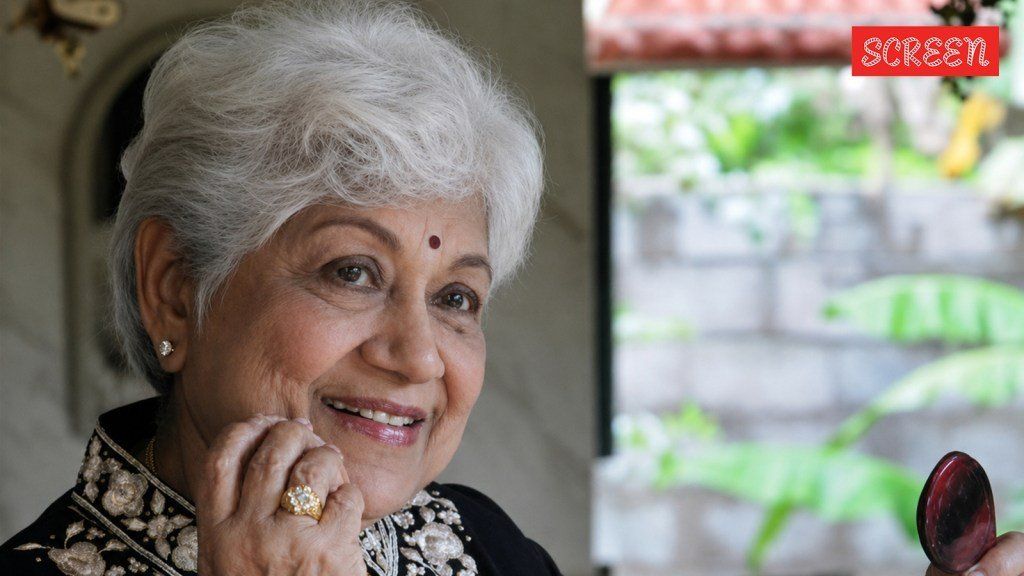
The South Indian film industry lost one of its defining figures on Friday when Sowcar Janaki, the multi-lingual actress who became synonymous with strong maternal characters across Tamil, Telugu, Kannada and Malayalam cinema, passed away at a private hospital in Chennai at the age of 94. Her death came after a short stay in intensive care, with the cause attributed to age-related complications. The news was confirmed by Nassar, president of the South Indian Artistes' Association, in a statement indicating her mortal remains would be displayed at Cenotaph Road in Teynampet from 5 pm onwards.
Born as Sankaramanchi Janaki, the actress carved an extraordinary career spanning over seventy years, beginning in 1950 when Indian cinema was still discovering the potential of female performers beyond romantic leads. Her prolific output of nearly four hundred films remains a testament to her stamina, versatility, and the persistent demand for her talents across the southern film industries. This volume of work places her among the most consistently employed actresses in Indian cinema history, a distinction that speaks to both her professional reliability and the enduring appeal of her presence on screen.
Janaki's recognition extended well beyond the ticket-selling appeal of her films. She received India's Padma Shri, one of the nation's highest civilian honours, acknowledging her contributions to Indian cinema. Her accolades included a Filmfare Lifetime Achievement Award, two National Film Awards, and the Kalaimamani Award, each recognition marking significant milestones in a career that evolved gracefully across multiple decades and language industries. Such honours reflected not merely popularity but critical respect within the film fraternity and governmental cultural institutions.
The response to her passing revealed the depth of affection she commanded among contemporary and subsequent generations of South Indian cinema. Chief Minister C. Joseph Vijay, himself an actor of considerable stature, expressed profound shock at her death, characterizing her as an actress who had secured an indelible place in audiences' hearts across generations. In his Tamil-language statement, he underscored her artistic journey and the range of languages in which she demonstrated her craft, while acknowledging that her loss represented a significant blow to the entire film industry.
Actor Kamal Haasan, one of South Indian cinema's most celebrated figures, shared intimate memories of their professional collaboration stretching across four decades, beginning with the film Paarthaal Pasi Theerum. Haasan noted that Janaki had frequently portrayed his mother on screen during this extended partnership, establishing a dynamic that became familiar to multiple generations of cinema-goers. He credited her with being an irreplaceable talent in South Indian cinema and recalled her association with his mentor, director K. Balachander, while emphasizing the emotional dimension of her passing with characteristically poetic language about motherhood's departure.
Actress Radhika Sarathkumar acknowledged Janaki's role as a path-breaker who combined strength and independence, noting the actress's personal friendship with Sarathkumar's father, the late actor Radha. This intergenerational connection underscored how Janaki's influence extended beyond film into the social fabric of the acting community itself. Such personal testimonies demonstrated that her significance transcended box office metrics or award counts, instead residing in the relationships and mutual professional respect she cultivated.
Telugu cinema luminaries also paid substantial tributes, with Jr NTR and Chiranjeevi both releasing statements in Telugu, the language in which Janaki had delivered many memorable performances. Jr NTR emphasized how her mark on Telugu and Indian cinema remained indelible, while Chiranjeevi provided more detailed reflection on her illustrious career that began with the film Shavukaru and spanned nearly seven decades across multiple linguistic and regional film industries. Chiranjeevi specifically commended her natural acting approach and her capacity to breathe authentic life into diverse character types.
What distinguished Janaki's career was not merely its longevity but its linguistic versatility at a time when few Indian actors achieved genuine success across multiple film industries. Her fluency in Tamil, Telugu, Kannada and Malayalam cinema—coupled with occasional work in Hindi productions—placed her in an exclusive category of performers whose appeal transcended regional boundaries. This multilingual facility proved invaluable during an era when language barrier concerns were far more pronounced, and her willingness to work across industries earned her respect as a truly pan-Indian talent.
Janaki's final film appearance in Tamil came through Biskoth in 2020, while her Telugu cinema bow-out occurred with Anni Manchi Sakunamule in 2023, demonstrating that she remained professionally active well into her nineties. Such late-career work, even in smaller roles, reflected both her commitment to the craft and the continuing affection with which producers and directors approached her for inclusion in their projects. Her transition into television work further illustrated her adaptability to evolving media landscapes throughout her extended career.
The loss carries particular significance for Malaysian and Southeast Asian audiences with strong Tamil and Telugu-speaking communities who grew up watching Sowcar Janaki's films in cinema halls and, subsequently, on television broadcasts. Her career represented a golden era of South Indian cinema when regional film industries possessed considerable creative vitality and international reach. For many viewers across Malaysia, Singapore and other parts of Southeast Asia, Janaki's films served as cultural anchors, connecting diaspora communities to their linguistic and cinematic heritage.
Beyond individual tributes, Janaki's passing marks the end of a distinctive era in South Indian cinema. She belonged to a generation of actresses who established themselves before the star system became as concentrated as it later became, and who demonstrated through sheer persistent work that sustained careers could be built through character acting and versatility rather than reliance on hero-pairing formulas. Her nearly four-hundred-film career, spanning languages, studios, and stylistic changes across cinema history, set a professional standard that few contemporary actresses would attempt to match.
The grandmother figure she so often played on screen became, through repetition and genuine warmth of portrayal, an archetype she owned completely. Her death removes from cinema and from public life an actress who represented not merely entertainment but a living connection to cinema's mid-twentieth-century flowering across South India. Industry observers and film historians will likely reassess her contributions more comprehensively in coming months, recognizing in her prolific output and consistent quality a reflection of South Indian cinema's sustained creative health across her seven decades of work.

