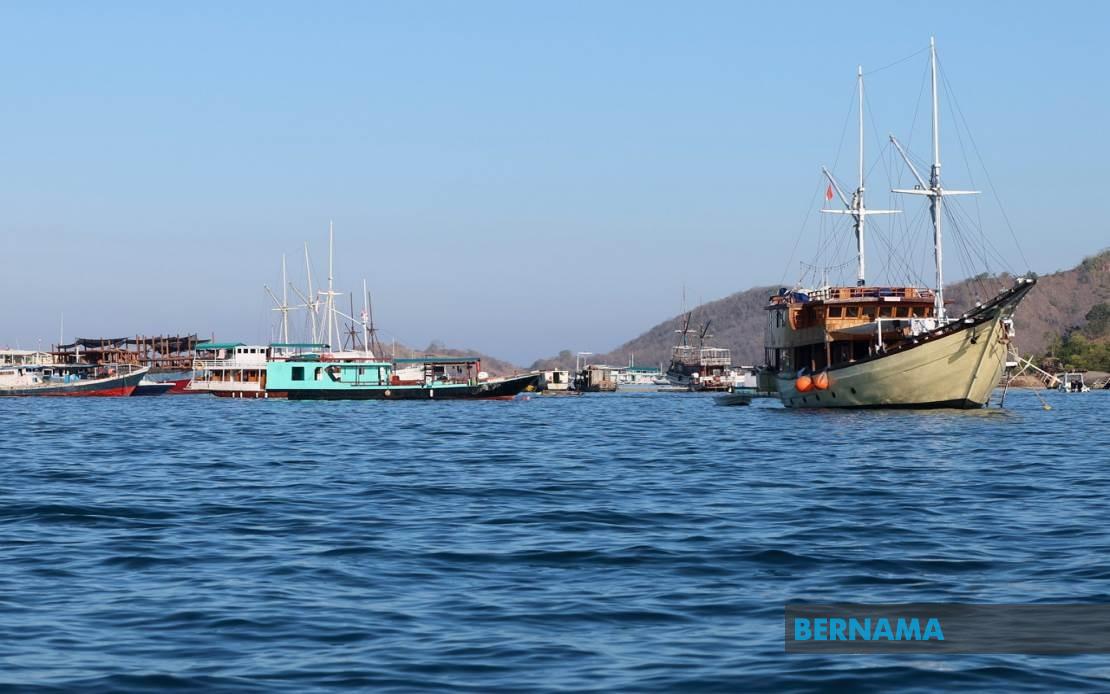
A cluster of significant policy announcements across Southeast Asia signals shifting economic and administrative priorities in the region. Indonesia's government has committed to a substantial restructuring of its state enterprise sector without triggering redundancies, addressing long-standing concerns about efficiency in the public economy. Meanwhile, neighbouring nations are pursuing parallel paths of reconstruction, security consolidation, and digital modernisation, each reflecting distinct national challenges and strategic objectives that carry implications beyond their borders.
Indonesia's pledge to reduce its portfolio of state-owned enterprises to between 250 and 300 entities represents a continuation of Jakarta's ongoing efforts to streamline public sector holdings. The assertion that consolidation will not result in employee layoffs signals the government's attempt to balance fiscal discipline with social stability—a delicate equilibrium that many regional governments struggle to maintain. State enterprises have long been vectors for political patronage and budgetary strain across Southeast Asia, and Indonesia's approach offers a template, albeit one whose success will depend heavily on implementation details and labour retraining programmes. The pledge deserves scrutiny: whether the government can genuinely absorb displaced workers from dissolved entities into surviving enterprises, or whether it will rely on natural attrition and early retirement schemes, remains unclear but crucial for public acceptance.
In Indonesia, the political environment appears increasingly contentious, with reports of mass arrests following anti-government demonstrations in Surabaya. The National Police's detention of dozens of protesters during a rally critical of President Prabowo Subianto's policies underscores mounting tensions between the administration and segments of civil society. Such incidents reflect broader anxieties about governance, economic management, and the pace of policy reform. For Malaysian observers, these developments serve as a reminder of the volatility inherent in larger, more populous democracies where street politics can rapidly escalate. The intersection of labour displacement through SOE consolidation and heightened political dissent creates a potentially combustible mix that bears watching.
Myanmar's post-earthquake recovery efforts demonstrate the scale of disaster management challenges confronting the region. The restoration of approximately 175 ancient religious structures out of 1,799 damaged in the March 2025 earthquake marks meaningful progress, yet the sheer volume of affected heritage sites highlights the vulnerability of Southeast Asian infrastructure to seismic activity. Religious sites carry profound cultural and spiritual significance across Myanmar, and their restoration addresses not merely physical reconstruction but also community morale and cultural continuity. For Malaysia, with its own seismic zones and architectural heritage, Myanmar's experience underscores the importance of earthquake preparedness and heritage preservation frameworks.
Beyond physical reconstruction, Myanmar is simultaneously pushing its small and medium-sized enterprises toward digital transformation as part of its Digital Economy 2030-2031 agenda. This dual focus—simultaneous recovery and modernisation—reflects an ambitious vision, though one that risks overwhelming businesses already stretched by post-disaster challenges. Digital adoption among micro, small and medium enterprises remains patchy across Southeast Asia, and Myanmar's directive will require substantial support infrastructure, skills development, and investment. The initiative aligns with broader regional trends toward e-commerce and digital payment systems, positioning Myanmar to participate more fully in ASEAN's digital economy framework, should security and political conditions stabilise.
In the Philippines, the Southern Luzon Command has reported significant security achievements, with the Calabarzon region designated as a Stable Internal Peace and Security area following sustained anti-insurgency operations and the decline of communist insurgent activity. This declaration represents a strategic victory in a decades-long campaign, though it also reflects the reality that internal security remains contested across much of the Philippine archipelago. For Malaysia, which faces its own counterinsurgency and security challenges, the Philippines' experience offers lessons in sustained commitment, community engagement, and the intersection of military and civilian strategies. The designation of Calabarzon as stable should stimulate investment and economic development in the region, potentially serving as a model for other contested areas.
Diplomatically, the Philippines faces renewed friction with China over historical territorial disputes. Defence Secretary Gilberto Teodoro Jr.'s criticism of the Chinese Embassy's rejection of the 2016 Arbitral Award reflects the persistent challenge of managing great power expectations in the disputed South China Sea. The Philippines' frustration with Beijing's dismissal of international legal instruments resonates across ASEAN, where multiple nations face similar challenges in asserting sovereignty and internationals law. This tension underscores the fragility of regional stability and the capacity of external powers to create friction even amid formal diplomatic channels.
Vietnam's commitment to launching a national property code and digital property identification system on July 1 signals a modernisation of its real estate sector aimed at increasing transparency and reducing speculative distortions. Such systems remain relatively novel across Southeast Asia, where property markets often operate with limited public information and significant informal activity. The initiative promises to improve tax collection, facilitate legitimate transactions, and curb illicit capital flows through property purchases. For Malaysian observers familiar with domestic property market challenges, Vietnam's approach offers an instructive comparison, demonstrating how digital infrastructure can address longstanding governance challenges in asset registration and market integrity.
Vietnam's simultaneous deployment of a 41-member search-and-rescue team to earthquake-affected Venezuela demonstrates the country's capacity and willingness to provide humanitarian assistance beyond its immediate region. This gesture reflects Vietnam's positioning as a responsible regional actor and its recognition that disaster response transcends geographic boundaries. Such humanitarian missions enhance diplomatic relationships while building goodwill and technical expertise. For Malaysia, active engagement in disaster relief across the Global South remains an important component of soft power and demonstrates regional leadership within ASEAN.
Collectively, these developments across four major Southeast Asian economies reveal governments pursuing parallel modernisation agendas while navigating security, stability, and social management challenges. Indonesia confronts the intersection of economic restructuring and political dissent; Myanmar balances disaster recovery with digital transformation; the Philippines consolidates security gains while managing great power competition; and Vietnam advances institutional reforms while maintaining humanitarian commitments. These patterns suggest that Southeast Asian policymakers increasingly view digital transformation, institutional strengthening, and security consolidation as complementary rather than competing priorities, each reinforcing the others. The success of these initiatives will substantially shape the region's trajectory over the coming decade, with implications for Malaysia's broader strategic environment, investment opportunities, and security architecture.

