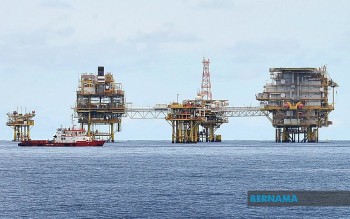
Southeast Asia's offshore energy sector is experiencing unexpected momentum, with greenfield capital expenditure projected to climb 12 per cent to surpass US$100 billion despite the recent West Asian geopolitical turmoil. Hong Leong Investment Bank Bhd's analysis reveals that the region is prioritising new offshore development projects more aggressively than previously anticipated, suggesting confidence among energy majors that current regional stability will persist. This expansion reflects a broader shift in capital allocation strategies across the Asia Pacific, where investors are balancing geopolitical risks against long-term energy security imperatives that favour diversified supply chains beyond traditional Middle Eastern sources.
The investment backdrop for Southeast Asia has been shaped considerably by the tentative US-Iran ceasefire arrangement and the subsequent 14-point memorandum of understanding signed between Washington and Tehran. While analysts caution that this diplomatic breakthrough remains fragile, the very fact of its execution has prompted energy companies to recalibrate their risk assessments. The region's attractiveness as an investment destination has consequently improved, as companies move capital from higher-risk jurisdictions towards established Southeast Asian basins where regulatory frameworks and operational experience are well-established. For Malaysian energy stakeholders, this reorientation of global capital represents a strategic opportunity to consolidate the nation's position as a preferred hydrocarbon development hub.
Brownfield capital expenditure, which funds enhancements to existing infrastructure and production systems, is also accelerating across the Asia Pacific. South Asia is anticipated to lead this category with a 23 per cent increase, while Southeast Asia follows with a more modest 3 per cent expansion. This bifurcated investment pattern reflects different maturity levels across the region's oil and gas assets. Brownfield spending demonstrates that energy companies remain committed to maintaining and upgrading established producing fields, a signal that despite oil price volatility, operators view their regional portfolios as economically sound and worthy of continued investment. For Southeast Asian workers and service providers, this commitment translates into sustained demand for skilled labour in maintenance, engineering, and support functions across existing production systems.
Shipping data through the critical Strait of Hormuz, one of the world's most strategically important energy chokepoints, is showing signs of normalisation following the diplomatic agreement. However, satellite monitoring reveals a peculiar complication: many vessels transiting the passage have disabled their Automatic Identification System transponders, suggesting that actual traffic flows may be higher than officially recorded figures indicate. This opacity in shipping patterns reflects lingering merchant concerns about transit safety and demonstrates that while geopolitical tensions have cooled, underlying anxiety about the corridor's stability persists. The implications for Southeast Asia are significant, as any sustained disruption to Hormuz flows would amplify the regional premium on locally-sourced and regionally-developed energy supplies.
Hong Leong Investment Bank has anchored its outlook for the oil and gas sector on two complementary investment dynamics. The first centres on whether diplomatic resolution will lead to improved energy security architecture and higher strategic petroleum reserves across consuming nations, which would benefit pipeline operators and terminal storage facilities throughout the Asia Pacific. This dimension reflects how geopolitical instability creates structural demand for infrastructure that enhances supply resilience. The second theme focuses on an anticipated Petronas capital expenditure acceleration beginning in 2027, a timing that aligns with Malaysia's medium-term development cycles. Should this upcycle materialise, downstream activity within Malaysia's oil and gas services and equipment sector would receive substantial stimulus, particularly firms engaged in upstream project execution, hook-up and commissioning work, marine support operations, and fabrication services.
The investment bank's revised Brent oil price forecasts signal confidence in a price floor rather than expectations of dramatic appreciation. Brent is now projected at US$80 per barrel for 2026, down from a previous US$90 estimate, while 2027 is expected to stabilise around US$75. This downward revision reflects the impact of inventory accumulation and the assumption that global supplies will gradually normalise. However, the bank's reasoning reveals important nuance: it expects oil prices to remain buoyed near these levels rather than decline substantially further, anchored by structural inventory concerns. The US Energy Information Administration's data indicates that OECD commercial stockpiles are projected to fall to 50 days of supply by late 2026, significantly below pre-conflict levels that exceeded 60 days, establishing a supportive price foundation.
The mathematics of global inventory rebuilding create a multi-year tailwind for oil prices at levels that are meaningful for producers but not prohibitively expensive for consumers. Energy security considerations worldwide have shifted the acceptable threshold for strategic reserves upward, implying that even as production normalises, the inventory replenishment process itself will support prices above historical trends. If inventories take longer than anticipated to rebuild to preferred levels—a realistic scenario given the complexity of ramping production and the risk of future disruptions—oil could remain supported above US$75 per barrel into early 2027. This price durability is crucial for Southeast Asian producers like Malaysia and Thailand, whose fiscal planning and national oil companies depend on stable mid-range pricing rather than boom-bust cycles.
Production recovery timelines present another variable that could extend price support. Shut-in volumes in the Strait of Hormuz region climbed sharply from 35 per cent of capacity in March 2026 to 45 per cent by May, reflecting the severity of recent disruptions. As these offline fields come back into production, the process will likely be gradual and subject to operational challenges, meaning the supply-demand balance will tighten more slowly than might occur in a rapid normalisation scenario. This extended recovery trajectory favours the regional oil and gas industry by maintaining price stability and predictability, allowing for medium-term capital planning that Southeast Asian energy companies require for major project development.
Economists at independent analysis firm IPPFA note that crude prices have retreated substantially from peak levels and are now oscillating around US$70–75 per barrel for both Brent and West Texas Intermediate benchmarks. This price range represents something of a Goldilocks scenario for broader economic health: low enough to ease cost pressures on energy-intensive industries and reduce input cost inflation, yet high enough to sustain investment in energy sector development. Should these price levels persist over coming months, the business environment across the region would improve markedly. Manufacturing competitiveness would benefit from lower energy inputs, consumer purchasing power would be protected from energy-driven inflation, and central banks would gain policy space to support growth through monetary accommodation.
The macroeconomic implications extend beyond energy sectors narrowly defined. Sustained prices in the US$70–75 range would dampen cost-push inflation globally, alleviating one of the primary concerns that has constrained monetary policy flexibility across central banks in the Asia Pacific and globally. This relief would reinforce ongoing economic recovery, strengthen investment demand from businesses confident in lower input costs, and support consumer spending as households feel less squeezed by energy expenses. For Malaysia and Southeast Asia more broadly, such an environment would create conditions favourable for business expansion and employment growth, with regional energy companies able to fund capex programmes while supply-chain industries benefit from sustained demand and pricing predictability.
At the time this analysis was prepared, Brent crude was trading at US$69.17 per barrel, up 0.90 per cent, while West Texas Intermediate stood at US$72.67, up 0.94 per cent. These modest gains suggest that markets are digesting the recent diplomatic progress and inventory dynamics with measured optimism rather than dramatic repricing. The stability in crude values reflects a market expectation that the current geopolitical detente and price range will likely persist, providing regional energy investors with the confidence needed to commit capital to Southeast Asian offshore projects. For Malaysia specifically, this backdrop supports the investment thesis underlying major development programmes and positions the nation's energy sector as a beneficiary of global capital reallocation toward lower-risk jurisdictions with stable supply profiles.

