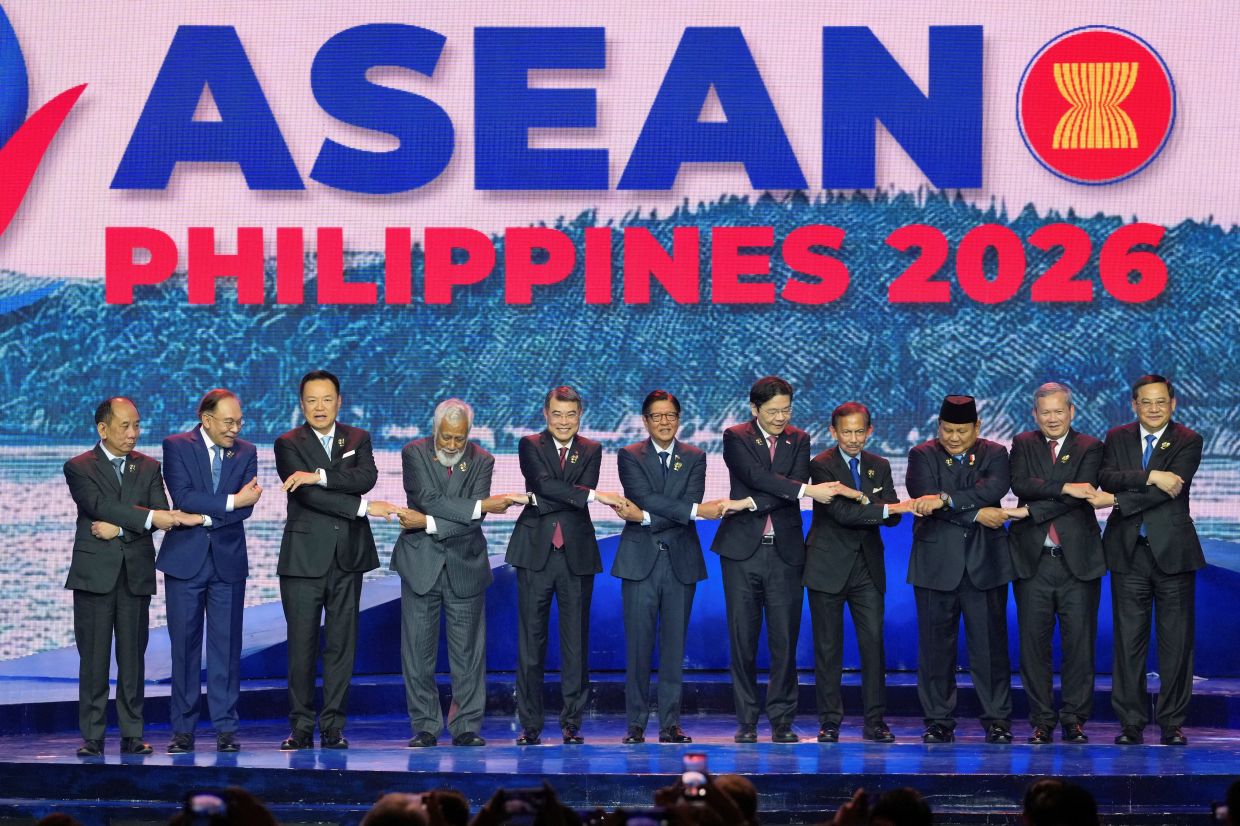
The Philippines will host a significant gathering of Southeast Asian foreign ministers this week in Manila, bringing together diplomatic representatives from across the region alongside key global powers to address mounting security concerns that threaten regional stability and prosperity. The three-day conference, anchored by the Association of Southeast Asian Nations, assumes particular urgency given the convergence of multiple crises demanding immediate diplomatic attention. U.S. Secretary of State Marco Rubio, Chinese Foreign Minister Wang Yi, and Russian Foreign Minister Sergey Lavrov rank among the high-profile attendees, signalling the international stakes involved in discussions that will reshape engagement patterns across Asia and beyond.
The immediate trigger for heightened anxiety stems from renewed Middle East hostilities, which have sparked genuine concerns about broader geopolitical escalation. Southeast Asian governments worry that intensifying confrontation between the United States and Iran could destabilise shipping lanes crucial to their economic survival. The Strait of Hormuz, through which approximately one-fifth of global petroleum supplies normally transit, serves as a critical chokepoint for a region heavily dependent on Middle Eastern energy resources. For countries like the Philippines, Indonesia, Thailand, and Vietnam, disruptions to oil and gas supplies carry direct consequences for industrial production, transportation costs, and household energy expenses.
The economic vulnerability of Southeast Asia to Middle East turmoil became starkly apparent when Philippine President Ferdinand Marcos Jr. declared a national energy emergency in March, demonstrating how supply shocks reverberate throughout the region's economy. Governments across Southeast Asia remain acutely conscious that another major conflict in the Middle East could trigger inflation, energy rationing, and broader economic hardship affecting their citizens. This concern explains why ASEAN foreign ministers plan to issue a joint statement expressing alarm over current hostilities and appealing to both the United States and Iran to resume diplomatic channels before the situation deteriorates further.
Parallel to these external security anxieties, the diplomatic gathering provides a platform for addressing long-standing internal regional problems that have resisted resolution. The Myanmar crisis represents perhaps the most persistent humanitarian catastrophe afflicting Southeast Asia, with the military coup in 2021 against Aung San Suu Kyi's democratically elected government triggering a devastating civil war. Official figures compiled by the Assistance Association for Political Prisoners indicate that more than 8,100 individuals have perished in the conflict, whilst nearly 22,500 remain imprisoned, suggesting a humanitarian emergency of staggering proportions unfolding within the ASEAN community.
The bloc's 2021 five-point peace plan has demonstrably failed to arrest the violence, primarily because Myanmar's military government has refused to implement key provisions whilst simultaneously resisting international pressure. This dysfunction prompted ASEAN to impose a controversial sanction, barring Myanmar's senior military officials from attending top-level regional summits. However, Philippine Foreign Secretary Theresa Lazaro, serving as ASEAN's special envoy on the Myanmar situation, recently engaged directly with Myanmar's Foreign Minister Tin Maung Swe in Bangkok during the first high-level diplomatic contact in five years. Rights advocates immediately criticised this overture as effectively circumventing the earlier ban and rewarding military intransigence without securing concrete commitments to ceasefire arrangements or humanitarian concessions.
Lazaro has defended the diplomatic engagement as a necessary step toward breaking the diplomatic deadlock, arguing that meaningful progress toward peace requires sustained dialogue with all parties to the conflict, including the military-backed government. In a follow-up initiative, both she and Thai Foreign Minister Sihasak Phuangketkeow subsequently met with representatives of Myanmar's ethnic armed organisations in Pattaya, underscoring ASEAN's attempt to maintain communication channels with all warring factions. The diplomatic strategy reflects a pragmatic recognition that exclusionary approaches have failed to produce results, yet the approach remains contentious within the international human rights community, which views direct engagement with Myanmar's military leadership as tacit acceptance of their legitimacy.
The South China Sea disputes will occupy substantial time during the ministerial discussions, particularly negotiations regarding a proposed code of conduct between China and ASEAN designed to manage tensions and prevent confrontations from escalating into open conflict. The territorial disagreements involve China, Taiwan, and multiple ASEAN members including the Philippines, Vietnam, Malaysia, and Brunei, but recent years have witnessed an alarming frequency of dangerous confrontations between Chinese and Philippine coast guard vessels operating in contested waters. These incidents have generated profound concern within the Philippines and among ASEAN members that uncontrolled escalation could trigger military conflict with catastrophic regional consequences.
Washington's deepening entanglement in Middle East affairs has prompted quiet but serious concerns throughout Southeast Asia regarding American strategic attention to Asia-Pacific matters. The Trump administration's commitment to supporting Taiwan and countering what it characterises as aggressive Chinese behaviour in the region requires sustained military presence and diplomatic engagement, yet the allocation of substantial American military resources to Middle East operations raises questions about the credibility of long-term American commitments to regional security. Rubio's attendance at the Manila talks represents an explicit effort to reassure Southeast Asian governments that the United States remains focused on Indo-Pacific stability despite contemporary Middle East preoccupations.
Rubio has expressed openness to meeting with Chinese Foreign Minister Wang Yi, though no formal bilateral session had been confirmed prior to the Manila gathering. The prospect of US-China engagement at the ministerial level carries significance for regional observers seeking signs of whether the incoming Trump administration intends to maintain dialogue channels or pursue confrontational approaches toward Beijing. Rubio's comments regarding the need for sustained communication between major powers, whilst acknowledging inevitable disagreements, suggest a diplomatic posture distinct from more belligerent rhetoric sometimes associated with the administration, though the practical substance of US-China cooperation remains unclear.
The Quad alliance, comprising the United States, India, Japan, and Australia, will feature prominently in Rubio's engagement schedule alongside bilateral ASEAN discussions. This grouping represents a cornerstone of American strategy to maintain its regional influence and counterbalance Chinese power projection, though Beijing has consistently denounced the arrangement as a containment mechanism designed to impede China's legitimate development. The Philippine chairmanship of ASEAN places Manila in a delicate diplomatic position, requiring balanced engagement with all external powers whilst prioritising the regional bloc's consensus-driven decision-making processes.
Ukraine's position at the proceedings underscores the geopolitical complexities surrounding the Manila gathering. Ukrainian Foreign Minister Andrii Sybiha has received an invitation to attend a Friday ceremony commemorating ASEAN's 1976 nonaggression treaty, yet he will not participate in the main ministerial sessions, reflecting ASEAN's traditional emphasis on regional solidarity and its historical reluctance to become embroiled in external conflicts beyond Southeast Asia. The absence of planned bilateral meetings between Rubio and Lavrov, despite their simultaneous presence in Manila, illustrates the profound diplomatic distance separating Washington and Moscow, though both maintain engagement channels through the ASEAN platform.
The convergence of these multiple challenges—Middle East instability, Myanmar's humanitarian catastrophe, South China Sea tensions, and great power competition—places extraordinary demands on ASEAN's diplomatic capacity. The bloc's consensus-based decision-making model, whilst historically effective in maintaining regional cohesion, faces pressure from divergent interests and external pressures. ASEAN members maintain varying strategic relationships with China, the United States, and Russia, complicating efforts to forge unified positions on contentious issues. The Manila ministerial talks will test whether ASEAN can project sufficient diplomatic unity to influence major powers' behaviour whilst simultaneously addressing internal humanitarian crises and territorial disputes threatening the region's stability and prosperity.

