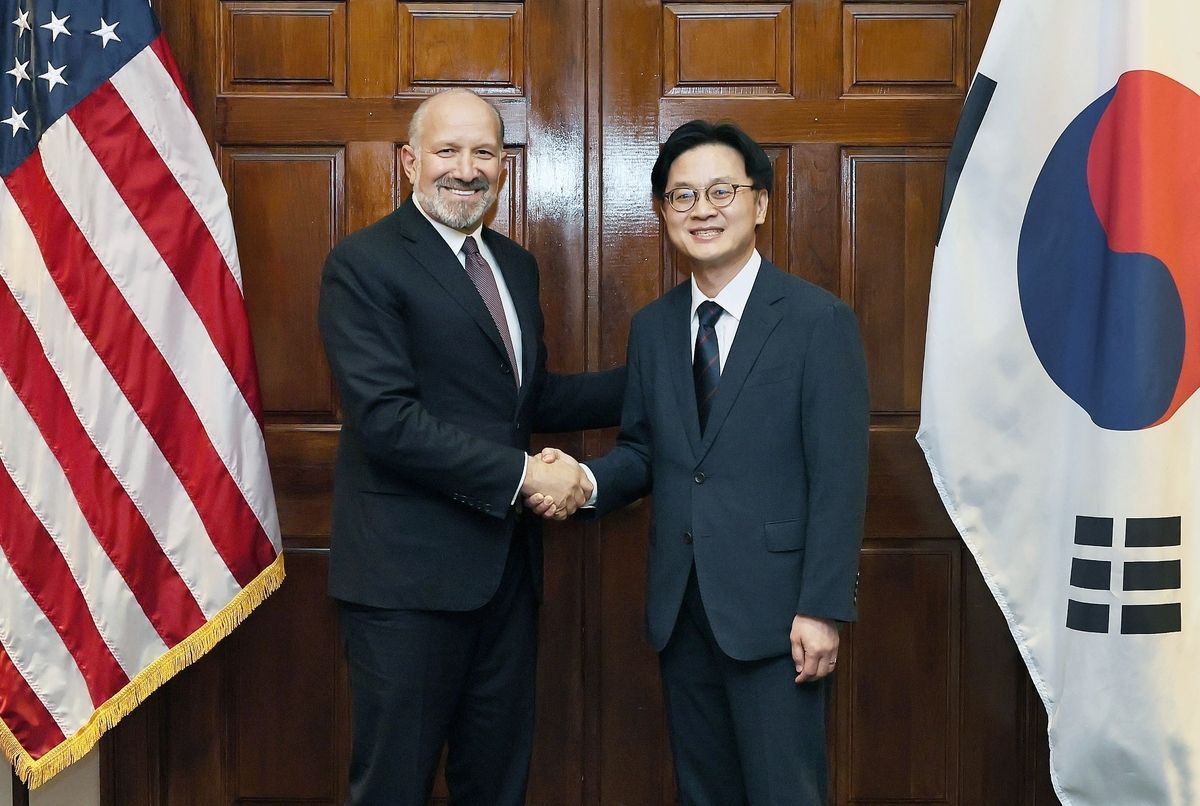
South Korea's Minister of Trade, Industry and Resources Kim Jung-kwan is travelling to Washington this week to engage with senior American officials on trade and investment matters, as Seoul prepares for what could be a consequential US tariff announcement under Section 301 of the Trade Act. The visit, scheduled from July 22 to 25, represents Seoul's effort to position itself proactively ahead of a US decision on an investigation into labour practices—a move that local Korean media suggests could impose fresh tariff burdens on South Korean manufacturing and exports.
The timing of Kim's visit underscores the delicate balance South Korea must maintain in its relationship with Washington. While the United States remains a crucial ally and trading partner, the administration's protectionist stance and its focus on labour standards create vulnerabilities for Korean industry. The Section 301 investigation framework, traditionally employed to counter unfair trade practices, is being applied increasingly to labour compliance and supply chain ethics—areas where enforcement remains ambiguous and contentious. For Seoul, the window to shape the narrative and negotiate the terms of any potential tariffs has narrowed considerably, making ministerial-level engagement essential.
During his Washington visit, Kim will meet with US Commerce Secretary Howard Lutnick to explore opportunities for strategic South Korean investment in America and address broader bilateral trade concerns. This conversation carries particular significance given Lutnick's influential position in shaping trade policy under the current administration. The emphasis on Korean investment into the United States reflects a sophisticated diplomatic strategy: by demonstrating economic commitment and job creation on American soil, Seoul hopes to offset protectionist sentiment and create stakeholder interest in maintaining stable trade relations. South Korean companies have already poured billions into US manufacturing, particularly in semiconductors and battery production, but further expansion could provide additional leverage in negotiations.
Beyond commerce, Kim is scheduled to meet Energy Secretary Chris Wright and other officials to discuss cooperation on resources and energy matters. This diversification of engagement reflects South Korea's understanding that bilateral relations extend far beyond traditional trade metrics. Energy security has become a cornerstone of South Korean policy given the nation's resource scarcity and dependence on imports. Positioning South Korea as a reliable partner in critical minerals and energy supply chains—areas where Washington is keen to reduce dependence on China—could help shield Korean exports from tariff action and demonstrate mutual strategic benefit.
A centrepiece of Kim's visit is the opening ceremony for the South Korea-U.S. Shipbuilding Partnership Center in Washington on Thursday. This facility, established following a May agreement between Seoul's Trade Ministry and the US Commerce Department, formalises institutional cooperation between shipbuilders from both nations. The symbolism is significant: shipbuilding represents a sector where South Korean companies maintain formidable competitive advantage, and the partnership centre legitimises that expertise while creating opportunities for joint ventures and technology transfer. For American stakeholders, such cooperation could ease concerns about technological vulnerability and supply chain concentration.
The shipbuilding initiative reflects South Korea's strategic pivot towards embedding itself more deeply in American industrial ecosystems rather than simply competing across borders. This aligns with the broader framework established by South Korea's law that took effect in June, designed to facilitate strategic investment in the United States. Kim has indicated that part of his mission involves clarifying and advancing specific investment projects under this programme, transforming it from theoretical framework into concrete commercial activity. Such initiatives serve a dual purpose: they expand South Korean corporate presence in America while simultaneously creating constituencies—workers, suppliers, local communities—with vested interests in maintaining friendly trade relations.
For Malaysia and other Southeast Asian economies, South Korea's predicament carries instructive lessons. As middle-income manufacturing nations, Malaysian firms face similar vulnerabilities to labour-related trade investigations and tariff actions. South Korea's diplomatic approach—combining high-level engagement, investment incentives, and institutional partnership arrangements—provides a potential template for how smaller trading nations can navigate great power protectionism. The willingness to embed investment commitments into formal structures, rather than relying solely on market forces, demonstrates how strategic foresight can mitigate trade risks.
Kim's public statements before departure emphasised Seoul's commitment to implementing tariff agreements and maintaining stable bilateral trade relations. This measured tone reflects the political sensitivity of the moment. South Korean industry—particularly automotive, electronics, and petrochemical sectors—faces substantial exposure to American tariff action, with cascading effects throughout regional supply chains. Any US tariffs on Korean products would likely reverberate through Southeast Asian suppliers and manufacturers dependent on Korean inputs or competing in American markets.
The broader context makes this visit particularly consequential. South Korea's trade surplus with the United States, while modest compared to China, remains a point of friction in American trade discourse. Simultaneously, Washington's strategic interest in South Korea as a security partner in Northeast Asia complicates purely economic calculations. Kim's meetings will likely explore whether the security dimension of the alliance can be leveraged to obtain trade concessions or at least prevent tariff escalation. This intersection of military and commercial relationships adds another layer to negotiations, though it also creates risk should either side attempt to weaponise security arrangements for commercial gain.
The resolution of the forced labour investigation will likely set the tone for broader US trade policy towards South Korea over the coming months and years. If the investigation concludes with significant tariffs, it could trigger retaliatory measures from Seoul and complicate ongoing negotiations on other fronts, including advanced technology trade and investment in critical sectors. Conversely, if Kim's engagement proves effective in convincing American officials of South Korean compliance efforts and the benefits of continued cooperation, it could establish a more collaborative framework for addressing future trade disputes. For Korean industry and the broader region, the success or failure of this visit will reverberate well beyond the immediate tariff question, shaping expectations for how trade friction will be managed in the years ahead.

