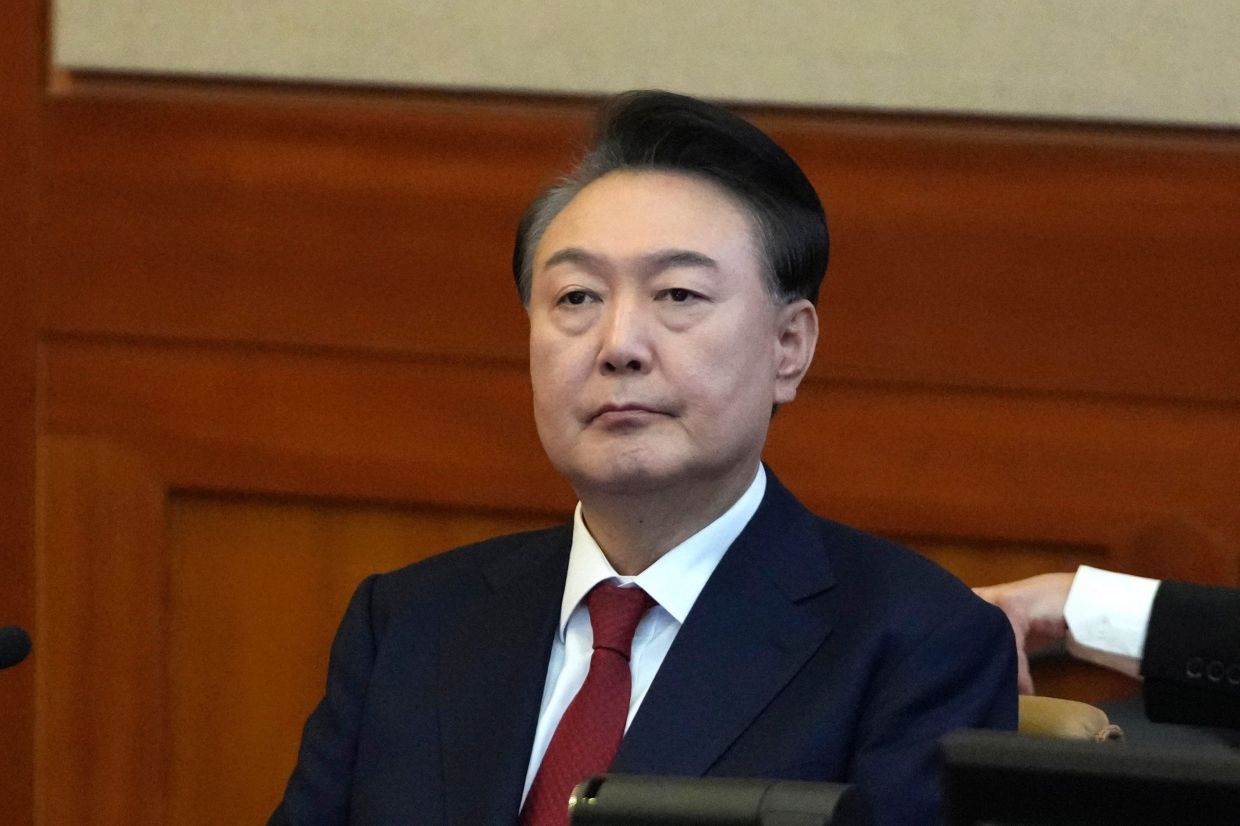
South Korea's Supreme Court has delivered its final verdict on ex-president Yoon Suk Yeol's conviction, upholding a seven-year prison sentence handed down for his role in orchestrating the nation's ill-fated martial law declaration in December 2024. The ruling, announced on Thursday, represents the end of the legal road for one of the highest-profile cases to rock the country in recent years, with judges dismissing all appeals and declaring that the lower court's judgment "contained no errors" in its assessment of the charges.
The Supreme Court's decision affirms convictions spanning a range of serious offences related to Yoon's abortive attempt to suspend civilian rule. The charges covered obstruction of cabinet deliberations through Yoon's selective convening of ministers before the martial law announcement, creation and destruction of false documentation bearing forged signatures of the prime minister, and the direction of officials to circulate misleading statements to international media outlets. Additionally, Yoon was found guilty of ordering an army commander to expunge records from secured military communications systems, actions designed to cover his tracks following the declaration's collapse.
The path to this Supreme Court confirmation involved escalating sentences at successive judicial levels. When a lower court first examined the case in January, it convicted Yoon on most charges and imposed a five-year sentence. The following April, an appeals court reviewed the verdict and determined that additional evidence warranted a guilty finding on the count involving the misleading press release sent to foreign media. This reconsideration led the appellate judges to increase the penalty to seven years. Prosecutors, believing the conduct warranted harsher punishment, had requested a decade-long sentence, while Yoon's legal representatives contested the verdict entirely. With both sides appealing to the nation's highest tribunal, the Supreme Court's Thursday ruling closed the door on further appeals in this particular case.
Yoon's defence team responded to the Supreme Court's decision with evident dismay, accusing the justices of reaching their conclusions "without sufficient deliberation" and flagging their intention to pursue constitutional challenges to the ruling. The lawyers have signalled plans to file formal complaints regarding the court's handling of the matter, suggesting they intend to exhaust remaining legal avenues despite the finality of Supreme Court decisions under South Korean law.
The dramatic events that precipitated these convictions unfolded on a December evening in 2024 when Yoon delivered a shock late-night televised address announcing the suspension of civilian government. The declaration plunged South Korea into unprecedented constitutional turmoil, though martial law's actual tenure proved mercifully brief. Legislators convened in emergency session and moved swiftly to overturn the order within approximately six hours, preventing a more prolonged authoritarian interregnum. Nevertheless, the attempt triggered substantial disruption: widespread public protests erupted, the stock market experienced significant declines, and the surprise manoeuvre caught major allies, including the United States, unprepared for the constitutional upheaval.
The martial law declaration itself represented the culmination of intensifying political friction between Yoon and the opposition-controlled parliament. Yoon, who maintained throughout his defence that the measure was undertaken "solely for the sake of the nation," justified the action as necessary to combat what he characterised as "anti-state forces" and to neutralise perceived threats emanating from North Korea. However, critics and prosecutors argued that the declaration reflected authoritarian impulses and constituted a dangerous overreach of presidential authority during a period of fractious executive-legislative relations.
Beyond the seven-year sentence now confirmed by the Supreme Court, Yoon faces additional criminal exposure. In a separate proceeding, a court previously imposed a 30-year sentence related to Yoon's dispatch of drones into North Korean territory, a provocative action prosecutors alleged was orchestrated to "manufacture" a crisis that would justify his martial law initiative. This conviction highlights the extraordinary nature of the charges facing the former leader and underscores the gravity with which South Korean courts have treated his conduct.
Yoon's martial law declaration proved politically fatal to his presidency. The constitutional crisis triggered by his actions accelerated a process that culminated in his ousting from office in April 2025, an outcome that itself became subject to intense political contestation. The subsequent presidential election granted the nation's highest office to Lee Jae Myung of the centre-left Democratic Party, marking a substantial shift in political direction for Seoul. Yoon's removal and the opposition's electoral ascendancy reflected public and institutional rejection of his actions, though questions about democratic resilience and civil-military relations would persist in South Korea's political discourse.
For Malaysian and Southeast Asian observers, the Yoon case presents instructive lessons regarding institutional checks on executive overreach and the fragility of democratic norms. South Korea's ability to nullify martial law within hours and subsequently prosecute a former president through ordinary courts demonstrates the resilience of democratic institutions when they function as intended. However, the very fact that such a declaration could be issued underscores how vulnerable even ostensibly stable democracies remain to authoritarian adventurism. The thoroughness of South Korea's judicial response contrasts with historical instances across Asia where such actions proceeded unchallenged, suggesting that institutional safeguards, when properly maintained, can constrain even the most powerful officials.

