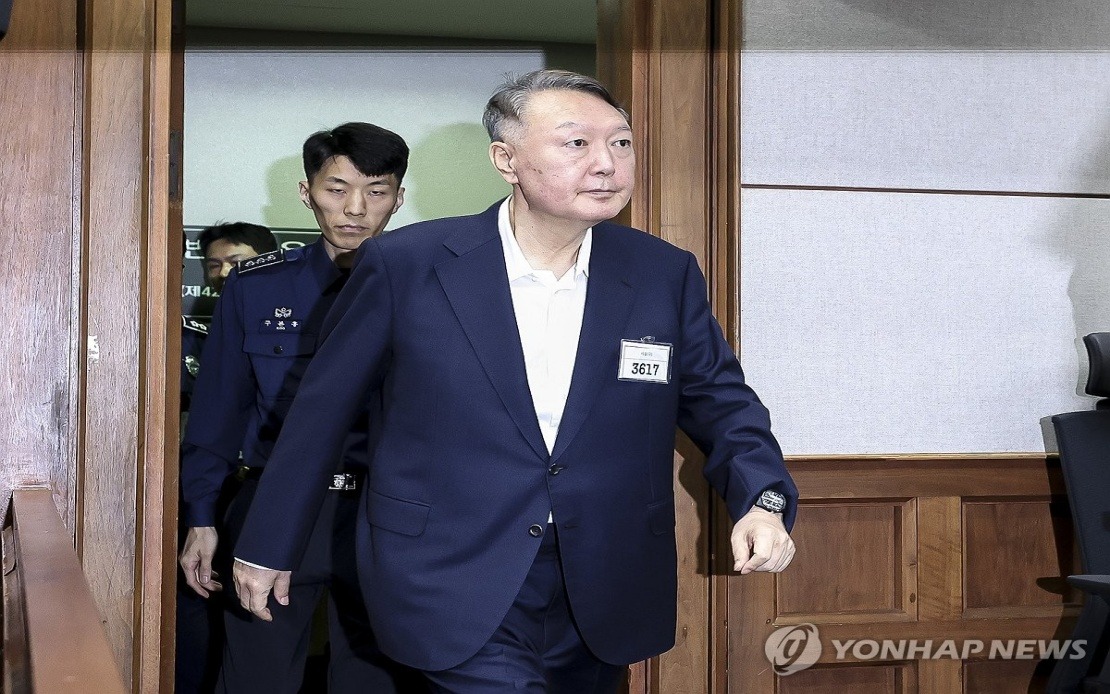
South Korea's Supreme Court has decided to allow live broadcast coverage of its upcoming verdict in the obstruction of justice case against former President Yoon Suk Yeol, rejecting arguments from his legal team that public transmission could undermine his right to a fair trial. The ruling, scheduled for delivery at 2 pm Thursday, represents a landmark transparency moment in a high-profile case that has dominated South Korean politics and raised questions about judicial accountability and presidential authority.
The decision to proceed with the livestream came after special counsel Cho Eun-suk's office filed a broadcast request last Friday. Yoon's defence team mounted vigorous objections, contending that live coverage posed "irreparable harm" to his personal rights and reputation, as well as threatening the integrity of his legal proceedings. Despite these concerns, the court determined that public interest in the case outweighed privacy considerations. Broadcasters will use the Supreme Court's own camera equipment to transmit proceedings, ensuring standardised coverage across all outlets.
This verdict marks the Supreme Court's first ruling specifically addressing the obstruction of justice charges that emerged directly from Yoon's shocking declaration of martial law on December 3, 2024. The former president stands accused of ordering his presidential bodyguards to physically prevent investigators from executing a detention warrant in January 2025, the month following the martial law proclamation. This obstruction allegation represents just one component of the multiple legal jeopardy Yoon now faces in Korean courts.
Beyond the obstruction charges, Yoon confronts a sweeping array of additional accusations that paint a picture of systematic administrative and legal violations surrounding his martial law decision. He is charged with violating the constitutional rights of nine Cabinet members by failing to convene them for a preparatory meeting to review his martial law proposal before implementing it. The prosecution also alleges he falsified public documents by revising the martial law proclamation after the decree had been lifted, purportedly to mask procedural irregularities in how the emergency was declared. Further charges include the subsequent destruction of the altered document.
The lower court's April verdict had already handed Yoon a seven-year prison sentence after finding him guilty on the obstruction charges. Notably, an appeals court then increased this sentence by two years to reach the current seven-year term, though this remained below the ten-year imprisonment the special counsel's office had originally recommended. For Malaysian observers accustomed to different judicial processes, this appellate increase demonstrates South Korea's adversarial trial system, where prosecutors and defence teams battle for sentencing recommendations at each stage.
The obstruction case operates separately from, but in parallel with, the far more serious insurrection charges that stem directly from the martial law declaration itself. In that separate proceeding, still ongoing at an appellate court level, Yoon received an initial life sentence. This dual-track prosecution reflects the complexity of the constitutional crisis triggered by December's extraordinary events, with different courts examining distinct legal dimensions of his conduct.
The livestream decision carries particular significance for Southeast Asian jurisdictions grappling with questions of judicial transparency and presidential accountability. South Korea's willingness to broadcast sensitive trials involving former heads of state stands in contrast to some regional practices, signalling a commitment to public oversight of high-stakes legal proceedings. The transparency move may influence broader regional discussions about balancing security concerns, personal privacy, and the democratic principle that justice should be seen to be done.
For Malaysian political observers, Yoon's predicament raises uncomfortable questions about constitutional limits on executive power and the mechanics of emergency rule. His attempt to impose martial law, regardless of his stated justifications, triggered immediate constitutional resistance that ultimately landed him in the dock. The contrast with Malaysia's own experiences of emergency proclamations and their legal aftermath invites deeper reflection on institutional checks and separation of powers.
The Supreme Court's willingness to allow broadcasting also reflects broader shifts in how democracies handle trials of fallen leaders. By permitting live coverage, South Korea rejects the notion that judicial proceedings against former presidents warrant special confidentiality. This openness requirement extends to the court itself, which must conduct proceedings with awareness that citizens are watching in real time. Such visibility theoretically incentivises procedural fairness and reasoned judgment, though critics contend it may influence outcomes through public opinion pressure.
Yoon's legal odyssey continues to unfold across multiple courtrooms, with different judges examining various aspects of his conduct during and after the martial law crisis. The obstruction verdict arriving Thursday will represent merely one checkpoint in what appears destined to become one of South Korea's most consequential legal proceedings against a former sitting president. How the Supreme Court rules may significantly impact the broader narrative around Yoon's political future and the precedents established for constraining presidential emergency powers.

