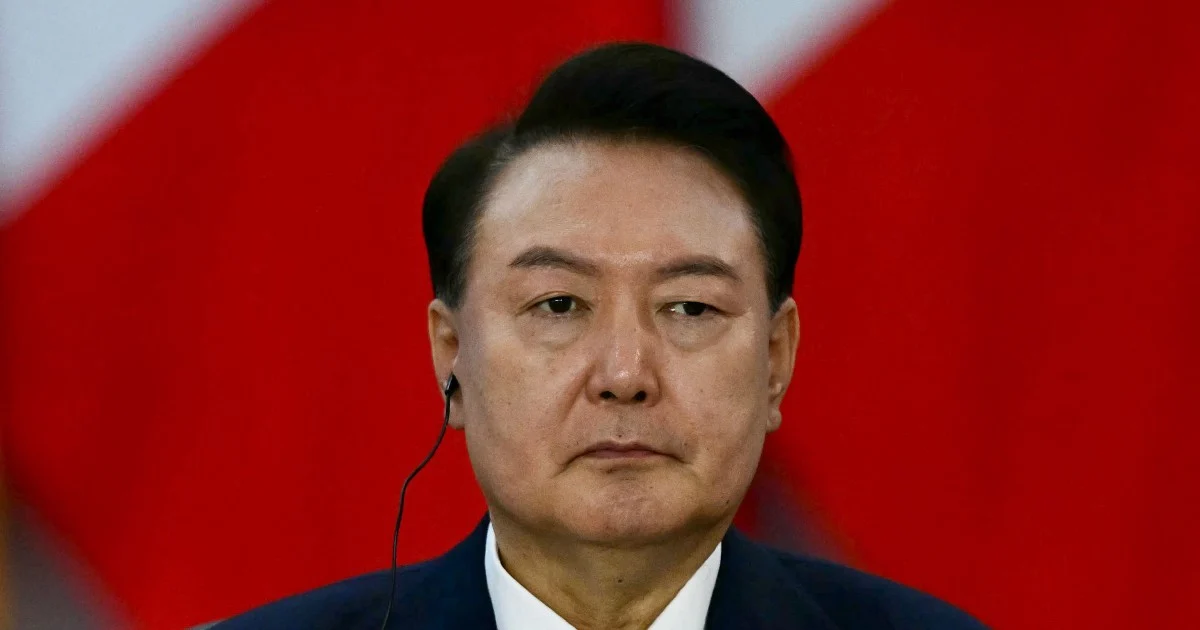
South Korea's apex court is poised to deliver a pivotal judgment Thursday in the high-profile case against former president Yoon Suk Yeol, whose ill-fated declaration of martial law in December 2024 has become the most significant constitutional crisis to grip the nation in recent memory. The Constitutional Court's decision will carry enormous weight not only for Yoon himself but for the broader trajectory of South Korean democracy and the precedent it sets for presidential accountability in moments of political strain.
The sequence of events that culminated in this courtroom drama began when Yoon unexpectedly announced martial law on December 3rd, triggering immediate and widespread alarm across the country. His assertion of emergency powers was met with swift resistance from lawmakers and the public alike, leading to his own party members joining opposition figures in moving to block the declaration. Within hours, the National Assembly had voted to nullify the martial law order, effectively rendering Yoon's decree void and exposing deep fractures within his political coalition that had been straining for months.
The failed martial law gambit, which Yoon later characterized as a miscalculation in his political judgment, set in motion a cascade of constitutional and legal consequences that have dominated South Korean headlines ever since. The incident itself became grounds for impeachment proceedings launched by the opposition, with lawmakers subsequently voting to strip Yoon of his presidential authority pending a constitutional review. This procedural sequence placed the Constitutional Court at the centre of determining whether Yoon's actions violated his oath of office and whether he should be permanently removed from power.
Beyond the martial law declaration itself, prosecutors and investigators have scrutinized the chaotic military mobilization that accompanied the announcement. Reports emerged of armed troops being deployed into Seoul, raising questions about whether military personnel acted within constitutional boundaries and whether Yoon had sought to suppress dissent through force. The Defence Ministry and military leadership later acknowledged that aspects of the deployment had exceeded normal parameters, though disputes persist over the extent to which Yoon personally directed these actions versus delegating authority to subordinates.
The political stakes for South Korea's democratic institutions remain extraordinarily high as this judgment approaches. A decision to remove Yoon permanently would make him only the second South Korean president to suffer such constitutional sanction, underscoring the gravity of the court's deliberations. Conversely, permitting him to retain office despite the martial law declaration would signal that such extraordinary assertions of emergency power carry limited legal consequences—a troubling precedent for any nation with a contested political landscape.
Regional observers have been watching this case with considerable interest, particularly in other East Asian democracies grappling with questions of presidential power and institutional checks. South Korea's handling of this constitutional crisis reverberates beyond its borders, offering lessons about how courts navigate situations where a sitting executive has allegedly violated democratic norms. The case exemplifies the tension between executive prerogatives during purported emergencies and the institutional safeguards designed to prevent authoritarian overreach.
Yoon's political trajectory over recent months has deteriorated markedly. Once riding high after his election in 2022 on a conservative platform promising firmer governance, his presidency had become increasingly beleaguered by scandals involving his wife and associates, coupled with mounting friction between his administration and an opposition-controlled National Assembly. The martial law declaration, Yoon later suggested, was partly motivated by frustration over legislative obstruction, though legal experts and analysts have noted that constitutional democracy provides recourse through electoral processes rather than emergency decrees.
The Constitutional Court's composition and recent jurisprudence have generated debate about whether the nine-justice panel can deliver a verdict perceived as independent. Public opinion surveys conducted over recent weeks show South Koreans deeply divided on the appropriate outcome, with generational and regional fault lines shaping responses to the crisis. These internal divisions reflect South Korea's broader political polarization, a phenomenon that has intensified since the early 2010s and complicates efforts to build consensus around institutional precedents.
Should the court proceed with Yoon's removal, immediate questions would arise regarding succession, as vice-president Han Duck-soo has already faced his own impeachment proceedings related to his actions during the martial law crisis. This potential constitutional vacuum has prompted commentary about whether South Korea's institutional frameworks adequately address situations where multiple high officials become simultaneously incapacitated. The case thus illuminates vulnerabilities in presidential systems that warrant careful consideration by constitutional scholars and policymakers.
The Thursday verdict will also determine consequences for a broader circle of military and civilian officials who face allegations of complicity in martial law enforcement. Generals, intelligence officials, and presidential advisors have all been examined in prosecutorial investigations, with potential outcomes ranging from acquittals to significant imprisonment. These downstream cases hinge partly on how the Constitutional Court characterizes Yoon's own culpability and the legal boundaries of obedience to presidential orders versus constitutional obligations.
For Malaysian and Southeast Asian observers, the case underscores how mature democracies with robust judiciaries can confront presidential overreach through constitutional mechanisms rather than extraconstitutional means. South Korea's ability to resolve this crisis through courts rather than through political upheaval demonstrates institutional resilience, though questions persist about whether such mechanisms function equally across nations with different constitutional traditions and judicial independence. The verdict will provide important guidance about how written constitutional frameworks translate into real-world protections against executive excess.

