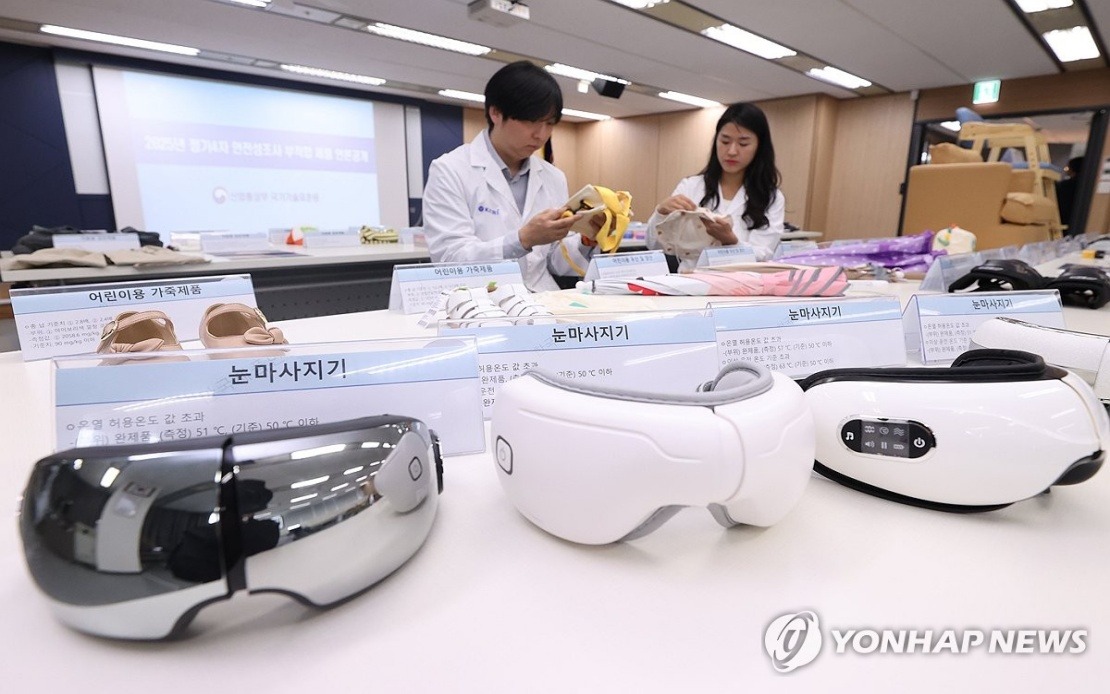
South Korea's product safety landscape has deteriorated markedly, with authorities recording 2,656 recall cases in 2025 compared to 2,537 the previous year—a 5 per cent increase that underscores mounting challenges in protecting consumers amid the explosion of cross-border e-commerce. The Fair Trade Commission's data, released Monday, reveals a troubling pattern in which substandard and previously recalled goods from overseas suppliers are increasingly finding their way onto domestic online marketplaces, exploiting regulatory gaps and the rapid growth of direct consumer purchases from international sellers.
The most alarming aspect of this trend lies in the surge of products violating South Korea's Framework Act on Consumers. Recall cases citing such violations jumped dramatically by 42 per cent to 851 instances, a figure that dwarfs the modest overall increase and points to systemic problems in how imported goods are vetted and monitored. This substantial gap between the general recall rate and consumer act violations suggests that the violation-related cases are the primary driver of concern, indicating that the regulatory framework is struggling to keep pace with the volume and complexity of products entering the market through online channels.
The phenomenon reflects broader structural challenges facing East Asia's largest economy as it grapples with the consequences of digital commerce expansion. Many hazardous items that have already been subject to recalls in their countries of origin—whether in Southeast Asia, China, or elsewhere—are being repackaged and marketed to Korean consumers through third-party sellers on platforms where oversight remains fragmented. This creates a scenario in which a product deemed unsafe in one jurisdiction can legally reach consumers in another, undermining confidence in the marketplace and exposing a vulnerability that affects not only South Korea but increasingly other regional markets as well.
Industrial and consumer goods bore the brunt of the problem, with recalls in this category reaching 1,282 cases and rising 8.6 per cent year-on-year. These products, which encompass everything from household appliances to children's toys and personal care items, represent the bulk of the recall burden and pose direct risks to everyday consumers. The breadth of this category means that the hazard profile is diverse, ranging from electrical safety issues to toxic substance contamination, making enforcement and public awareness efforts considerably more complex than in more narrowly defined sectors.
In contrast, pharmaceutical products and herbal medicines presented a more encouraging picture. Recalls in this domain fell 13.5 per cent to 295 cases, suggesting that tighter regulations and established supply chain oversight in the healthcare sector have been more effective at filtering out problematic goods. This divergence highlights how regulatory maturity varies dramatically across different product categories, with older, more established frameworks proving more resilient against the challenges posed by globalized e-commerce.
Medical device recalls told a different story, climbing 8.5 per cent to 308 cases despite the pharmaceutical sector's improvement. This category, which sits between consumer goods and pharmaceuticals in terms of regulatory complexity, appears vulnerable to the same pressures affecting industrial consumer products. The growing reliance on imported medical devices—ranging from diagnostic equipment to health monitoring gadgets—without proportional increases in inspection capacity creates blind spots where substandard items can slip through.
The Fair Trade Commission has signalled recognition of the gravity of the situation, announcing enhanced surveillance operations conducted in partnership with other government agencies. The watchdog emphasized that it is actively working with online marketplace operators to block the sale of products that have been subject to recalls elsewhere or that fail domestic safety testing. This collaborative approach acknowledges that no single agency can effectively monitor the vast ecosystem of online sellers and supply chains that characterize modern e-commerce.
For Malaysian and Southeast Asian readers, South Korea's predicament carries direct implications. Many of the hazardous imported goods flowing into Korean online platforms originate from within the region, underscoring how weak enforcement in source countries can create cross-border repercussions. As Malaysian e-commerce platforms expand and more local consumers purchase directly from international sellers, similar vulnerabilities are likely emerging domestically. The Korean experience demonstrates that even well-resourced regulatory bodies struggle to keep pace with the velocity and scale of online trade, suggesting that regional cooperation and harmonized safety standards may be necessary to address this challenge effectively.
The government's strategy of requesting marketplace operators to suspend sales of recalled products represents a pragmatic but ultimately reactive approach. It places responsibility on platforms to identify and remove problem items, yet many sellers operate through multiple accounts and use sophisticated techniques to evade detection. This enforcement model, while necessary, highlights the structural asymmetry between regulators and the increasingly sophisticated networks of sellers who profit from information gaps and jurisdictional fragmentation.
Looking forward, South Korea's experience suggests that addressing the hazardous import problem will require not only enhanced domestic surveillance but also strengthened international cooperation, including information-sharing agreements with source countries and more stringent requirements for cross-border sellers to verify product compliance. As online commerce becomes increasingly central to consumer behaviour across Asia, the regulatory frameworks that worked in the era of primarily domestic retail are proving inadequate. Without more proactive and coordinated interventions, product safety incidents and consumer harm are likely to accelerate, potentially triggering broader public health and consumer confidence crises.

