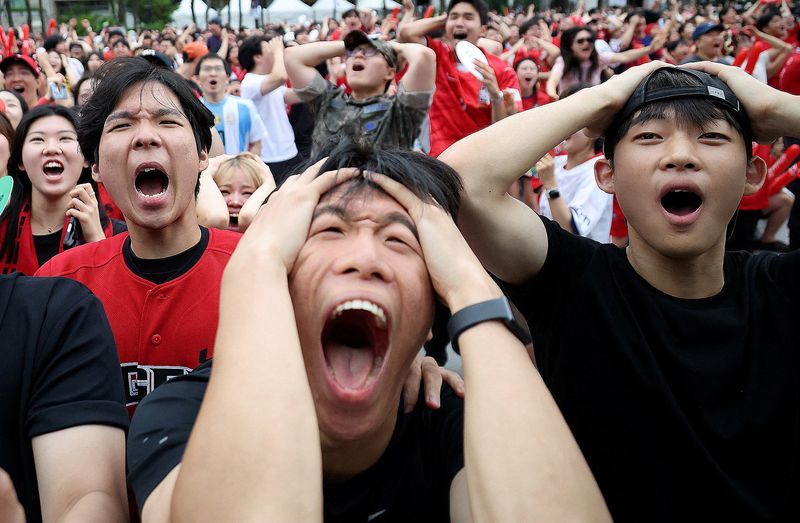
South Korea's President Lee Jae Myung has ordered a comprehensive investigation into the national football team's surprising early elimination from the World Cup, marking an unusually direct political intervention into sporting affairs. The demand for a sports ministry-led inquiry reflects the scale of public disappointment over what many saw as a preventable catastrophe, with Lee characterising the outcome as the direct result of incompetent leadership decisions and preferential hiring practices that prioritised personal connections over merit.
The controversy centres on the re-appointment of Hong Myung-bo as national team manager in 2024, a decision that had already drawn scrutiny from South Korean media outlets questioning the transparency and fairness of the selection process. Lee's criticism extends beyond the coach himself to the broader institutional failures that allowed what he views as an unqualified appointment to proceed without sufficient oversight or accountability mechanisms. His intervention signals how deeply this sporting failure has penetrated political discourse in South Korea, where football remains a source of national pride and collective identity.
South Korea's elimination came after successive defeats to Mexico and South Africa left the team third in Group A, outside the qualification threshold for the round of 32. The group stage outcome shocked many observers given that the Korean side had been expected to advance comfortably from what appeared to be a relatively manageable draw. The contrast between pre-tournament expectations and the actual result has intensified criticism of the coaching staff and selection committee, with questions raised about tactical decisions, team selection, and overall strategic planning during the competition.
Lee's public statement, posted on X on Sunday, revealed his frustration with what he characterised as a broader pattern of systemic dysfunction within Korean sports administration. He specifically highlighted how decisions based on factional loyalty rather than professional competence had demonstrably harmful consequences for national performance. This framing suggests the President views the World Cup failure not as an isolated sporting mishap but as a symptom of deeper governance problems that extend beyond football into how South Korea makes critical institutional appointments across various sectors.
The backlash against Hong has proven severe and remarkably swift within South Korean society. A petition demanding his dismissal posted on the national assembly's website rapidly accumulated the necessary signatures for official review, demonstrating substantial public support for removing the coach. More colourfully, social media campaigns have shown photographs of small business establishments displaying notices explicitly banning Hong from their premises, a form of public shaming that reveals the intensity of popular frustration with his role in the national team's poor performance.
The President's call for investigation specifically requests that the Ministry of Culture, Sports and Tourism conduct a thorough examination of the appointment circumstances, undertake detailed cause analysis, and develop preventative measures for the future. This framing shifts responsibility upward toward government institutions rather than leaving accountability solely with the football federation or coaching staff. It also suggests potential structural reforms may follow once the inquiry concludes, potentially affecting how national sports managers are hired, monitored, and evaluated going forward.
Lee's statement reveals a political leader attempting to channel public disappointment into systemic criticism rather than accepting the result as merely an unfortunate sporting outcome. By emphasising the distinction between public interest and private gain, and contrasting competence-based decision-making with factional appointment practices, he is articulating a broader governance narrative that resonates with concerns about institutional integrity in South Korea. The World Cup failure thus becomes illustrative of what he presents as endemic problems in how the country selects leaders at all levels.
For Malaysian and broader Southeast Asian readers, South Korea's experience offers instructive lessons about the consequences of prioritising loyalty networks over merit in key institutional roles. While football provides the immediate context, Lee's underlying critique about the dangers of opaque appointment processes and inadequate oversight mechanisms applies equally to sports administration, business leadership, and government positions throughout the region. The Korean case demonstrates how such governance failures can produce tangible, highly visible failures that damage national reputation and public morale.
The investigation announcement signals that South Korea's political establishment takes this World Cup elimination seriously enough to warrant formal governmental action and potential institutional reform. Whether such inquiries ultimately produce meaningful structural change or function primarily as political theatre remains an open question. However, the sustained public anger and high-level political response suggest that this particular World Cup exit will have consequences extending well beyond the football pitch, potentially reshaping how South Korea approaches leadership selection in its sports institutions.

