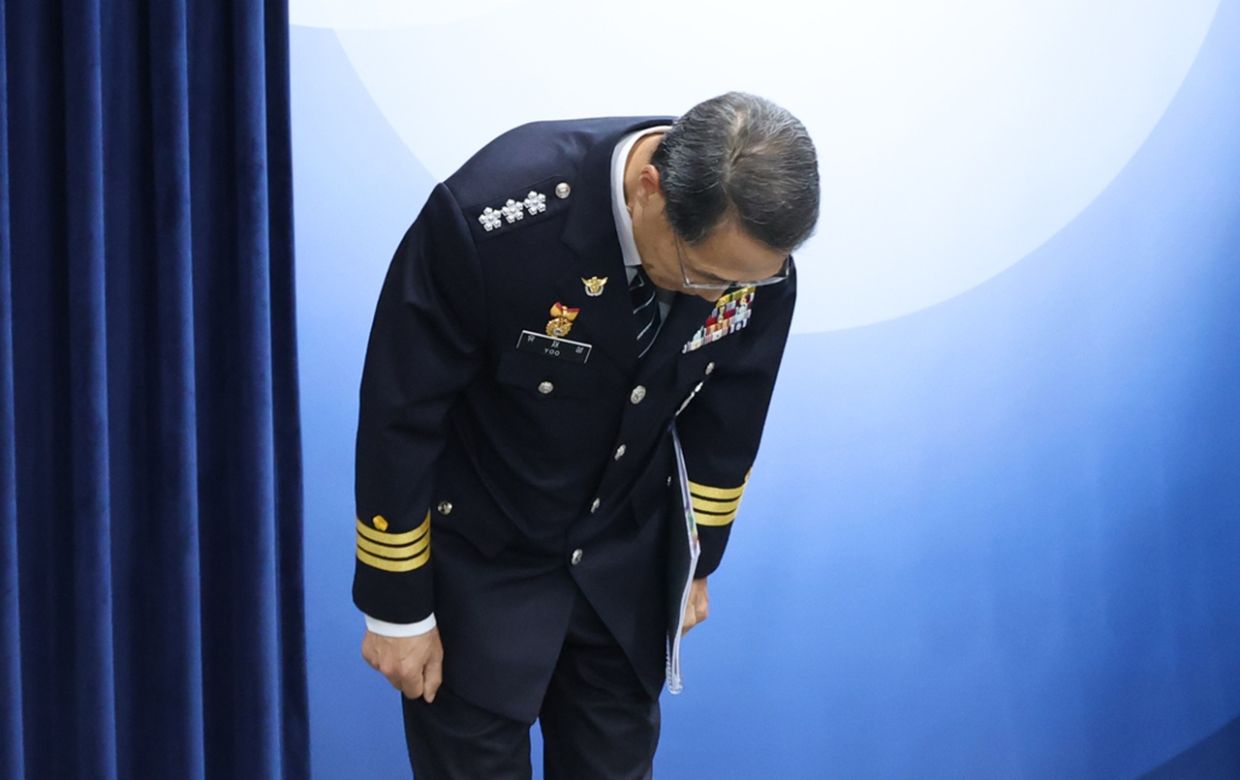
South Korea's police leadership confronted mounting public pressure on Monday when Acting National Police Agency Commissioner General Yoo Jae-sung announced a comprehensive reform agenda aimed at restoring institutional credibility. The pledge comes as the country grapples with a damaging scandal centred on the handling of a murder investigation involving suspect Jang Yoon-gi, arrested in connection with the death of a teenage girl in Gwangju last May. Speaking at the Government Complex Seoul, Yoo framed the controversial case as a catalyst for systemic change, emphasising that investigative procedures and officer conduct standards required fundamental restructuring to rebuild public confidence in law enforcement.
The scandal has exposed troubling vulnerabilities within South Korea's police apparatus. Investigators allegedly shared sensitive case information with Jang's father, a serving police officer, while simultaneously mishandling critical evidence in what critics describe as a catastrophic breach of investigative integrity. These allegations have triggered intense public backlash and intensified scrutiny of institutional mechanisms designed to prevent conflicts of interest and ensure impartial law enforcement. For Malaysian observers, the case illustrates how concentrated power within security institutions can create perverse incentives that undermine justice, a consideration relevant across Southeast Asia where police reform remains an ongoing challenge.
Yoo's reform package introduces several structural innovations intended to create meaningful checks on police authority. By the month's end, the agency plans to establish an investigative reform task force comprising seven to ten members, with external experts constituting more than half the panel. This composition represents a deliberate effort to inject civilian oversight into predominantly internal processes. The task force will examine personnel policies aimed at severing improper connections between officers and their local communities—a particular concern given the Jang case—while simultaneously reviewing protocols for handling investigations involving vulnerable populations.
Parallel to these structural reforms, the police are establishing an internal affairs unit under the National Office of Investigation. Unlike traditional mechanisms that shield senior officers from scrutiny, this unit will investigate serious misconduct across all ranks without hierarchical exemptions. The initiative acknowledges a critical weakness in many institutional accountability systems: the tendency for seniority to create zones of reduced oversight. By explicitly removing rank-based protections, South Korea aims to signal that no officer, regardless of position, occupies a space beyond investigation.
A second oversight mechanism—a civilian-led body operating under the Korean National Police Commission—represents perhaps the most ambitious component of the reform agenda. Comprising approximately 100 civilian investigators, this body will examine alleged human rights violations and investigative misconduct. Its establishment requires legislative amendment to the Police Act, with a related bill already submitted to the National Assembly. Yoo stressed that for the mechanism to function effectively, its investigative findings must carry genuine consequences, potentially triggering personnel changes or disciplinary measures rather than remaining advisory observations that institutions can easily disregard.
The police commissioner also addressed the politically sensitive question of expanding the rotation system across all officer ranks. Currently, superintendents undergo nationwide rotations, with some senior inspectors similarly affected, but the system has not been universally applied. Expanding it systemically could break entrenched local relationships that foster the kind of improper connections that the Jang case exemplifies. However, Yoo acknowledged practical obstacles: providing official residences to officers at all levels during transfers would require substantial budget increases and raise questions about fairness between civilian and uniformed personnel. Rather than impose a solution, the commissioner indicated the police would consult with rank-and-file officers, suggesting that sustainable reform requires institutional buy-in.
The reform programme reflects international best practices in police accountability. By combining internal investigation mechanisms with civilian oversight, establishing clear investigative protocols for vulnerable populations, and requiring external expert participation in policy development, South Korea's approach mirrors models adopted in other democracies attempting to rebuild public trust following institutional failures. The emphasis on transparency during legislative deliberations, rather than imposing changes through administrative fiat, suggests recognition that reform legitimacy depends partly on democratic legitimacy.
For Southeast Asia, including Malaysia, this South Korean case offers instructive lessons. Regional police forces often operate in environments where political connections and family relationships within law enforcement create similar vulnerabilities to the Jang scandal. The apparent ease with which a suspect's father—a serving officer—allegedly accessed sensitive investigation materials underscores how insufficient institutional separation between family relationships and professional duties can corrode investigative impartiality. Malaysia's ongoing police reform initiatives, including proposed accountability mechanisms and investigative standards, operate in a comparable context where public confidence in law enforcement has been challenged by high-profile cases and perceived selective application of investigative standards.
Yoo's commitment to implement reforms while remaining open to officer concerns suggests that sustainable institutional change requires balancing accountability with professional morale. Police organisations across the region often resist external scrutiny based on arguments that civilian oversight impairs operational effectiveness. By proposing gradual implementation of measures that can be deployed immediately while reserving complex systemic changes for task force deliberation, the commissioner attempted to avoid wholesale institutional resistance while maintaining momentum toward genuine reform.
The timeline for implementation remains deliberately non-specific in most areas, with the reform task force tasked with developing implementation details rather than the commissioner imposing top-down solutions immediately. This approach risks appearing dilatory to public advocates demanding swift change, yet it acknowledges that police institutions cannot be reformed effectively through imposed mandates that alienate the personnel expected to implement them. The tension between rapid accountability and sustainable institutional change represents a persistent challenge for security sector reform across the region.
Regarding the specific matter of Jang's father, Yoo indicated that the police would defer concluding their internal investigation until the special investigation team completed its examination. This procedural sequencing prevents parallel investigations from undermining each other's findings, though it also extends uncertainty about disciplinary outcomes. The case will likely influence not only South Korean police practice but also regional discussions about preventing institutional conflicts of interest within law enforcement, particularly where family relationships intersect with investigative authority.
The comprehensive nature of South Korea's reform agenda—encompassing personnel systems, investigative protocols, civilian oversight, and legislative amendment—indicates recognition that institutional credibility cannot be restored through superficial adjustments. Each component addresses a different vulnerability exposed by the scandal. Whether the reforms ultimately prove effective depends partly on implementation rigour and partly on whether the underlying culture of law enforcement shifts to genuinely prioritise investigative impartiality over protecting officers' personal relationships. This distinction between institutional design and operational practice will determine whether South Korea's experience becomes a model for regional police reform or simply another well-intentioned initiative undermined by institutional resistance.

