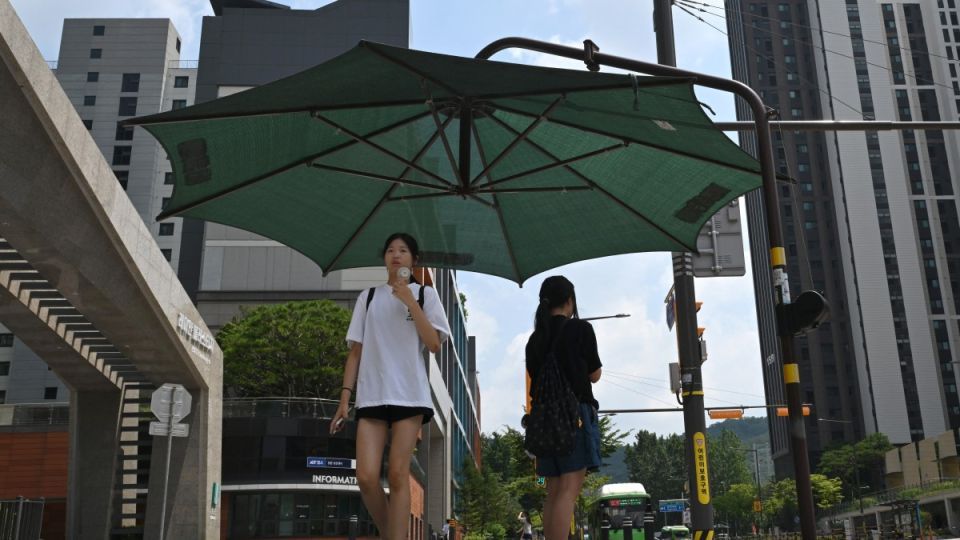
South Korea is grappling with an occupational health crisis as record-breaking temperatures transform workplace safety into an urgent national concern. With the country experiencing unprecedented heatwaves—Yangsan in South Gyeongsang Province recorded 42.5 degrees Celsius, while Seoul has endured extended periods under the highest-level heatwave warning—major employers from construction giants to heavy industrial manufacturers are fundamentally reshaping how their workers spend the working day. The response demonstrates corporate awareness of legal liability and worker welfare, yet it simultaneously reveals a troubling disparity: protections remain concentrated among firms with the capital to invest in infrastructure and flexibility, leaving workers at smaller operations and outdoor worksites dangerously exposed to thermal stress.
The urgency of the crisis is underscored by sobering injury statistics. According to data cited by Rep. Kim Wi-sang of the ruling People Power Party, South Korea's Korea Workers' Compensation and Welfare Service has documented 195 heat-related occupational accidents between 2022 and June 2024, including 20 fatalities. More alarming is the temporal pattern: by the end of June this year alone, 13 cases had been formally recognised, four of them fatal, arriving well before the historically dangerous months of July and August. This trajectory suggests the coming summer could see significantly higher casualties unless intervention accelerates.
Legal accountability has emerged as a powerful catalyst for corporate action. A landmark district court conviction last year of a construction company under the Serious Accidents Punishment Act—the first such ruling involving a heatstroke fatality—signalled that employers could face criminal liability for heat-related deaths among their workforce. This precedent has galvanised the construction sector, which accounts for a disproportionate share of industrial fatalities and has become frontrunner in implementing comprehensive thermal protection strategies. The industry recognises that negligence now carries legal consequences extending beyond compensation claims to potential criminal charges against company executives.
Construction firms have pioneered sophisticated responses. Hyundai Engineering & Construction provides financial incentives for workers who utilise designated rest areas, essentially gamifying heat safety compliance. More technologically advanced is Lotte E&C's Internet of Things system deployed across approximately 80 construction sites, which measures perceived temperature readings every five minutes and classifies heat risk across five distinct levels, enabling real-time operational decisions. Daewoo E&C has adopted an even more worker-centric approach, permitting labourers experiencing physical distress to cease work immediately without incurring penalties—a significant policy shift in an industry traditionally dominated by output pressures.
Recognising that migrant workers face heightened vulnerability, several construction companies have implemented targeted support. Hyundai E&C has distributed emergency reporting guides in 22 languages and supplied workers with active cooling vests featuring integrated fans alongside oral rehydration solutions. Kumho E&C has partnered with beverage manufacturer Lotte Chilsung to supply bottled water, sports drinks, cooling towels and portable shelters at construction sites through September, addressing multiple dimensions of heat stress simultaneously.
Heavy industrial operations unable to suspend production during peak heat have adopted strict work-rest rotation protocols. Posco, whose blast furnaces operate continuously regardless of weather, mandates 15-minute rest intervals following every 45 minutes of labour when perceived temperatures exceed 35 degrees Celsius, stepping down to 10-minute breaks after 50-minute work blocks when temperatures range between 31 and 35 degrees. Hyundai Steel implements comparable thresholds: minimum 10-minute hourly rest at 31 degrees, increasing to 15 minutes above 35 degrees. These mathematical approaches to thermal safety represent a departure from traditional industrial scheduling, subordinating production targets to physiological tolerance limits.
Shipbuilding companies have extended seasonal break protocols substantially. Hanwha Ocean has doubled its standard morning and afternoon breaks from 10 to 20 minutes through August regardless of ambient temperature, while implementing graduated lunch extensions: 30-minute additions when temperatures exceed 28 degrees, expanding to full hour-long extensions above 31.5 degrees. HD Hyundai Heavy Industries has lengthened lunch periods from 60 to 90 minutes through summer's conclusion and operates more than 270 cooling facilities across its shipyards, providing workers with cooling vests, ice water and electrolyte supplements. Samsung Heavy Industries has established a dedicated task force coordinating heat response strategies and deploying portable cooling equipment, while SK hynix and Coupang have similarly expanded climate-control infrastructure at their respective logistics and manufacturing facilities.
Yet this progress masks a profound structural inequality. Heat-related occupational accidents are disproportionately concentrated among vulnerable worker segments entirely absent from major corporations' protection schemes. Of 195 recognised heat injuries since 2022, more than half occurred at workplaces employing fewer than 50 people, while 42 incidents involved businesses with fewer than five employees. These micro-enterprises typically lack dedicated safety personnel, possess minimal cooling infrastructure and cannot easily reorganise work schedules without operational disruption. Labour experts and parliamentary observers attribute this gap to resource constraints: smaller employers simply lack the financial capacity to install cooling systems or restructure operations, creating a two-tiered safety system stratified by corporate size.
Migrant workers constitute an additional vulnerable population, particularly those engaged in agriculture and outdoor labour where formal employer protections often prove nonexistent. Last month two fatal incidents underscored this peril: a Thai seasonal worker died while working in Haenam, South Jeolla Province, and a Vietnamese national perished while labouring outdoors on a farm in Goesan, North Chungcheong Province. These deaths highlight how occupational heat exposure extends well beyond factory floors to encompass agricultural and outdoor service sectors where workers frequently operate in unshaded environments without access to adequate hydration, rest facilities or emergency medical protocols.
Rep. Kim Wi-sang has called upon government authorities to shift focus beyond large corporate workplaces toward systematic protection of seasonal migrant workers and small outdoor businesses. His advocacy reflects recognition that workplace heat safety cannot remain a corporate responsibility exercised selectively by well-resourced multinational firms. Without government-mandated standards, comprehensive inspections and accessible support systems for smaller employers, the nation's response to thermal occupational hazards will continue protecting privileged workers whilst leaving the most exposed populations vulnerable to preventable casualties. As climate change intensifies heat extremes, this policy gap demands urgent closure through coordinated government, employer and civil society intervention.

