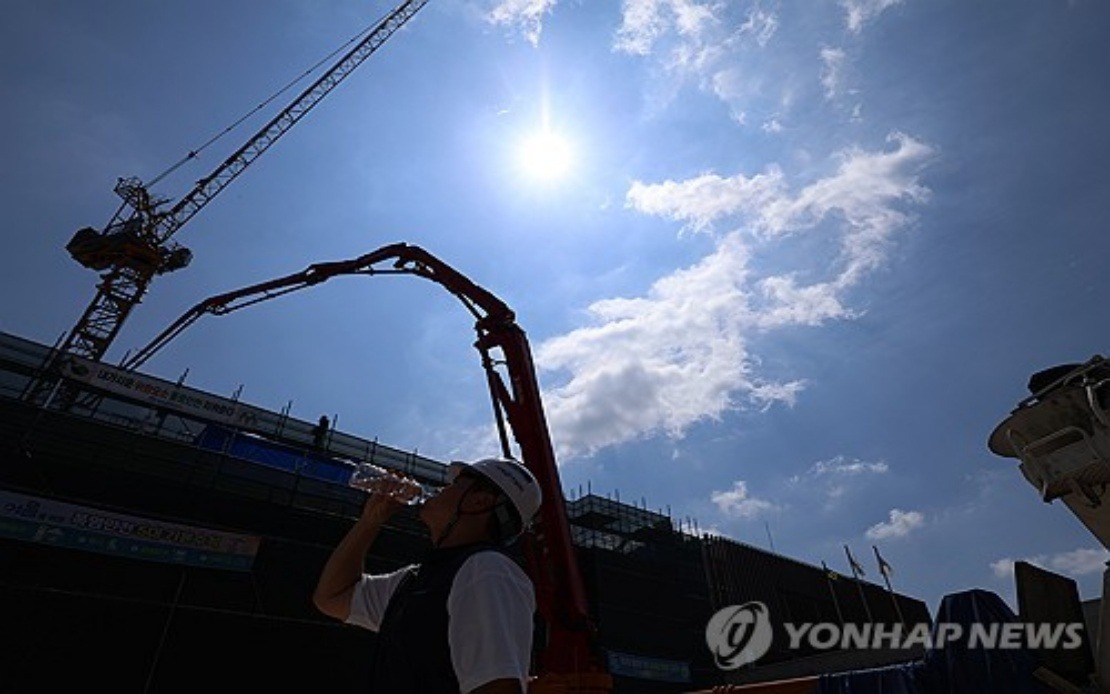
South Korea is confronting an unprecedented climate emergency as its meteorological agency expanded critical heat wave warnings across the greater Seoul metropolitan area on Wednesday, affecting nearly half the region's population under the most severe alert classification. The Korea Meteorological Administration activated top-tier warnings across 20 of 46 weather advisory zones in the capital region, a significant escalation that underscores the severity of conditions gripping the nation's most densely populated area.
The expansion of serious heat wave warnings took effect at 11 am, encompassing southern Incheon and nine municipalities and districts within Gyeonggi Province, including Gwangmyeong, Yeoncheon, and Hwaseong. This development represents a dramatic intensification of an already critical situation, as all of Seoul itself had been placed under the highest-level warning just one day earlier—a watershed moment marking the first time the entire capital city has triggered this alert since the heat wave warning system was formally introduced on June 1. The geographic spread now extends beyond the traditional metropolitan boundaries, with Cheongyang in South Chungcheong Province also receiving the alert, making this the initial instance of such warnings being activated across the central Chungcheong provinces.
Under the Korea Meteorological Administration's operational criteria, serious heat wave warnings are triggered when apparent temperatures—a composite measurement accounting for humidity and wind conditions—are projected to reach 38°C or above, or when daily maximum temperatures surpass 39°C. These thresholds apply specifically to regions where the highest apparent temperature has already reached 35°C for a minimum of two consecutive days, establishing a baseline that reflects the sustained nature of extreme conditions rather than isolated hot spells.
The current heat event has shattered historical records with particular ferocity in the southeastern city of Yangsan, where temperatures peaked at 42.5°C. This represents the highest temperature measurement since South Korea began maintaining systematic meteorological observations in 1904—a remarkable threshold that underscores the exceptional nature of the present weather pattern and suggests climatic conditions pushing beyond what the region's infrastructure and population have previously experienced.
The human consequences of this meteorological crisis have proven severe and mounting. The Korea Disease Control and Prevention Agency has documented 2,221 heat-related hospitalisations and 19 confirmed fatalities across South Korea between May 15 and Monday, figures that reflect not merely statistical abstractions but genuine hardship afflicting vulnerable populations. These numbers carry particular significance for Southeast Asian observers, as they demonstrate how rapidly and comprehensively extreme weather events can overwhelm public health systems, even in developed nations with sophisticated medical infrastructure.
For Malaysian and broader Southeast Asian readers, South Korea's crisis carries instructive implications regarding climate vulnerability and heat management. While Malaysia itself experiences consistently high temperatures year-round, the phenomenon of heat waves—defined as sustained periods of anomalously hot conditions—differs meaningfully from baseline tropical warmth. South Korea's experience demonstrates that populations accustomed to temperate climates face acute danger when temperatures surge beyond historical norms, precisely because infrastructure, public behaviour, and individual physiology have evolved for cooler conditions. The severity of outcomes in Seoul and surrounding regions suggests that as global temperatures continue rising, regions traditionally characterised by milder weather face disproportionate health risks.
The institutional response from South Korean authorities reflects the seriousness with which the government treats the emergency. The progressive expansion of warnings, beginning with Seoul's entire territory and subsequently extending to surrounding provinces, indicates an operational framework designed to communicate escalating risk to the public through colour-coded or tier-based alert systems. Such graduated approaches allow authorities to focus resources and public messaging proportionally to threat levels, though their effectiveness ultimately depends upon public awareness and compliance.
The timing of this heat wave during South Korea's summer season carries additional significance for regional climate analysis. Unlike Malaysian residents who might regard such temperatures as merely warm rather than dangerous, South Korean populations inhabit a context where 42.5°C constitutes a genuine anomaly rather than normalcy. This distinction matters profoundly because human physiology, urban infrastructure, and social practices all adapt to long-term climatic patterns. When those patterns shift dramatically and rapidly, populations face genuine peril regardless of their institutional development.
For Southeast Asian policymakers and public health officials, the South Korean case provides valuable lessons regarding heat wave preparedness and emergency response mechanisms. The high hospitalisation and mortality figures suggest that even well-resourced health systems can become overwhelmed during extreme events, particularly when vulnerable populations—the elderly, those with pre-existing conditions, outdoor workers, and socioeconomically disadvantaged groups—lack adequate protection or awareness of danger signs. This reality carries direct relevance to tropical developing nations where populations face concurrent threats from heat, humidity, and potentially inadequate healthcare access.
The geographic expansion of warnings to newly affected provinces represents an important indicator of the heat event's intensification rather than stabilisation. Each new region brought under top-tier alert status suggests that weather systems remain dynamic and potentially capable of further geographic spread. For residents and officials across Greater Seoul and surrounding territories, this trajectory indicates that the coming days may prove increasingly challenging before any meaningful meteorological relief materialises.
Looking forward, South Korea's meteorological and public health agencies face the dual challenge of managing immediate crisis response while preparing for potential future escalations. The precedent set by placing the entire Seoul metropolitan area and beyond under highest-level alerts establishes a new baseline that reflects contemporary climate realities. For Malaysia and Southeast Asia, watching how developed nations manage such unprecedented events provides valuable intelligence regarding future climate adaptation requirements and the practical limits of existing infrastructure and institutions.

