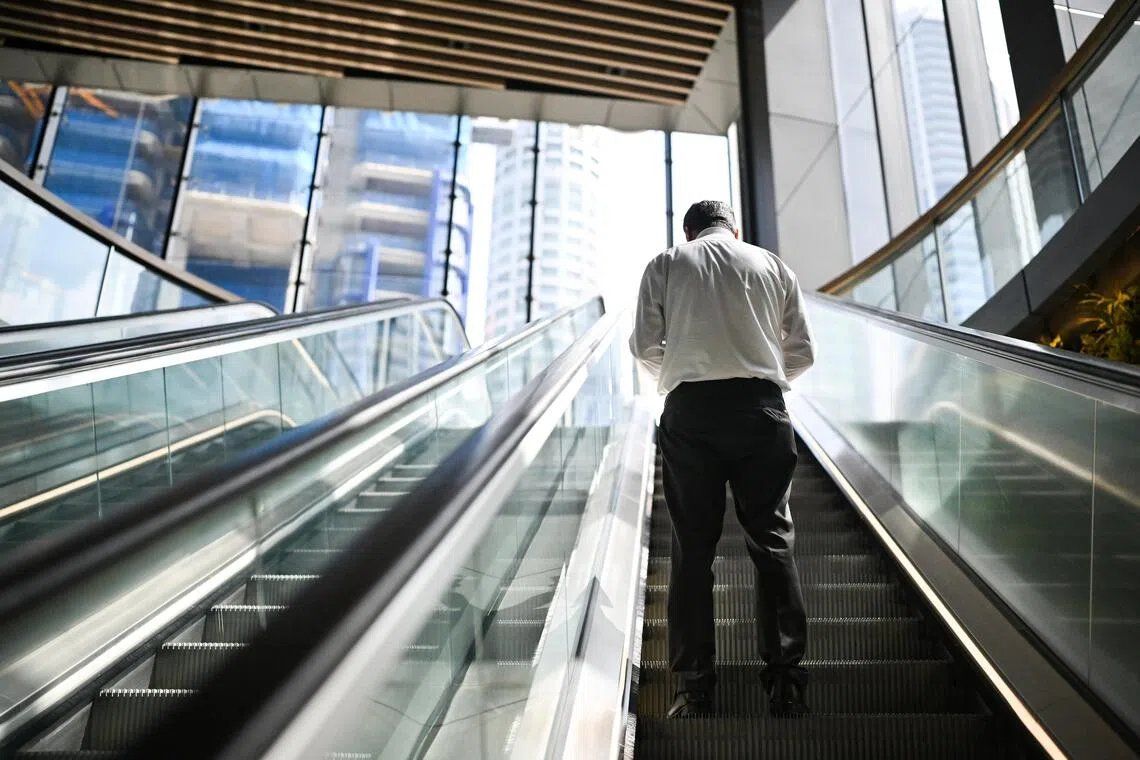
South Korea faces an unexpectedly divisive question that has split the nation almost down the middle: should commuters stand on one side of an escalator to allow the other side for people rushing, or should passengers occupy both sides in orderly lines? A government survey of 1,000 adults across seven major cities found the population nearly evenly distributed on the issue, with 50.1 per cent favouring the single-side approach and 49.9 per cent advocating for two-line standing, revealing a persistent cultural tension that extends far beyond simple transit convenience.
The intensity of this debate became evident when the government convened a forum in Seoul on August 29 with approximately 200 citizens and experts to discuss the merits and drawbacks of each approach. The gathering underscored how escalator etiquette has evolved into a multifaceted policy question involving efficiency, safety, and infrastructure maintenance rather than merely personal preference. Jang Gye-ryeon, a public administration researcher at the Korea Institute of Industrial Relations, captured the complexity by arguing that the discussion cannot be reduced to a binary choice. Instead, policymakers must consider whose efficiency matters most and in what contexts the rules should apply, acknowledging that different scenarios may call for different approaches.
The efficiency argument forms a key part of the ongoing debate. At first glance, individuals in a hurry clearly benefit from being able to walk up or down a moving escalator, saving precious seconds during rush hour commutes. However, research suggests that allowing two-lane standing may actually move more total passengers through a station over time. A notable experiment conducted at a crowded British station demonstrated a 25 to 30 per cent increase in passenger capacity when both sides were occupied compared to leaving one side open for walkers. South Korea conducted its own limited test at Guri Station near Seoul, which produced comparable results: approximately 190 people used the escalator over an identical timeframe when both sides were filled, whereas only 164 made use of it under the one-side-standing arrangement. Though researchers cautioned against drawing sweeping conclusions from this single trial, the results suggest that collective efficiency may outweigh individual convenience.
Beyond efficiency, safety considerations have become increasingly central to the discussion. Scientific testing revealed that the physical forces experienced by people vary significantly depending on escalator use. Walking downward generates an impact roughly equivalent to 2.01 times a person's body weight, while ascending stairs produces approximately 1.54 times body weight. These repeated impacts from walking, combined with uneven loads created when people stand predominantly on one side, could theoretically cause accelerated wear on escalator mechanisms. Heo Yun-seop, a professor at Korea Lift College, explained that such stresses might ultimately affect an escalator's operational lifespan and maintenance expenditures, though current evidence remains insufficient to definitively link one-sided standing to equipment failures.
South Korea's relationship with escalator etiquette has undergone multiple reversals over the past two decades, reflecting shifting priorities between efficiency and safety. During the late 1990s, authorities began promoting single-side standing to manage passenger flow better, and this practice gained widespread adoption around the 2002 FIFA World Cup when the nation sought to accommodate international visitors and streamline urban transit. However, mounting concerns about accidents and equipment deterioration prompted a policy reversal beginning in 2009, when the government actively encouraged two-line standing for approximately five years. Since 2015, officials have largely stepped back from prescriptive guidance, instead promoting three fundamental safety principles: gripping the handrail, avoiding walking or running on moving steps, and remaining within designated safety zones.
This inconsistent policy history offers insight into why commuters remain so sharply divided today. Each shift in official messaging leaves behind constituencies accustomed to different practices, and many South Koreans have developed strong preferences based on decades of either one approach or the other. Statistical evidence regarding accident patterns has reinforced the safety argument for policy reconsideration. Data compiled between 1993 and 2025 shows that user behaviour accounted for 72.3 per cent of recorded escalator accidents, while individuals aged 60 and above comprised 53.3 per cent of those injured, highlighting particular vulnerability among elderly passengers who may struggle with balance or quick reactions on moving equipment.
The August forum itself demonstrated how discussion and evidence presentation can shift public opinion, albeit not decisively. Before the event, 45.9 per cent of participating citizens favoured two-line standing, while only 13.4 per cent supported one-side standing for pedestrians. Following hours of expert presentations and citizen deliberation, these figures moved substantially: support for one-side standing climbed to 29.9 per cent, while two-line standing support declined to 31.4 per cent. The most striking outcome was that 38.1 per cent of participants ultimately endorsed a contextual approach, suggesting different rules depending on specific locations and crowd densities, reflecting Jang's earlier argument that no single solution serves all situations equally.
This contextual preference emerging from the forum reveals sophisticated public thinking about urban design and policy flexibility. Rather than insisting on universal rules, many South Koreans appear willing to accept that escalators in crowded subway stations during peak hours might operate under different protocols than those in quieter locations or during off-peak times. Such flexibility acknowledges that commuter needs, safety risks, and efficiency calculations genuinely vary across the nation's diverse transit environments. A bustling downtown Seoul station faces entirely different pressures than a less-trafficked suburban terminal, and a shopping mall escalator serves fundamentally different purposes than those in transportation hubs.
For Malaysia and other Southeast Asian nations observing South Korea's escalator deliberations, the case study offers valuable lessons about balancing competing public interests and the challenge of establishing consensus on seemingly mundane infrastructure practices. As rapid urbanisation continues across the region and mass transit systems expand, countries may encounter similar dilemmas about how to manage public spaces efficiently while prioritising safety, particularly for vulnerable populations like elderly citizens. South Korea's willingness to convene experts and citizens for sustained discussion about transit behaviour, rather than simply imposing top-down solutions, suggests an approach worth considering as Asian cities grapple with their own commuting challenges.
Interior Minister Yun Ho-jung announced that the government intends to incorporate insights from the forum into upcoming initiatives designed to enhance escalator safety across the country. This commitment suggests South Korea will likely move toward more nuanced, location-based policies rather than reverting to blanket nationwide regulations. The nation's experience demonstrates that even seemingly straightforward questions about how people should behave in shared spaces can become surprisingly complex when safety, efficiency, equity, and infrastructure sustainability all factor into the analysis. As Seoul develops more sophisticated approaches to managing public behaviour, the escalator debate may ultimately yield broader lessons about democratic policymaking in modern cities.

