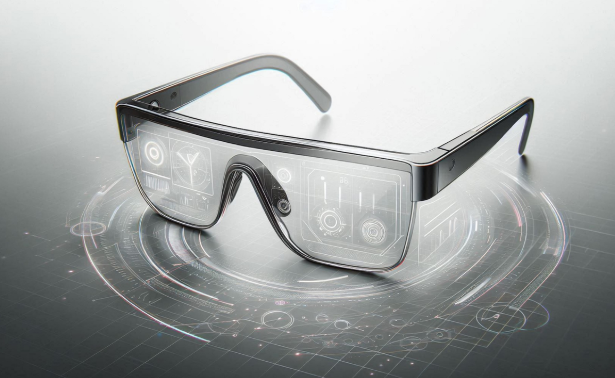
South Korean prosecutors have taken legal action against a man in his 40s who attempted to gain unfair advantage on a rigorous national qualification examination by wearing artificial intelligence-enabled glasses, representing the first criminal prosecution of its kind in the country. The Gwangju District Prosecutors' Office moved to indict the suspect last month following his apprehension during a fire protection facilities engineer certification test, bringing formal charges under the National Technical Qualification Act after local media outlets disclosed the case on Monday, July 13.
The mechanics of the scheme reveal how rapidly consumer technology has evolved beyond the capacity of traditional exam security measures to detect. While taking the examination in Gwangju in May, the man wore glasses equipped with hidden cameras and AI processing capabilities designed to identify correct answers from examination materials and display them directly within his field of vision. What ultimately exposed his attempt was a seemingly minor detail—an exam invigilator noticed an unusual reflection on the lens surfaces, a tell-tale sign that sparked closer scrutiny of the device and subsequent investigation.
During questioning, the suspect provided insight into his motivations and technical sophistication. He confessed to the cheating attempt and explained that he had personally developed an artificial intelligence application programmed to work in tandem with the glasses hardware. Rather than seeking to fraudulently obtain a professional credential, he claimed his primary motivation was testing whether the system he had created actually functioned as intended—essentially treating a high-stakes national examination as a proof-of-concept for his technology. This explanation, whether fully credible or not, underscores how the convergence of AI development and wearable devices creates novel opportunities for academic and professional fraud.
The Gwangju case was not an isolated incident. Authorities subsequently identified and apprehended two additional men in their 20s who employed the identical cheating methodology at separate national technical qualification exam venues in Seoul and Mokpo during the same month. The rapid proliferation of similar attempts suggests that information about the vulnerability of existing security protocols had spread quickly among individuals seeking shortcuts through demanding certification processes, or that the technology had become sufficiently accessible and affordable to attract multiple independent users.
Beyond professional certification examinations, AI glasses have surfaced in connection with cheating schemes targeting English language proficiency assessments. At least two individuals were caught attempting to use the devices during TOEIC examinations in May, with a third case detected in June. The TOEIC tests, which are crucial benchmarks for employment opportunities and academic advancement throughout South Korea and the broader East Asian region, represent particularly high-stakes targets for those willing to risk prosecution in pursuit of inflated scores.
The escalating incidents triggered an urgent response from examination authorities. Officials responsible for administering major national qualification assessments convened an emergency meeting on July 10 to develop comprehensive countermeasures against this emerging threat. The meeting reflected growing recognition within South Korean regulatory agencies that existing safeguards, designed primarily to detect conventional cheating methods such as unauthorized note materials or communication devices, were inadequate against AI-powered solutions that operate invisibly to external observers.
The proposed interventions under consideration represent two complementary approaches to the problem. First, regulatory bodies are moving to formalize the prohibition of AI glasses by explicitly adding them to officially sanctioned lists of prohibited examination items, ensuring that possession of such devices at testing centers constitutes a clear violation regardless of whether they are actually activated or used. This administrative approach provides legal clarity and enables proactive enforcement based on device detection rather than requiring proof of actual cheating.
Second, and potentially more consequential, authorities are contemplating substantially more severe penalties for individuals caught attempting to cheat with technological aids. Escalated sanctions are intended to raise the perceived risk sufficiently high to deter potential offenders from attempting similar schemes. The calculus of cost-benefit analysis that might appeal to someone considering exam fraud would shift dramatically if conviction carried criminal records and substantially harsher consequences than current provisions under the National Technical Qualification Act.
For Malaysia and other Southeast Asian nations with similarly structured professional certification systems and competitive examination cultures, the South Korean cases offer instructive lessons about emerging vulnerabilities in examination security architecture. As AI technology becomes progressively more sophisticated and affordable, similar cheating attempts are likely to surface regionally. Malaysian examination bodies administering professional qualifications, English language assessments, and university entrance tests should proactively evaluate whether existing security protocols and detection capabilities remain sufficient against AI-enabled devices.
The incident also highlights the tension between technological innovation and institutional integrity. The suspect's claim that he was merely testing his self-developed AI system, rather than seeking illicit professional credentials, raises philosophical questions about how societies should categorize and punish different motivations for examination fraud. Whether prosecution focuses primarily on the act of cheating itself or on intent and actual harm caused will shape how countries develop proportionate regulatory responses.
Looking forward, the South Korean government's response signals broader regional anxieties about technological disruption of established systems and institutions. Educational and professional certification processes depend fundamentally on meritocratic assessment—that individuals who achieve credentials have genuinely demonstrated requisite knowledge and competence. As AI glasses and potentially more sophisticated cheating technologies become available, maintaining public confidence in examination systems will require continuous adaptation of supervisory methods, detection technologies, and enforcement frameworks. The race between those developing fraudulent technologies and those tasked with preventing their use in examinations has entered a new, more technologically complex phase.

