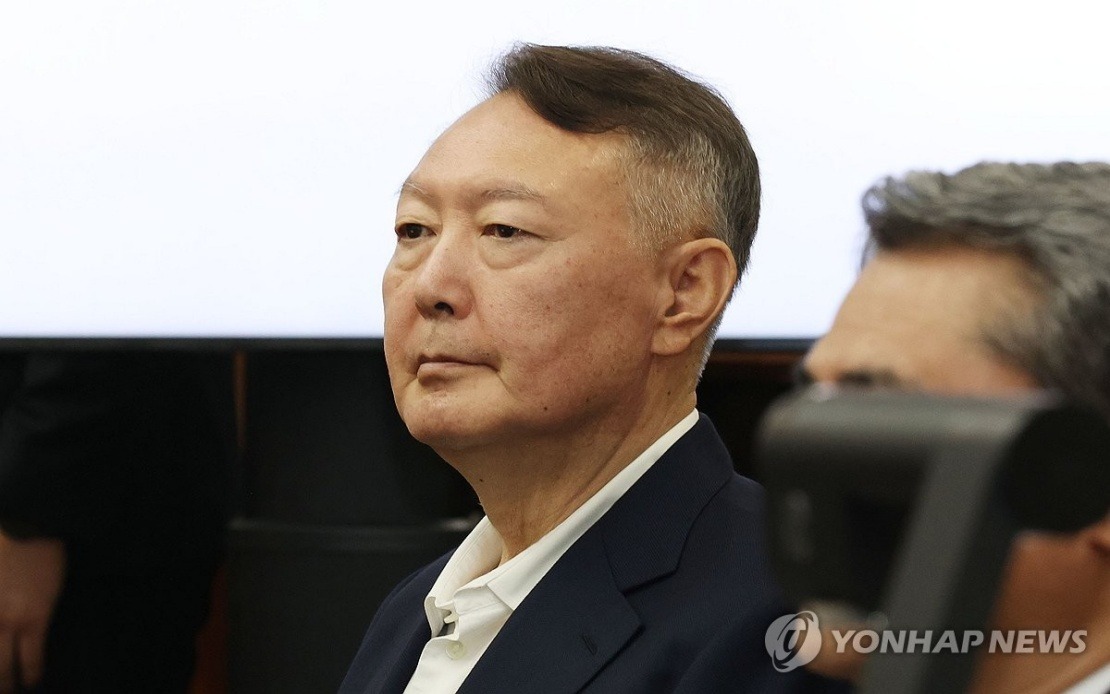
Former South Korean President Yoon Suk Yeol has been handed a two-year prison sentence by Seoul's Central District Court on charges of accepting illegal political funds disguised as complimentary opinion polling services. The ruling on July 13 represents a significant legal setback for the disgraced leader, who is simultaneously defending himself against far more serious accusations related to his aborted martial law declaration in December 2024. The conviction underscores the deepening legal jeopardy facing South Korea's political establishment, with Yoon now facing multiple concurrent trials on vastly different charges ranging from financial impropriety to insurrection.
The court determined that Yoon received fourteen opinion polls valued at approximately 270 million won (roughly US$180,100) free of charge from Myung Tae-kyun, a self-styled political powerbroker, between April 2021 and March 2022. Rather than viewing these surveys as legitimate political research, prosecutors argued they constituted illegal campaign contributions designed to circumvent restrictions on political fundraising. The arrangement allegedly operated as a quid pro quo mechanism, with Yoon reciprocating Myung's generosity by pledging to support former parliamentary representative Kim Young-sun's nomination as a People Power Party candidate during June 2022 by-elections. This transactional relationship became the central focus of special counsel Min Joong-ki's investigation into financial irregularities within Yoon's political operations.
The Seoul court's judgment partially vindicated the prosecution's case, accepting their argument that an implicit understanding existed between Yoon and Myung regarding mutual political favours. However, the court rejected the prosecution's more expansive accusations that Yoon had colluded with his wife, former first lady Kim Keon Hee, to systematically solicit polling data. The divergence between Yoon's conviction and his wife's earlier acquittal on identical charges by the Seoul High Court in April creates a puzzling inconsistency within South Korea's judicial system. The appellate court had reasoned that neither Yoon nor Kim could be said to have benefited from the surveys since Myung distributed similar polling work to other political figures, thereby negating any exclusive advantage or illegal enrichment.
This contradiction has prompted Min's prosecution team to appeal the former first lady's acquittal, arguing that the appellate court's reasoning was fundamentally flawed. The prosecutors contend that Myung's distribution of surveys to multiple recipients does not eliminate the illegal nature of providing free services without proper disclosure or documentation. The case demonstrates the complexity of prosecuting campaign finance violations in South Korea's political system, where the boundary between legitimate political networking and illegal financial transactions remains contested even among senior jurists. The conflicting rulings also highlight broader tensions within South Korea's judiciary regarding how strictly to interpret campaign finance regulations affecting high-profile political figures.
Myung Tae-kyun, the power broker at the centre of this scandal, received an eighteen-month prison sentence, substantially less severe than the three-year term the special counsel had requested. Myung's cooperation with prosecutors and potentially mitigating circumstances appear to have influenced the court's relatively lenient approach. The prosecution's original demand for four years imprisonment for Yoon underscored the seriousness with which Min's team viewed the alleged violations, but the court's decision to impose half that duration suggests judicial scepticism regarding several prosecution arguments or a determination that the evidence, while sufficient for conviction, did not warrant maximum penalties.
Yoon's conviction arrives amid an extraordinary cascade of legal proceedings that have defined his post-presidential existence. In February, a separate court sentenced him to life imprisonment for orchestrating the failed martial law declaration, a charge that carries implications of insurrection and abuse of presidential authority far exceeding the campaign finance violation. That conviction triggered widespread debate about presidential immunity, the limits of executive power, and whether South Korea's democratic institutions possessed sufficient safeguards against authoritarian impulses. The life sentence has been appealed, and Yoon remains free pending the outcome of higher court proceedings, though his imprisonment on campaign finance charges could complicate bail arrangements or appellate proceedings.
The opinion poll scandal reveals how contemporary Korean politics operates through informal patronage networks and back-channel arrangements that technically violate campaign finance statutes but pervade the political ecosystem. Myung's cultivation of relationships with senior politicians through provision of valuable campaign research exemplifies the grey zones that exist between permissible political consultation and prohibited financial support. The special counsel's decision to prosecute these arrangements signals a determination to enforce campaign finance regulations more rigorously, though inconsistent judicial outcomes raise questions about whether such enforcement can achieve meaningful deterrence.
For regional observers, particularly in Southeast Asia, the Yoon case offers instructive lessons regarding democratic vulnerability and the importance of robust institutional checks on executive authority. South Korea's constitutional framework ultimately prevented Yoon's martial law attempt from succeeding, and the subsequent prosecutions demonstrate that even former presidents cannot operate with immunity from legal accountability. However, the protracted nature of these proceedings, the potential for political manipulation of the justice system, and the differing outcomes in related cases underscore how even established democracies struggle to maintain impartial adjudication of high-stakes political cases.
The conviction and sentencing also illuminate how opinion polling, ostensibly a technical instrument for understanding voter preferences, can become entangled in political corruption schemes. The relatively modest financial value of the surveys—270 million won represents a small fraction of typical campaign budgets—suggests that prosecutors focused on principle rather than magnitude. By treating free opinion polls as campaign contributions requiring disclosure, South Korean authorities sought to prevent the emergence of hidden financial channels that circumvent transparency requirements. Whether this approach effectively discourages similar arrangements or merely drives such transactions further underground remains uncertain.
Yoon's legal predicament has consumed South Korean political discourse throughout 2024 and into 2025, creating a prolonged crisis of executive legitimacy. His supporters contend that he faced unprecedented political persecution through weaponized prosecution, while critics argue his convictions represent necessary accountability for various abuses of power. The starkly differing judicial outcomes regarding Yoon and his wife in similar cases fuel suspicions that South Korea's courts may not be operating with perfect consistency or neutrality. This perception itself, regardless of actual judicial integrity, damages public confidence in legal institutions and complicates efforts to establish clear norms regarding acceptable political conduct.
As Yoon's multiple trials advance through appellate proceedings, South Korean society faces fundamental questions about executive power, democratic restraint, and the proper relationship between law enforcement and high-profile political figures. The campaign finance conviction, while less dramatic than the insurrection charge, establishes a pattern of legal violations spanning multiple distinct domains. Whether additional convictions will accumulate, and how appellate courts will ultimately assess these cases, will profoundly shape both Yoon's personal fate and South Korea's broader institutional trajectory in the years ahead.

