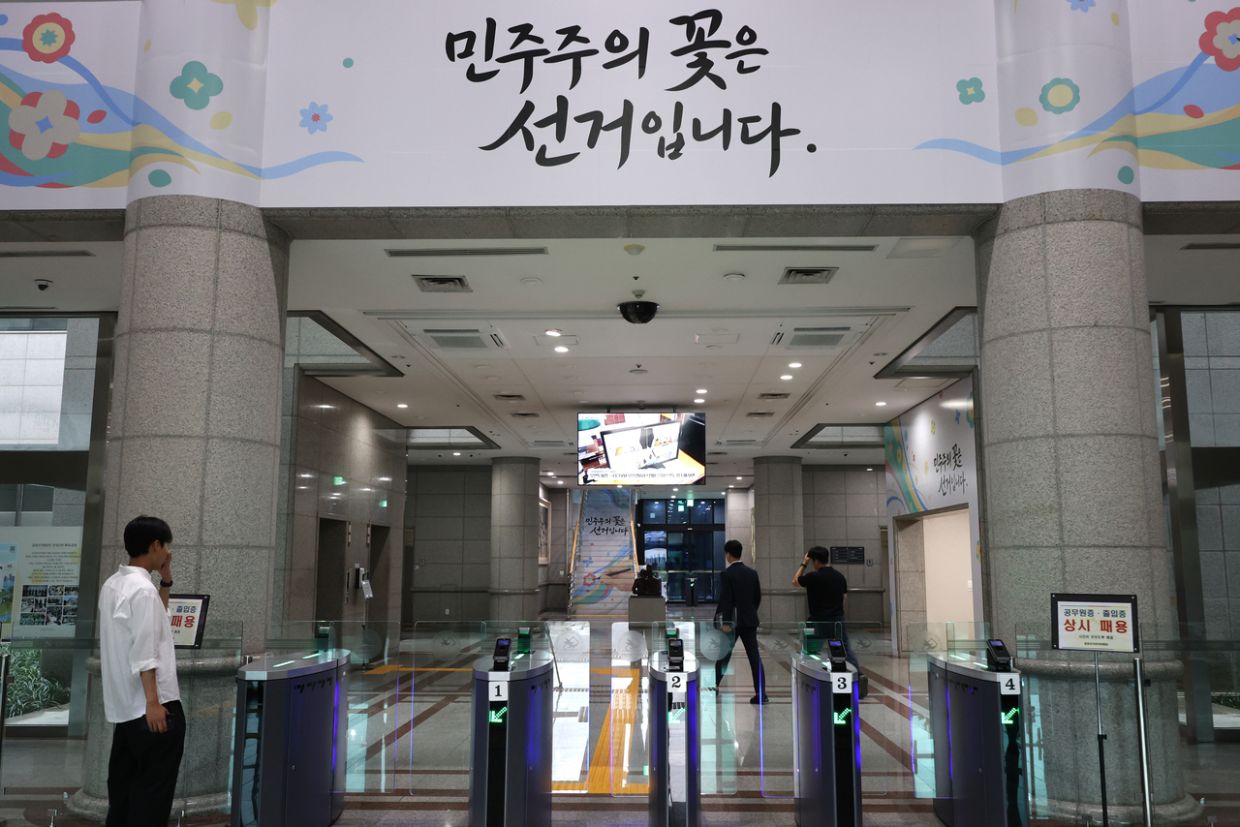
South Korea's election integrity came under scrutiny this week as prosecutors and police investigators executed a search warrant at the National Election Commission offices in Gwacheon, located just outside Seoul. The raid focused on gathering evidence related to an expanding investigation into allegations that commission employees deliberately altered statistical records within the agency's computer systems, according to legal sources familiar with the operation.
The broader investigation centres on a significant disruption that occurred during South Korea's June 3 local elections, when multiple polling stations experienced critical ballot shortages. The operational failures resulted in a deeply troubling outcome: voters who arrived at designated polling locations found themselves unable to participate in the democratic process, forcing many to leave without casting their votes. This situation raises fundamental questions about electoral administration and public confidence in the voting system.
What has transformed this administrative mishap into a criminal investigation is evidence suggesting that National Election Commission staff members actively worked to conceal the magnitude of the voter registration errors that preceded the ballot crisis. By manipulating data within their systems, investigators allege these employees attempted to obscure how such widespread shortages could have occurred in the first place. This layer of alleged misconduct—attempting to cover up mistakes rather than immediately addressing them transparently—has escalated the political sensitivity of the case significantly.
The joint task force comprising both prosecution and police personnel indicates the seriousness with which authorities are approaching the matter. South Korea's electoral systems operate under substantial scrutiny given the nation's historical experiences and the central importance of credible democratic processes to public trust in governance. When institutional mechanisms designed to protect electoral integrity themselves become subjects of criminal investigation, it creates cascading concerns about systemic reliability.
For Malaysian observers, this case offers important perspective on electoral administration challenges that can emerge across different democracies. While Malaysia's electoral commission operates within its own distinct institutional framework, the South Korean experience demonstrates how seemingly technical failures in ballot distribution and voter registration management can rapidly escalate into matters of institutional credibility and legal consequence when paired with allegations of cover-up activities.
The implications extend beyond Seoul and South Korea's capital region. Local elections serve as important barometers for political sentiment and voter engagement, particularly in decentralized systems where regional governance carries substantial weight. When voters experience barriers to participation—whether through actual shortages or perceived administrative incompetence—the consequences ripple through public perception of democratic institutions generally. The subsequent investigation into data manipulation compounds these concerns by suggesting that institutional self-protection may have taken precedence over transparency and accountability.
South Korea has developed robust institutional safeguards and legal frameworks intended to prevent and investigate electoral irregularities. The willingness of prosecutors and police to pursue a joint task force operation against the election commission itself, despite the institutional sensitivity involved, reflects confidence in the independence of the judiciary and prosecutorial system. This contrasts with weaker systems where challenging government institutions, even those responsible for elections, might face political obstruction.
The specific focus on computer system manipulation reflects modern electoral administration's reliance on digital infrastructure. As voting systems increasingly depend on technological platforms for voter registration, ballot distribution planning, and results management, the potential for both unintentional failures and deliberate tampering grows correspondingly. The investigation's attention to this technical dimension suggests prosecutors believe they have identified systematic patterns rather than isolated data entry errors.
For regional stakeholders, the case underscores the critical importance of institutional independence and professional standards within election management bodies. Electoral commissions occupy uniquely sensitive positions requiring both operational competence and unwavering commitment to transparency. When those agencies become implicated in cover-up activities—regardless of their original intentions regarding the underlying failures—public confidence sustains lasting damage.
The investigation's trajectory will likely influence how election management agencies across Asia approach internal error-detection and public reporting. Agencies that lack confidence in their own institutional protections may feel incentivized to conceal problems, precisely the pattern the South Korean investigators are scrutinizing. Conversely, countries with established patterns of institutional accountability may find it easier to acknowledge and remediate electoral administration challenges without the defensive impulses that allegedly characterised the National Election Commission's response.
As the task force continues securing evidence and developing its case against implicated commission employees, South Korean election officials will face pressure to implement procedural reforms ensuring ballot preparation accuracy and preventing future shortages. Beyond immediate operational adjustments, however, the institutional challenge involves rebuilding public confidence that the election management apparatus operates with transparency and integrity rather than self-protective motivations.
The raid represents a significant moment in South Korea's ongoing refinement of electoral institutions. While ballot shortages and related administrative failures occur across mature democracies, the subsequent investigation into alleged data manipulation demonstrates institutional commitment to accountability. For Malaysia and other regional democracies, the case illustrates both the operational complexities inherent in managing large-scale elections and the critical necessity of maintaining institutional credibility through transparent handling of failures when they occur.

