South Korea is witnessing the twilight of one of its oldest and most controversial food traditions. Come February 2027, the breeding, slaughter and sale of dogs for consumption will become illegal across the nation, bringing to a close a practice deeply embedded in Korean culture for generations. The transformation underway represents not merely a change in dietary habit, but a fundamental philosophical shift in how South Korean society views animal welfare—one that carries broader implications for the region as attitudes toward food ethics continue to evolve across Asia.
The journey to this point illustrates the complexity of cultural change. Annie Ko, a 45-year-old musician, became an unlikely catalyst in this transformation when she adopted DeeJay, a Labrador puppy rescued from a dog meat farm in Wonju in 2015. The trembling runt had spent his first three months confined in a cramped cage alongside six siblings, destined for slaughter had rescue workers not intervened. Ko's decision to bring DeeJay home, despite having no prior experience as a pet owner, reflects a broader generational shift among younger and more globally-minded South Koreans who increasingly question traditional practices. Through her work with Humane World for Animals, an international non-profit organisation, Ko has witnessed the rescue of approximately 2,800 dogs from farms across the country, with most finding new homes in the United States, Britain and Canada. DeeJay remains unique as the sole survivor from his litter to remain in South Korea.
The legislative framework enabling this change emerged only recently, following decades of contentious debate within South Korean society. Parliament passed landmark legislation in January 2024 that established a three-year transition period, allowing farmers time to restructure their operations rather than facing immediate collapse. This pragmatic approach balanced animal welfare concerns with the economic realities facing rural communities dependent on dog meat production. According to South Korea's Ministry of Agriculture, Food and Rural Affairs, the strategy has proven remarkably effective—more than 80 percent of the approximately 1,500 registered dog meat farms had ceased operations by May 2026, leaving fewer than 300 still functioning. The government incentivised this voluntary closure through compensation packages offering up to 600,000 won (US$426) per dog, combined with low-interest loans and comprehensive support programmes including job transition assistance and re-employment counselling for affected workers.
The economic consequences of this transition are already evident in South Korea's remaining dog meat establishments. Restaurant owners and meat vendors report that business volume has contracted to roughly one-third of historical levels, creating genuine hardship for proprietors who have operated their establishments for decades. A vendor at Seoul's Gyeongdong Market, one of the last remaining public venues where dog meat is sold, disclosed that prices have surged dramatically—tripling from approximately 20,000 won per kilogram in 2024 to 60,000 won at present. The vendor declined further comment, citing the sensitivity of the issue in an increasingly polarised society.
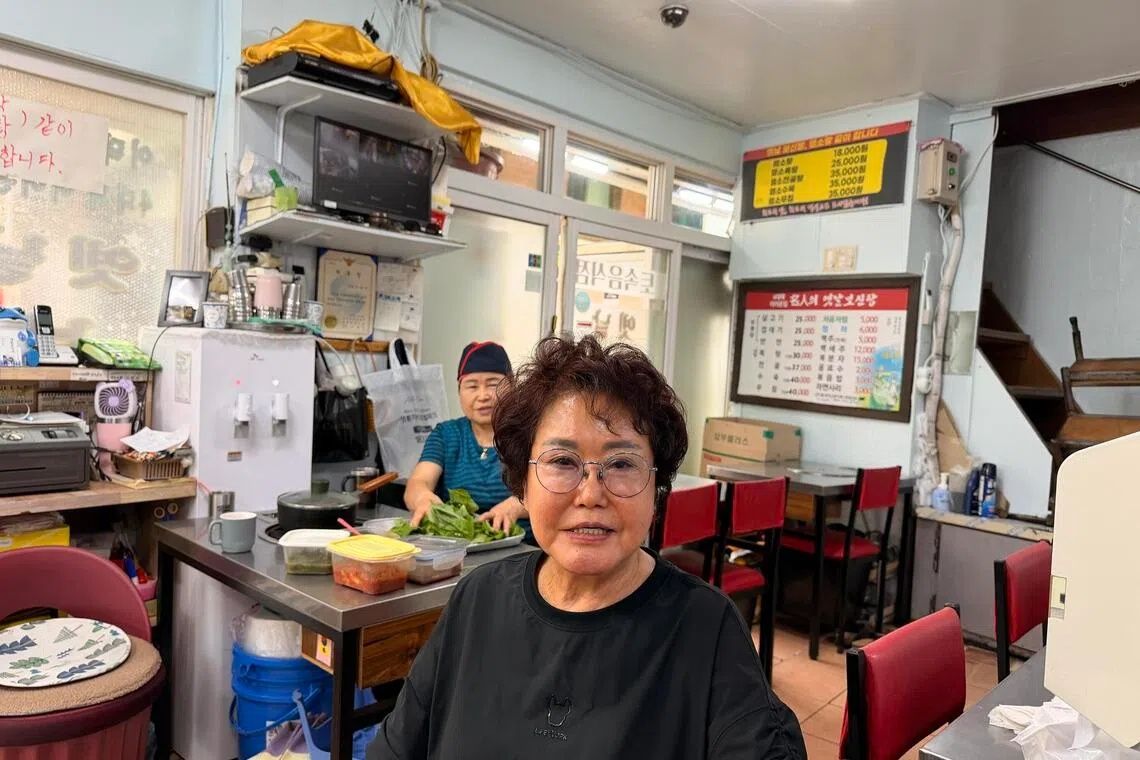
The impact on traditional restaurants proves particularly acute during the season when dog meat consumption has historically peaked. Lee Deok-sung, who has operated a dog meat stew restaurant near Seoul's Dongdaemun Market for 45 years, described the current summer as devastating for business. Boshintang, the traditional dog meat stew, has long occupied a unique place in Korean dietary practice, traditionally consumed during boknal—the three hottest days of summer—when consumers believed the dish replenished stamina lost to oppressive heat. This year's boknal dates fall on July 15, July 25 and August 14, marking potentially the final summer season before the ban takes effect. Lee has been forced to raise prices from 16,000 won to 25,000 won per bowl to cover escalating meat costs, yet sales remain sluggish. With unsold portions visible on preparation trays, Lee expressed anxiety about breaking even on daily operations and existential uncertainty about survival once the ban becomes law.
Across a narrow alley from Lee's establishment sits another venerable institution—Lee Kyung-ja's boshintang restaurant, operating for over 40 years. Both neighbouring restaurants represent well-established fixtures in Seoul's remaining dog meat dining culture, yet both face unprecedented challenges. In an attempt to adapt, both establishments introduced black goat stew earlier in 2026, selecting this alternative specifically because its texture and gamey flavour closely approximate dog meat. However, the substitution has failed to gain traction with either restaurant's clientele. Lee Kyung-ja, now 75 years old, reported that some days pass without a single customer. Those patrons who do visit explicitly state preferences for dog meat, citing superior taste compared to goat, while others mention that traditional Korean medicine practitioners continue recommending dog meat for patients recovering from serious illness. The prospect of rebuilding a customer base at her advanced age while transitioning to an entirely different protein source appears daunting, prompting Lee to contemplate closing the restaurant if business deteriorates further following the ban's implementation.
Understanding the depth of this tradition requires examining its historical roots. Records suggest dog meat consumption in Korea extends back at least to the Joseon Dynasty, with one of the most significant historical references appearing in the Donguibogam, a seventeenth-century medical treatise compiled by royal physician Heo Jun. This influential text characterised dog meat as a warming food believed to restore energy and vitality, establishing a quasi-medicinal rationale for consumption that persists among some practitioners today. The practice intensified considerably during Japan's colonial administration from 1910 to 1945 and in the post-Korean War era, when widespread privation and food scarcity drove many citizens to seek affordable protein sources.
Yet contemporary South Korea presents a starkly different context from these historical periods. Economic prosperity, dietary diversification and generational change have fundamentally altered how significant portions of the population—particularly urban youth—view this tradition. International advocacy by animal welfare organisations, combined with South Korea's aspiration to position itself as a modern, progressive nation on the global stage, contributed to shifting public opinion. The ban reflects not simply external pressure, but genuine internal transformation in how South Koreans increasingly value animal welfare relative to cultural continuity. This evolution holds particular significance for Southeast Asia, where comparable debates about traditional animal-based practices are emerging in Vietnam, Cambodia and other regional nations as economic development and generational change intersect with animal rights consciousness.
The February 2027 deadline approaches with accelerating urgency for remaining dog meat farmers and restaurant operators. The compensation schemes and support programmes offered by government agencies represent genuine assistance, yet they cannot fully address the psychological and cultural dimensions of this transition. For some practitioners, dog meat production and sales constitute not merely livelihood but identity—professional roles deeply connected to family history and community standing. Simultaneously, for animal welfare advocates and younger generations of South Koreans, the ban represents a moral achievement and alignment with international standards regarding animal protection. The resolution of these competing narratives will shape not only South Korea's food culture but potentially influence attitudes across the region as other nations grapple with comparable questions about balancing tradition against evolving ethical frameworks.

