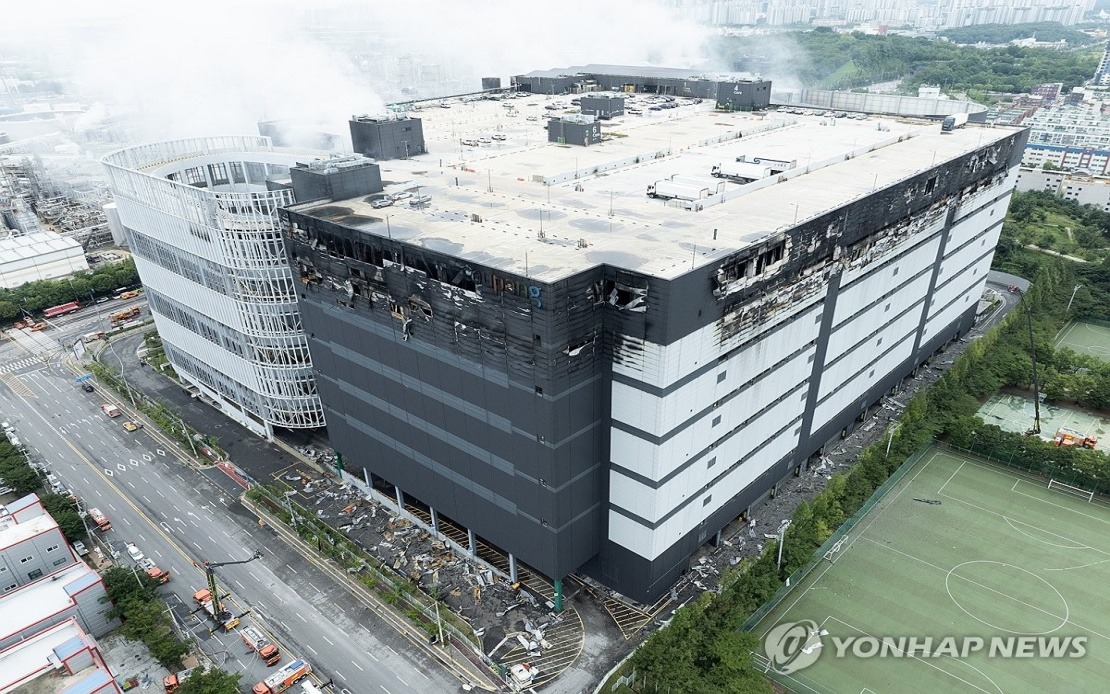
A sprawling fire that engulfed a Coupang logistics facility in Incheon, located west of Seoul, has been declared under initial control after consuming more than two and a half days of relentless firefighting operations. The blaze, which ignited on Saturday, was finally contained at 8 p.m. on Monday, marking a critical turning point in what proved to be one of South Korea's most challenging recent fire-suppression efforts. The declaration came after an intensive response that mobilised resources on a national scale, signalling the gravity with which authorities treated the incident.
The South Korean government's decision to issue a national order on Saturday proved instrumental in coordinating one of the country's largest firefighting operations. In total, 812 firefighters and 231 pieces of specialised equipment converged on the Incheon logistics centre, drawing personnel and apparatus from multiple jurisdictions. This scale of deployment underscores both the magnitude of the fire and the complexity involved in tackling a modern, sprawling warehouse facility. The sheer manpower required reflects the challenges posed by contemporary industrial structures that house vast quantities of goods across multiple levels and compartments.
The physical characteristics of the warehouse itself presented significant obstacles to firefighting teams throughout the multi-day battle. The complex internal architecture of the facility, combined with the presence of substantial quantities of flammable materials typical of a major e-commerce logistics hub, created conditions that prolonged the emergency. Firefighters had to contend not only with active flames but also with navigating the building's intricate layout while searching for remaining hotspots and preventing re-ignition. The density and variety of combustible inventory stored within the facility made predicting fire behaviour exceptionally difficult.
Despite these formidable challenges, a turning point arrived on Monday with the arrival of rainfall in the Incheon region. This natural phenomenon, though modest, provided a crucial assist to exhausted firefighting crews. The moisture from precipitation helped reduce ambient temperatures around the facility and may have dampened some external combustibles, allowing teams to gain meaningful ground in their containment efforts. This fortunate convergence of human effort and favourable weather conditions finally tipped the scales in the responders' favour after 61 gruelling hours of continuous operations.
The human toll of the incident extended well beyond the direct threat posed by flames and smoke. Local authorities issued an evacuation order late Sunday for all residents living within 116 metres of the warehouse's ramp zone, a precautionary measure that reflected concern about potential structural collapse, toxic smoke dispersal, or secondary explosions. This evacuation affected hundreds of nearby residents, forcing them to abandon their homes with minimal notice. The order sent tremors through the local community, disrupting routines and triggering anxieties that persisted throughout the firefighting operation.
Temporary shelter arrangements were hastily established to accommodate those displaced by the mandatory evacuation. A total of 178 people sought refuge at nearby schools, which were pressed into service as emergency shelter facilities. These improvised arrangements, while necessary, highlighted the cascade of disruptions that such incidents trigger throughout affected communities. Families with young children, elderly residents, and others requiring special accommodations had to adapt quickly to temporary living situations far from their homes.
The decision to close educational facilities underscored the broader community impact of the warehouse fire. Local authorities, exercising caution regarding air quality and potential hazards, advised daycare centres and elementary schools within the affected radius to remain closed on Monday. This directive resulted in the closure of one elementary school and 14 daycare centres, affecting hundreds of children and their families who had to adjust daily schedules at short notice. Parents juggled unexpected childcare arrangements while schools absorbed operational disruptions.
From a logistics perspective, the incident carried significant implications for Coupang's operations and broader e-commerce supply chains in South Korea. Coupang, as the nation's dominant e-commerce platform, operates numerous warehouse facilities to maintain its legendary same-day and next-day delivery capabilities. The loss of one major logistics centre, even temporarily, creates bottlenecks throughout the distribution network. For Malaysian readers, this scenario illustrates the vulnerabilities inherent in hyper-efficient, just-in-time logistics systems that regional e-commerce platforms increasingly replicate.
The fire also raises questions about industrial safety protocols and building code compliance across South Korea's warehousing sector. Logistics centres, particularly those serving high-volume e-commerce operators, represent unique fire risks due to the concentration of combustible materials and the scale of operations. The incident will likely prompt regulatory reviews and potentially trigger industry-wide safety audits. These developments may eventually influence warehouse design and safety standards across Southeast Asia, where e-commerce infrastructure is expanding rapidly.
The 61-hour battle against this warehouse fire demonstrates the immense resources required to manage large-scale industrial incidents in modern supply chain ecosystems. It also illustrates how such emergencies ripple outward to affect not only direct responders but entire residential communities and commercial networks. As South Korea undergoes a post-incident investigation, lessons learned may prove relevant for neighbouring countries, including Malaysia, where similar logistics hubs are proliferating to support booming regional e-commerce sectors.

