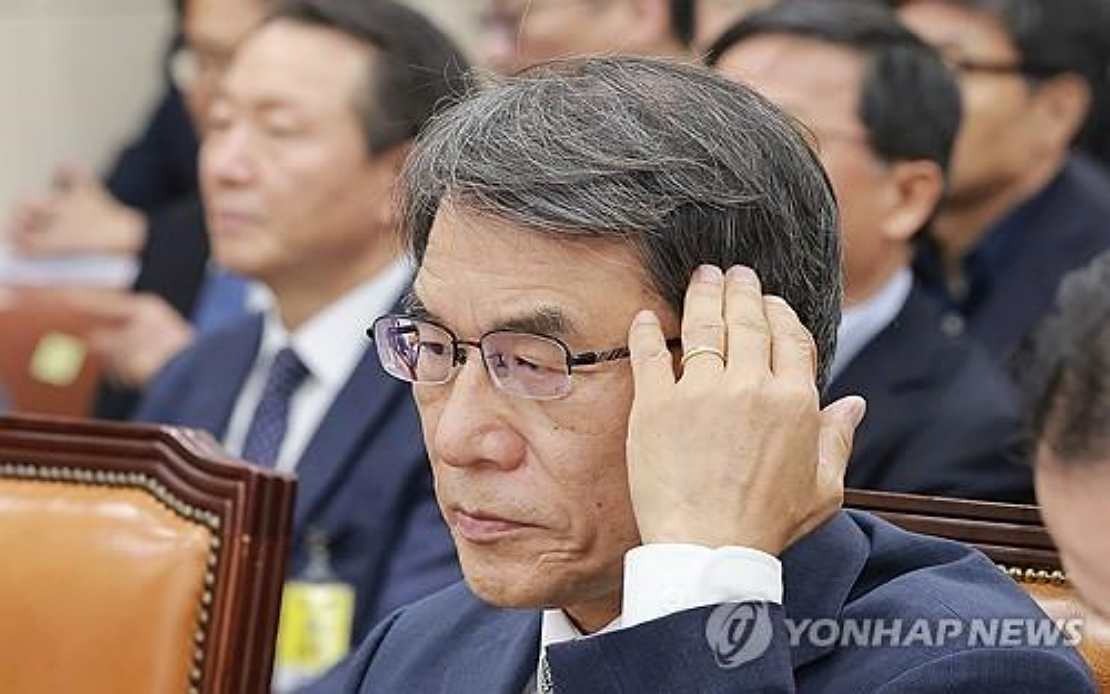
South Korean law enforcement authorities executed a significant operation on Monday targeting the National Election Commission as part of an expanding corruption investigation into its former leader, Roh Tae-ak, over allegations of financial misconduct and unauthorised spending of public resources. The joint police-prosecution task force presented formal search warrants naming Roh and several other unnamed commission officials as criminal suspects, moving beyond preliminary inquiries into what authorities characterise as systematic misappropriation of state funds.
The raid focused on the NEC chairperson's office, where investigators spent the morning conducting a thorough examination of records and documentation. While the operation included the commission's headquarters, authorities notably did not extend their search to Roh's private residence on the same day, suggesting that investigators may have obtained sufficient documentation from the agency's own files or planned additional searches for later stages of the inquiry.
The core of the allegation centres on three international business journeys that Roh undertook while serving as commission chief. These trips took him and his spouse to Australia and New Zealand, Germany and Estonia, and Denmark and Sweden respectively. While such overseas official missions are standard practice for high-ranking government figures attending conferences or conducting diplomatic exchanges, the contentious issue involves the deliberate omission of his spouse's participation from the NEC's official post-trip reports that were released to the public. This discrepancy raises fundamental questions about the nature of the visits and whether they constituted legitimate government business or personal travel funded through state mechanisms.
Parallel to Roh's individual case, the broader investigation has unveiled what appears to be a more systemic pattern of questionable overseas spending within the election watchdog. Records indicate that 461 staff members deployed across the commission participated in 107 international business trips between 2022 and June of this year. The destinations chosen for these missions paint a striking picture: rather than concentrating on regulatory centres or major political capitals where election-related knowledge might be exchanged, the overwhelming majority of trips targeted leisure and resort destinations such as the Maldives, Bangkok, Kota Kinabalu and Florence. For Malaysian readers, the inclusion of Kota Kinabalu as a purported destination for official NEC business missions raises particular eyebrows, as the Sabah capital is primarily known as a holiday and nature tourism hub rather than a centre for electoral governance expertise.
The investigation's genesis traces back to June 19 when South Korea's main opposition People Power Party filed a formal complaint against Roh, initiating the prosecutorial process that would eventually lead to the current raids. This suggests that the opposition party identified patterns of irregular spending or received credible reports of misconduct that prompted it to escalate the matter beyond media speculation into the formal legal system. The timing of the complaint, coming just before a broader pattern of questionable travel emerged, indicates that the party likely possessed substantial evidence rather than engaging in routine political opportunism.
Roh's departure from his position occurred last month, following significant operational failures that embarrassed the commission during local elections held on June 3. Voting in several polling stations across southern Seoul experienced disruptions due to insufficient ballots, creating scenes of frustration among voters and raising questions about administrative competence. While the ballot shortage issue and the embezzlement allegations are formally separate matters, Roh's resignation in the shadow of operational failure suggests that his position had already become untenable on multiple fronts, making the subsequent corruption investigation a further erosion of public confidence.
The investigation reveals troubling questions about institutional oversight and financial accountability within South Korea's electoral administration. The fact that hundreds of staff members could participate in extensive international travel to leisure destinations without generating immediate alarm from auditing mechanisms indicates either a breakdown in supervisory systems or a climate of permissiveness that pervaded the organisation. For Southeast Asian governance observers, the case serves as a cautionary example of how even specialised regulatory bodies can drift into patterns of questionable spending when internal controls weaken.
The wider implications for South Korean democracy are significant. Election commissions occupy crucial institutional roles in maintaining democratic integrity and public confidence in electoral processes. When the administrators of elections themselves become subjects of corruption investigations, the reputational damage extends beyond the individuals involved to the legitimacy of the institution responsible for overseeing the validity of electoral outcomes. This creates a paradox wherein an agency designed to protect democratic processes faces credibility challenges precisely when public trust in such bodies becomes most essential.
For regional observers, the South Korean case mirrors concerns visible across Asian democracies regarding the management of public institutions and the prevention of financial irregularities. The methodical approach adopted by South Korean investigators—combining police and prosecution resources, executing formal warrants, and examining both high-level leadership and systemic patterns—demonstrates institutional mechanisms designed to address such matters comprehensively. The investigation's unfolding will likely influence how other regional electoral bodies reassess their own financial controls and overseas travel policies, particularly regarding spousal accompaniment and the designation of trip purposes.

